
Category: Blog

Your blog category

  • The Enormous Cost of Being the One Who Holds Everything Together

    The Enormous Cost of Being the One Who Holds Everything Together

    “For most of history, Anonymous was a woman.” ~Virginia Woolf

    There’s a kind of work in our society that doesn’t come with a title or pay, and for a long time, I didn’t even notice I was doing it. I just lived inside it. It shaped my days, my stress, my identity.

    These days, I see it more clearly. I can name it now. I don’t only live inside it, but I still return to it—especially as a parent, especially when things stretch thin. The difference is now, I pause. I reflect. I ask myself if I have to

    “For most of history, Anonymous was a woman.” ~Virginia Woolf

    There’s a kind of work in our society that doesn’t come with a title or pay, and for a long time, I didn’t even notice I was doing it. I just lived inside it. It shaped my days, my stress, my identity.

    These days, I see it more clearly. I can name it now. I don’t only live inside it, but I still return to it—especially as a parent, especially when things stretch thin. The difference is now, I pause. I reflect. I ask myself if I have to hold it all. Sometimes I still do. But not by default. Not blindly. Well, usually anyway.

    I’m writing to make the invisible visible. To name what I rarely heard said out loud, not just to others, but to myself. When I’m holding the center while everything pulls at the edges, absorbing what others don’t even realize needs carrying, I see myself. I’m not overreacting. I’m not asking for too much. I’m doing the work that holds lives together.

    I am often the one who remembers the dentist appointment, Mufti Day, the allergy meds, the forecast, the birthday, the swimming bag. Or the one who keeps the emotional boat steady—calming the toddler (or the adult acting like one), soothing tension between co-parents, biting my tongue so dinner doesn’t derail, all while managing the storm inside my own heart, or gut, or head.

    This work has many names to me: mental load, emotional labor, logistical labor and, especially, narrative labor (the effort of constantly explaining myself, justifying choices, making life make sense for everyone else). It’s the work that says, “I’ll just do it; it’s quicker.” Or, “It’s fine, I’ll figure it out” Or, “No one else will remember, so I’ll make a list.”

    But here’s what’s changed: I recognize it now. I’m no longer trying to prove I can handle everything. I’ve learned that sometimes, the quiet question inside—“Why is it always me?”—is actually wisdom, not weakness. It’s a sign to pause. To reset. To shift the pattern.

    While I see this most obviously in motherhood, I know it exists everywhere. In caring for aging parents. In supporting partners with chronic illness or disability. In blended families and complex co-parenting. In friendships and workplaces, where someone quietly holds the emotional glue.

    I’ve watched how, without this work, so many people and systems quietly fall apart. And I’ve also learned the cost of doing it all, all the time. That cost lives in the body.

    These days, my body can often feel like that old board game Operation—except the buzzer is jammed on and the batteries are dying. A constant low-level fog on my brain, with a weariness that sinks deep into my bones. It’s not always visible, but it’s there in my clenched jaw, racing thoughts at 3 a.m., or that strange, sudden overwhelm that never quite becomes tears.

    I used to downplay my own needs because there was no room for them. I kept things light even while crumbling, especially when my kids were young. I was the strong one everyone leaned on, even when I longed for someone else to take the weight.

    Now, I try to notice that impulse. To catch it in the moment. To remind myself I am not a machine. That asking for help doesn’t make me weak; it makes me wise.

    If this sounds like you too, you are not alone.

    This is for those of us managing households and trauma responses. For those parenting kids who live in two homes, two worlds. For those doing the extra work to help a child thrive in a system that wasn’t built for them. For those stuck in meetings, trying to help others see what should already be obvious. For those holding finances, feelings, and fallout.

    And then there’s judgment. The kind that seeps through tone, silence, side comments. The kind you can feel in the air. Suddenly, you’re not being witnessed; you’re being evaluated.

    It often lands hardest on those making unconventional caregiving choices. The stay-at-home parent “not contributing.” The adult child who cuts back work to care for parents. The partner quietly managing chronic illness. The blended-family parent navigating chaos.

    I once read, “Judgment assumes superiority. It lacks curiosity. It flattens your life into a one-dimensional story and acts like it knows the ending.” That’s exactly what it feels like.

    I’ve carried that weight many times—judgment from those who don’t live my reality. For a long time, my nervous system told me it wasn’t safe not to care what others thought. Even when I knew the wisdom of that old saying “Don’t take criticism from someone you wouldn’t go to for advice.”

    It’s always ironic; the ones who carry the least are often quickest to critique how you carry the most.

    And so here’s my truth: I won’t apologize for being there for my kids while they still need me. I won’t apologize for showing up for the people I love.

    There’s another saying, “Don’t judge someone until you’ve walked a mile in their shoes.” But most don’t want the shoes; they just want the right to judge from the sidelines. Or, as Brené Brown puts it, “If you’re not in the arena getting your ass kicked, I’m not interested in your feedback.”

    Because here’s what’s often missed: most people don’t realize how much they rely on invisible labor… until it stops.

    They don’t have to think about whether the PE gear is clean. Who will follow up with the lawyer or the school. How tension gets diffused or meltdowns averted. Why the fridge is never empty or the calendar runs smoothly.

    But when I’ve stepped away? Things fall through the cracks. Conversations go sideways. The house might be quiet, but not peaceful.

    This isn’t about guilt. It’s about value. This work enables others to succeed, to rest, to function—precisely because someone else is holding the complexity.

    Invisible labor holds everything together, until it can’t. I know this. The migraines, the kidney stones, the menstrual issues—they brought me to my knees. My body was trying to protect itself. Fair call. This work isn’t bottomless. It’s not free. And it’s not a given.

    So many of us do this work quietly, without even naming it in ourselves. Because when something is always expected, it starts to feel like it doesn’t count.

    But it does count. It is work. It deserves to be seen, not just when it collapses, but while it’s still holding the thread.

    We are not invisible. We are not unreasonable. We are not weak for needing rest or recognition.

    We are doing work that keeps lives afloat. That work matters. We matter. But boundaries matter too. No one is coming to save us. And we can’t keep rescuing others from their own responsibilities.

    Yes, there will be excuses. But unless there’s a clear diagnosis, the sixteen-year-old who won’t get out of bed for school? That’s theirs to navigate, not mine to carry. Let there be real-world consequences. How else will they grow? How else will they take responsibility? How else will they learn to stand on their own two feet?

    So today, I pause. I see what I’m carrying. I value what someone else is. I ask where the load can be shared. I wonder what would change if we truly recognised the weight behind what seems effortless.

    Because the most important work isn’t always the loudest, but it’s often the most essential.

    And maybe the first step isn’t changing everything. It’s noticing it. Naming it. Starting there.

    About Shona Keachie

    Shona teaches by example how to find our inner truth among the often harried day-to-day practicalities of life. If you enjoyed this article, you may enjoy Navigate Life’s Waves: Remember to Celebrate the Good Amidst the Chaos, Is It Worth It? How to Tend to Hope When the Future Feels Fractured, and From Overwhelm to Empowerment – Healing Your Body, Mind, and Heart in Crisis. To follow her blog, click here. Visit her at shonakeachie.com.

    Get in the conversation! Click here to leave a comment on the site.

  • Full Circle: Reclaiming the Me Who Felt Most Alive

    Full Circle: Reclaiming the Me Who Felt Most Alive

    “We shall not cease from exploration, and the end of all our exploring will be to arrive where we started and know the place for the first time.” ~T.S. Eliot

    In my early twenties, I packed a backpack and boarded a plane alone with a one-way ticket to Southeast Asia. It was a move that baffled my father, inspired my friends, and quietly terrified me.

    I was drawn by something I couldn’t fully articulate at the time: a craving for freedom, truth, and a kind of belonging I hadn’t yet known. What I didn’t realize then is that this two-year …

    “We shall not cease from exploration, and the end of all our exploring will be to arrive where we started and know the place for the first time.” ~T.S. Eliot

    In my early twenties, I packed a backpack and boarded a plane alone with a one-way ticket to Southeast Asia. It was a move that baffled my father, inspired my friends, and quietly terrified me.

    I was drawn by something I couldn’t fully articulate at the time: a craving for freedom, truth, and a kind of belonging I hadn’t yet known. What I didn’t realize then is that this two-year trip would imprint on me a version of myself I’d spend the next twenty years slowly forgetting, and then, almost by surprise, begin to reclaim.

    Three weeks into that trip, I found myself in Northern Thailand feeling completely lost. I wasn’t sightseeing like I “should” have been, or checking off cultural highlights. I felt aimless. Lonely. A bit ashamed that I wasn’t “making the most” of the experience.

    The structure I was used to (school, expectations, a tidy plan…) had fallen away. I felt unmoored, as if I’d made a huge mistake. Who was I to think I could just wander and have it mean something?

    And then I met Merrilee.

    She was older, solo, sun-wrinkled and wise—the kind of woman who carries stories in her skin.

    Over an afternoon spent talking at our quiet guesthouse, she helped me see something I hadn’t yet understood—that the point wasn’t to fill the time. The point was to be with myself. To let the lack of familiarity and structure teach me how to listen inward. To begin trusting my own rhythm and desire without external cues.

    The kind of freedom I’d dreamed of required discomfort first and a willingness to stop outsourcing my worth to what I was doing.

    That single conversation changed the entire arc of my trip. And it changed me. Forever.

    For the first time, I felt connected to myself not because I was achieving something, but because I was simply attuned. I moved at a pace that felt good. I made decisions from joy, not obligation. I stopped trying to prove anything. And in the middle of that season of self-connection, I met the man who would become my husband. A new chapter began rooted in love and partnership, and eventually, in motherhood.

    And slowly, without really realizing it, the version of me that woke up in Thailand began to dim.

    Over the years, I became a mama to two beautiful boys. I cultivated a stable career. I managed a household. I became, in many ways, the kind of adult we are told to strive for: organized, reliable, efficient, productive. I wore those traits like armor, and at times, even like a badge of honor. But beneath it, there was a soft ache.

    I had flashes of her—that younger, aligned me—the one who had danced through temples, laughed with strangers, trusted the moment. I saw her in photos. I reread journal entries and marveled at how whole I’d felt. But the distance between us seemed too wide. I didn’t resent the life I’d built. I just felt like I’d built it around everyone but me.

    Some seasons are shaped by who needs us and how we choose to show up. And when we decide to set aside our deepest longings for the sake of others, it can serve as a useful contrast.

    Maybe that soft ache was there to remind me that while raising children, tending to aging parents, or holding together the invisible threads of a household can offer deep meaning and purpose… it’s not the whole of me.

    Somewhere in my early forties, with my kids nearly grown and a job that no longer felt right, the stirring got stronger. Roaring and insistent.

    Only this time, it didn’t send me packing to the other side of the world. It sent me inward. And I was ready for it now. I had the capacity to respond.

    I began exploring new trainings. I started a side business that brought me alive in ways I hadn’t felt in years. I slowly reduced how much I was giving to my secure job to devote more time to the work that felt aligned with my soul. I was awakening again, but with responsibilities and relationships that complicated the path.

    Eventually, I knew it was time to leave my job entirely. It was a leap that, while intentional, shook me more than I expected.

    The weeks after submitting my resignation were not the liberating breath I’d anticipated. Instead, I felt untethered, afraid, and riddled with doubt. Who was I now? What if I failed? What if all of this was some naive midlife fantasy?

    Every structure I had leaned on—title, paycheck, certainty—was gone. I felt like I was falling. And then it hit me: I’d been here before.

    That lost, floating, what-the-hell-am-I-doing feeling? It was the exact same emotional terrain I’d walked through in Thailand. Only now, I had more to lose. The stakes were higher, so the fear was louder, but the lesson was ultimately the same.

    To let go of structure without losing myself. To trust the process of becoming before I had evidence of it all working out. To believe that flow, intuition, and joy are valid guides, even in business.

    This time, there was no Merrilee waiting for me on a bamboo veranda. But there was embodied memory. There was me. There was the version of me who had lived it once and come alive because of it. The gift of having that experience in my early twenties wasn’t just the adventure. It was the blueprint it gave me for how to find my way back when I felt lost.

    I didn’t have to figure it all out from scratch. I just had to remember who I was when I felt most alive. What she trusted. How she moved. What she believed.

    She didn’t need five-year plans or marketing funnels or perfect clarity. She needed space. And courage. And breath. She needed to like herself and to let that be enough.

    And so, I began letting that version of me take the lead again.

    Building a business, especially one rooted in healing, service, and soul, isn’t just about offers and strategy. It’s a spiritual path. It asks you to meet your edges, again and again. It confronts your conditioning. It stirs up your doubts. But it also calls forward your truest voice: the one that got quiet when you were busy being “good” and responsible and reliable.

    For years, I looked back on that time in Asia with a kind of reverence—a fond and distant memory of a life I couldn’t believe I was once brave enough to have lived. I never saw it as a departure from real life, but I did place it in a separate category, a luminous chapter that shaped me, but felt hard to access again.

    Now I see it more clearly. That moment was the original map of who I am when I’m not trying to be what the world wants. And now, in this middle chapter of life, I get to choose her again.

    Not by backpacking across the globe (though I admit that’s tempting), but by waking up each day and building a life, a business, a version of myself that’s led by truth, flow, and trust. It’s scarier now. But it’s also richer. Because I know what it feels like to come home to myself.

    And I know the ache of the contrast if I don’t.

    Maybe you’re reading this and feel like you’re standing at a similar threshold, untethered, uncertain, trying to trust the pull of something deeper.

    If so, let this be your Merrilee moment.

    The path might feel blurry. You might question whether you’re wasting time, or if you are foolish for wanting more.

    But what I continue to learn in new ways is that the process of returning to yourself and recentering your needs doesn’t always come with clarity. It often arrives with chaos. With fear. With silence. With the pain of letting go.

    But what’s waiting for you on the other side of the unraveling is a more vibrant you. And that person is so worth meeting again.

    About Natasha Ramlall

    Natasha Ramlall is a trauma-informed mind-body health practitioner. She helps individuals see their pain in a new way which moves them into more evolved levels of mind-body health, wholeness and healing. To learn more or work with her, visit humanistcoaching.ca and get her Journaling Bundle to explore how this tool can support you.

    Get in the conversation! Click here to leave a comment on the site.
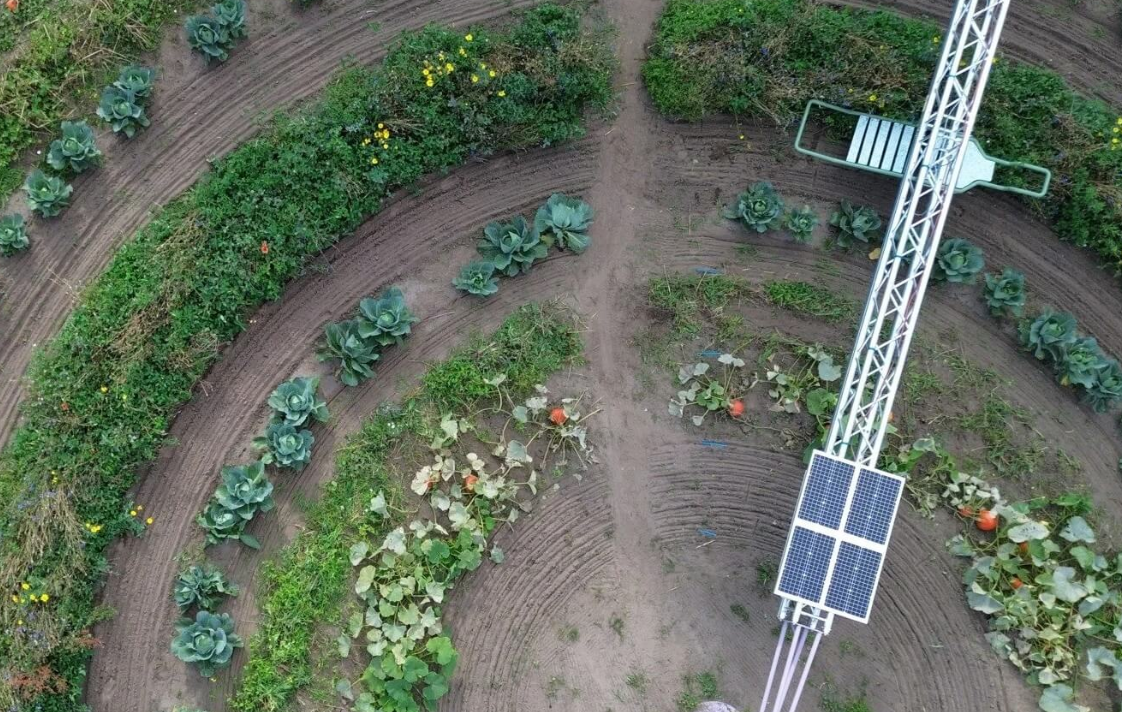
  • Regenerative circling faming with man, AI, robots and solar power

    Regenerative circling faming with man, AI, robots and solar power

    In the next wave of regenerative agriculture, the farm is no longer a grid of efficiency but a living circle—with the human spirit at its core. Instead of replacing the farmer, AI and robotics now orbit like silent companions, extending our hands rather than erasing them. A rotating robotic arm moves through the plot not as a master, but as an assistant, guided by ecological intelligence and human intuition. This is not automation for profit—it’s a return to sacred design, where technology becomes humble, circular, and in service to the soil, the grower, and the wider web of life.

    The post Regenerative circling faming with man, AI, robots and solar power appeared first on Green Prophet.


    In the next wave of regenerative agriculture, the farm is no longer a grid of efficiency but a living circle—with the human spirit at its core. Instead of replacing the farmer, AI and robotics now orbit like silent companions, extending our hands rather than erasing them. A rotating robotic arm moves through the plot not as a master, but as an assistant, guided by ecological intelligence and human intuition. This is not automation for profit—it’s a return to sacred design, where technology becomes humble, circular, and in service to the soil, the grower, and the wider web of life.

    During Covid, when the world lost its bearings and I feared the global food distribution system would snap like a dry twig, I did the only sensible thing a mother could do: I built a garden. Not a Pinterest garden, but a functional, wartime-style victory garden (download the original here), a mashup of raised Middle Eastern circular plant beds with permaculture herbs spiraling from the center, borrowing wisdom from desert farmers and American agricultural resilience manuals from the 1940s. We planted beans, cucumbers, tomatoes, molokhia (it grows faster than hemp), lettuce, zucchinis, melons and more.

    The reward wasn’t just food security — it was witnessing life return. Birds began swooping low to take a peek and eat bugs during the day, chasing the pollinators that came to kiss the flowers. A watermelon I planted was one day the  size of an egg and then ballooned into a full, striped universe almost overnight, as if showing me how quickly life responds when humans step back and design with respect. Life happens!

    Floris Schoonderbeek

    Floris Schoonderbeek

    Now, in a strange and beautiful echo of my inherited Dutch farming ancestry, a Dutch industrial designer, Floris Schoonderbeek, is proposing a new way to farm — in circles, not squares. They call it Circle Farming, an invention that I see it as a technological reverence for something ancient. Farming in circles in the Middle East isn’t new. Look from above and you will see circular crops irrigated in Libyan deserts. 

    Pivot irrigation is used in California and Libya but the scale of farming takes out the “man” in the center

    The Al Khufrah Oasis in southeastern Libya, near the Egyptian border (photo above is from 2004), is one of the country’s largest agricultural developments and a distinct geometric landmark of pivot irrigation is easily spotted by astronauts aboard the International Space Station. Since only about 2 percent of Libya’s land receives enough rainfall for farming, the project relies entirely on fossil water pumped from a deep underground aquifer. In tandem, the Libyan government launched the Great Man-Made River project to transport these groundwater reserves to the coast to support population growth and industrial expansion.

    Today, parts of the system are still functioning, but years of conflict. the death of Gaddafi, and lack of maintenance have reduced its reliability. While water continues to reach some agricultural and urban areas, the original vision of full capacity and expansion has largely stalled.

    circle farming innovation, regenerative agriculture technology, human centered farming design, AI farming robotics, circular agro design future, sustainable robotic agriculture, next gen irrigation AI, farmer and robot collaboration, regenerative farm architecture, circular plot farming AI arm, tech supported agriculture human, modern agro robotics design, future of farming circular systems, agroecology meets technology, precision farming circular layout, man at center agriculture tech, AI powered permaculture circle, robotic irrigation regenerative design, tech for soil healing, circular farming reinvented, sustainable agro robotics harmony, farm technology without replacing farmers

    Circle Farming founder enjoying his work on the farm without breaking his back

    But the Dutch, famous for stubbornly living and growing on land that is supposed to be emerged are updating the instead of plowing rectangles with tractors, a robotic arm is fixed at the center of a 30-meter circle. It moves slowly, like a clock hand made of steel, pulling familiar agricultural tools behind it — for weeding, watering, even harvesting — except now without carving brutal tire tracks through the earth. The land between circles is left untouched — a commons for insects, wildflowers, birds, even humans to linger. Farming becomes a woven pattern instead of an industrial grid.

    Each circular strip holds a different crop, creating a precision-farming mandala that’s both productive and biodiverse. Sensors and AI whisper data back to the farmer — moisture here, pest pressure there — giving advice like an oracle rather than a command chain.

    Workers aren’t expected to bend and break their spines in the fields. Instead, they lie belly-down on suspended beds attached to the rotating arm, gliding over the crops with dignity — hovering like dragonflies as they weed, prune, harvest by hand. It turns farming from grunt labor into something closer to communion with the land.

    This model is being designed for small peri-urban farms, the exact kind of places that struggle to compete with industrial agriculture but carry the soul of food sovereignty. It’s automation not as replacement, but as companion. A bridge for urban people longing for meaningful work, who might rather float over lettuce than sit under fluorescent lights answering emails for a salary that buys them tasteless tomatoes.

    circle farming innovation, regenerative agriculture technology, human centered farming design, AI farming robotics, circular agro design future, sustainable robotic agriculture, next gen irrigation AI, farmer and robot collaboration, regenerative farm architecture, circular plot farming AI arm, tech supported agriculture human, modern agro robotics design, future of farming circular systems, agroecology meets technology, precision farming circular layout, man at center agriculture tech, AI powered permaculture circle, robotic irrigation regenerative design, tech for soil healing, circular farming reinvented, sustainable agro robotics harmony, farm technology without replacing farmers

    This is the new agricultural aesthetic: not tech versus nature, but tech in service to a more intelligent form of nature-culture. Circular design — which ancient farmers, Bedouins, and mothers like me already knew — is returning, this time with robotics and AI strapped in for the ride. What happens when farming becomes beautiful again? When robots don’t dominate, but make room for birds, wildflowers, kids, rest, and wonder?

    Greenhouse farming which allows the farmer to adjust micro-specific conditions to the plant is a market dominated by Dutch and Israeli technology. Will the Dutch own regenerative farming? Given the history of farming and efficiency in both of these countries, it will be technology that will be available to all of humanity.

    Read up on the history of Dutch irrigation farming

    In Israel: Simcha Blass and the perfection of modern drip irrigation in Israel

    ::Circle Farming

    The post Regenerative circling faming with man, AI, robots and solar power appeared first on Green Prophet.

  • Sustainable Eating: How Smarter Grocery Planning Reduces Food Waste

    Sustainable Eating: How Smarter Grocery Planning Reduces Food Waste

    Biohack your food by creating healthy meal plans  Recurring tasks have a way of getting away from you quickly and there’s no task more demanding than grocery planning. However, the prospect of planning out meals can be overwhelming, but the cost of not doing it is steep.  Food waste is an unfortunate reality of modern […]

    The post Sustainable Eating: How Smarter Grocery Planning Reduces Food Waste appeared first on Green Prophet.

    Biohack your food by creating healthy meal plans 

    Recurring tasks have a way of getting away from you quickly and there’s no task more demanding than grocery planning. However, the prospect of planning out meals can be overwhelming, but the cost of not doing it is steep. 

    Food waste is an unfortunate reality of modern convenience and packed schedules, but it’s an unnecessary outcome with lasting impact. Waste costs families hundreds of dollars annually, diverting dollars otherwise used wisely. Learn how to plan meals and grocery shopping strategically to save money and create sustainable food habits for life. 

    1. Purposeful Planning Gives Each Ingredient a Job

    Look at meal planning like you would a game plan — every ingredient plays a role. A bunch of green onions accents a salad one day and brings fried rice together the next. 

    Plot your meal plan to account for the entirety of your food purchase. Items that come pre-packaged may contain more than you need for a dish. Take this into account when you plan and collect a group of dishes using the same key ingredients. 

    Healthy meal kits make this strategy easy as they include the exact amount of everything to make meals. Packaged with pre-measured ingredients reduces food waste and saves time washing, cutting, and measuring. Choose meal kits for easy, delicious meals for stress-free planning and mealtimes where nothing is wasted.  

    2. Multipurpose Ingredients Flex for Real Life

    Sometimes, what you’d planned for dinner just doesn’t sound appealing come mealtimes. Other times, your original plan gets sabotaged by life. That’s why it’s smart to plan meals with multipurpose ingredients that can flex. 

    Shop for ingredients that require only arranging for the busiest of nights. A head of iceberg lends itself to lettuce wraps, a nutrient-dense salad, or extra crunch for a sandwich. 

    Frozen chicken chunks crisp to perfection in an air fryer and work for the whole family. Dunked in dips for kids or tossed into a salad or wrap, frozen chicken can save dinner. 

    3. Post-Shopping Storage Extends Freshness

    There’s no denying that throwing groceries in the fridge and moving on is easier than the alternatives. However, taking the time to properly store your haul makes all the difference for their longevity. 

    Pay attention to social media hacks that promise fresher berries — a quick wash with water and vinegar retains moisture and keeps mushiness at bay. Place herbs in a jar of shallow water and cover them with a new disposable shower cap. This approach retains optimal humidity levels that’ll keep your parsley perky and cilantro crisp. 

    Split packages of chicken into meal-sized portions to make prep easy and avoid package leakage. Trim cuts for your meals while you’re at it, cutting strips for tacos or splitting breasts for chicken Parmesan. Working ahead now will save time throughout the week, dirty fewer dishes, and reduce meal planning stress. 

    4. No-Prep Foods Make Snacking Easy and Fresh

    Reduce the friction between you and your next snack to keep hangry feelings at bay. Toasted nuts, fresh fruit, and cheese sticks are easy snacks and provide quick energy. 

    These and other no-prep options help them get used well before their expiration. Shelf-stable nuts, prepackaged beef sticks, and dried fruit last for months. Monitor shelf-stable and pantry items’ expiration dates and rotate them to avoid spoilage. 

    Wash and cut next-day vegetable snacks while you prepare dinners to maintain crispness. Rinse and store in individual bags for easy access. If you have extra carrots at the end of the week, use them in a salad, soup, or freeze them. 

    5. Stock Freezable Favorites and Eliminate Waste

    Include several freezer-friendly foods in your weekly ingredient list to adjust meal planning on the fly. Peppers, onions, carrots, and celery are key players in many meals and perform well frozen, too. Stash extras after cleaning, cutting, and packaging in freezer-safe storage. 

    Elevate your food’s flavors and even further reduce waste with thoughtful scrap saving. Tops of carrots, ends of onions, and dregs of celery can be bagged and frozen for future use. Simmer these scraps along with other fridge castaways for a flavorful broth the next time you’re prepping for the week. 

    Cooked foods freeze well, too, and can make weeknight meals a cinch. Pulled pork from a weekend barbecue makes incredible tacos, nachos, and even pizza. Freeze extra soup for a comforting meal any time of the week. 

    6. Buy-in From Diners Makes a Difference 

    Don’t meal plan alone — get your fellow diners on board with the plan. Include roommates, your partner, and your kids in the process, too. 

    Review the week ahead and discuss activities, work, school, and the weather to shape the plan. A rainy day might demand a hearty soup while sunshine calls for burgers. Gather everyone’s ideas and give everyone a voice, and a role, in meal planning.

    Kids can be assigned jobs that help them develop skills, too. Writing down the menu and ingredients makes it fun to work on spelling. Learning about cooking brings in math through measurements and ingredient count. 

    When everyone is involved in the plan, preparation, and cleanup, food is more likely to be eaten. You’ll experience less waste, fewer arguments, and happier, healthier eaters. 

    Smart Meal Planning Saves Food, Money, and Time

    An investment in meal planning pays dividends in less than a week, making your return on investment a no-brainer. With a plan for mealtimes, you can dedicate your time, energy, and attention to what matters most. 

    The post Sustainable Eating: How Smarter Grocery Planning Reduces Food Waste appeared first on Green Prophet.

  • The Trauma Keeps Talking—But My Voice Is Now Louder

    The Trauma Keeps Talking—But My Voice Is Now Louder

    “Turn down the volume of your negative inner voice and create a nurturing inner voice to take its place.” ~Beverly Engel

    After the abuse ends, people think the pain ends too. But what no one tells you is that sometimes the loudest voice isn’t the abuser’s anymore—it’s the one that settles inside you.

    It whispers:

    “You’re broken.”

    “You’re used.”

    “You don’t deserve better.”

    And over time, that voice doesn’t just whisper. It becomes the rhythm of your thoughts, the lens through which you see yourself.

    That’s what I mean when I say the trauma keeps talking.

    Living with the Echo

    “Turn down the volume of your negative inner voice and create a nurturing inner voice to take its place.” ~Beverly Engel

    After the abuse ends, people think the pain ends too. But what no one tells you is that sometimes the loudest voice isn’t the abuser’s anymore—it’s the one that settles inside you.

    It whispers:

    “You’re broken.”

    “You’re used.”

    “You don’t deserve better.”

    And over time, that voice doesn’t just whisper. It becomes the rhythm of your thoughts, the lens through which you see yourself.

    That’s what I mean when I say the trauma keeps talking.

    Living with the Echo

    In the months after my assault, I didn’t have words for what I was feeling. I just knew that every choice I made seemed to come from a place of damage.

    I found myself in situations that felt eerily familiar—letting people use me, letting hands roam without question. I wasn’t saying “yes” because I wanted to; I was saying it because a voice inside had already decided I wasn’t worth more.

    And to anyone watching from the outside, it might have looked like I was reckless. But inside, I was just tired. Tired of fighting a voice that seemed louder than mine.

    Why We Stay Stuck

    Trauma has this way of rewriting the script in our heads.

    It convinces us that we’re not the same person anymore, that we’re tainted beyond repair. And because we believe that, we keep choosing situations that prove the voice right.

    It’s not that we want to keep hurting ourselves. It’s that the part of us that knows we deserve better gets buried under layers of pain and self-blame.

    I remember once thinking, “What’s the point of saying no?” I felt like I’d already lost the right to draw boundaries.

    Looking back now, I realize that wasn’t me speaking. That was trauma—still in control.

    The Turning Point

    For me, things didn’t change overnight. There wasn’t a single moment when I woke up healed. But there was a moment when I got tired of losing to that voice.

    I remember looking in the mirror and realizing, “If I keep going like this, the abuse wins forever—even without him here.”

    That realization didn’t silence the trauma, but it gave me a reason to fight back.

    I started doing small, almost invisible things to reclaim myself:

    Saying “no” even when my voice shook.

    Choosing one safe person to tell the truth to.

    Permitting myself to stop—to pause—before walking into another cycle that would hurt me.

    Each of those choices felt impossibly hard at the time. But with every pause, with every “no,” the voice of trauma got quieter.

    Healing Is a Process, Not a Snap

    I used to think healing meant waking up one day and feeling nothing.

    Now I know healing means learning to talk louder than the trauma.

    It means choosing—again and again—to believe a different story about yourself.

    If this is where you are—if the trauma is still talking and you feel powerless to shut it up—I need you to know something:

    You can stop. You can pause. You can turn around.

    Not for anyone else—for you. For your peace. Your sanity. Your healing.

    What I Want You to Remember

    I won’t insult you by saying, “Just snap out of it.” That’s not how this works.

    But I will tell you that one pause, one moment of reclaiming yourself, can change everything.

    It’s not easy, I know. But it’s possible. And it’s worth it.

    You deserve better than pain on repeat. You deserve to be more than what was done to you.

    If you’re reading this and the trauma is still talking, please hear this from someone who’s been there:

    The voice isn’t you. You’re still here. And you’re allowed to fight for a story where the abuse doesn’t win.

    I may not have all the answers, but I know the terrain of this road—the stops, the setbacks, the slow turning around. And I want to walk it with you, one better choice at a time.

    Because healing isn’t out of reach. You just have to start talking louder than the trauma.

    About Ibukun Oluwaseun Adesina

    Ibukun Oluwaseun Adesina is a trauma-informed social worker, coach, and soul-writer who believes that healing can take many forms—from professional guidance to personal reflection and storytelling. Through her movement, Virginia Heals and its youth initiative, SafeNest Teens, she helps others find safety, courage, and self-worth after pain. She’s also the author of How to Heal When You Can’t Talk About It, a guide for silent survivors learning to find their voices again. Connect with her on Facebook or email virginiaheals@gmail.com.

    Get in the conversation! Click here to leave a comment on the site.

  • The God I Lost, the One I Found, and the Faith That Changed Me

    The God I Lost, the One I Found, and the Faith That Changed Me

    “I searched for God and found only myself. I searched for myself and found only God.” ~Rumi

    There’s a particular kind of heartbreak that happens when you realize some of your prayers are going nowhere.

    There’s a painful silence that follows unanswered calls. Yet, despite the ache, I can still feel the pull to pray to the God outside of myself—that old reflex to place faith in something bigger, some invisible force in the sky, who, apparently, can make things happen magically here on Earth.

    But it doesn’t always go that way, does it?

    I prayed my cancer would go …

    “I searched for God and found only myself. I searched for myself and found only God.” ~Rumi

    There’s a particular kind of heartbreak that happens when you realize some of your prayers are going nowhere.

    There’s a painful silence that follows unanswered calls. Yet, despite the ache, I can still feel the pull to pray to the God outside of myself—that old reflex to place faith in something bigger, some invisible force in the sky, who, apparently, can make things happen magically here on Earth.

    But it doesn’t always go that way, does it?

    I prayed my cancer would go away. It didn’t.

    I prayed the world would heal from climate change. It didn’t.

    I prayed my business would make enough to live on. It didn’t.

    I prayed my book would reach thousands. Still hasn’t.

    I prayed for peace in the world. It’s getting worse.

    So, I stopped. Stopped praying. Stopped hoping in that way where my heart is wide open and a little desperate.

    It didn’t feel brave. It felt hollow. But in the silence that followed, something shifted within me. When the noise of asking subsided, a quieter truth emerged.

    For a long time, I thought my discomfort came from out there. From God. From other people. From difficult situations. Blaming something outside myself gave me a sense of control—a story to hold onto. But no matter how convincing that story was, the ache inside remained.

    It took time, but eventually I saw it: the root of my suffering wasn’t external at all. It was internal.

    When I finally stopped waiting for life to bend to my will and turned inward, I came face-to-face with something uncomfortable—my attachment to control.

    What I discovered was a mind conditioned to grasp, to fix, to be right, to judge, to compare, to push. And most of the time, that’s where the struggle began—when reality didn’t match my expectations. I’d get caught in loops of thought, unable to see clearly, tangled in ego and forgetting the essence of my being—my heart.

    The heart is where our whole, compassionate selves live. We feel it. We recognize what Howard Thurman called the sound of the genuine. That’s who we are—at our core.

    So, it’s not that I lost faith entirely. It’s that I relocated it. I remembered the genuine within.

    Now, I have faith that life will unfold as it will, and sometimes, that’s painful. Life doesn’t often match the visions we hold. It burns plans to the ground. It humbles. It disappoints.

    And still, I have faith.

    I have faith in the goodness of the human heart. I have faith that we can hold grief in one hand—the image of the life we imagined—and, with the other, steady ourselves enough to rise and take the next step forward.

    I have faith in our ability to choose compassion over entitlement. To sit with discomfort and still reach for the just response. To place our hand on our chest, close our eyes and choose to respond—not from the head, but from the heart.

    And maybe, just maybe, that’s what God actually is.

    Not some white-bearded man in the sky. Not a distant savior. But the part of us that knows how to return—not to the mind’s spirals, but to the body. To the breath. To the quiet pulse of the heart.

    What if we—all of us, even world leaders—stopped looking to the God outside and, instead, returned to the one within?

    Because the God within doesn’t need to be right. The God within doesn’t dominate or divide. The God within creates peace. Is peace.

    And maybe that’s the kind of faith we need now.

    Because when faith in something outside of us falls away, what’s left?

    We are.

    About Lara Charles

    Lara Charles is an Australian writer exploring the deeper threads of life through thought-provoking personal essays and memoir. Her work has appeared in national and international publications. She is the author of the Substack newsletter Deeper Threads and a teacher on the global cancer support platform Thrivers Ark. Her debut memoir, Joy, Regardless, is a powerful reflection on illness, identity and self-discovery. Discover more about her work at laracharles.com.

    Get in the conversation! Click here to leave a comment on the site.

  • The Grief No One Talks About: How to Heal After Losing a Soulmate Pet

    The Grief No One Talks About: How to Heal After Losing a Soulmate Pet

    “Until one has loved an animal, a part of one’s soul remains unawakened.” ~Anatole France

    When my cat Squiggles died, I didn’t just “lose a pet.” I lost a part of my identity, my greatest source of comfort, and my sense of home.

    Squiggles was the one constant in my life through every milestone, every heartbreak, every version of myself I grew into over the course of two decades. I had her since the moment she was born, and for almost twenty-two years, Squiggles was my constant companion, my emotional support, my soul-kitty.

    But no matter how much I prepared …

    “Until one has loved an animal, a part of one’s soul remains unawakened.” ~Anatole France

    When my cat Squiggles died, I didn’t just “lose a pet.” I lost a part of my identity, my greatest source of comfort, and my sense of home.

    Squiggles was the one constant in my life through every milestone, every heartbreak, every version of myself I grew into over the course of two decades. I had her since the moment she was born, and for almost twenty-two years, Squiggles was my constant companion, my emotional support, my soul-kitty.

    But no matter how much I prepared myself, nothing could soften the blow of saying goodbye and being forced to live without her.

    As a therapist, I tried to apply all of the coping mechanisms I’ve learned over the years. But the human in me wanted to reject them all. I was just too deep in my grief.

    So I turned inward. And over the past two years, I’ve been learning how to live with the loss of my soul-kitty. Not get over it. Or try to forget. But live with it.

    Here are five things that helped me cope with life without her.

    1. I validated the pain of my grief.

    I knew the loss of Squiggles was going to be devastating one day, but knowing it didn’t make it easier. What it did do was help me validate just how deeply it hurt.

    I didn’t try to hide how sad I felt. I cried every day for weeks. I canceled plans. I moved slowly. And instead of shaming myself for how awful I felt, I tended to the pain.

    Even though many people out there might think, “She was just a pet,” to me, she was everything.

    There’s a term for this kind of mourning: disenfranchised grief. It’s when your grief isn’t recognized by society in the same way a human loss might be. That doesn’t mean the grief is less real. It just means others may not understand how impactful the loss is.

    The bond I had with Squiggles was deeper than many human relationships. I’ve heard countless people say the death of their pet hurt more than the death of a relative. I believe them. I felt it.

    So I reminded myself daily: This was one of the most significant relationships in my life. I’m allowed to be this heartbroken.

    2. I tried to find balance.

    As a therapist, I’m well-versed in the idea that “the only way out is through.” But when you’re in the middle of overwhelming grief, feeling your feelings can quickly turn into drowning in them.

    So I did it in small doses. I yearned for her. I cried. I talked to her. I allowed myself to remember.

    And I also gave myself permission to take breaks from my grief when I could.

    In the early weeks, I couldn’t imagine feeling anything other than sorrow. But slowly, I started allowing myself to step back from the pain. I gave myself a night out with friends. I practiced guitar. I gardened. I let myself laugh without feeling guilty about it.

    And here’s the truth of taking breaks: It does not mean you’re moving on. It means you’re doing the best you can to survive.

    Joy and grief can live side by side. One doesn’t cancel out the other.

    3. I stopped saying “should.”

    Grief doesn’t follow logic. Or timelines. Or “shoulds.

    And yet, they still popped up:

    “I should be feeling better by now.”

    “I should get rid of her things.”

    “I should be grateful I had her for so long.”

    At some point, I realized those “shoulds” were self-judgments in disguise. So I started replacing “should” with “could,” or “would like.” Sometimes I just asked, “Who says?”

    Who says I have to move on quickly?

    Who says keeping a box of her things means I’m stuck?

    Who says I’m grieving “too much”?

    Grief is a unique experience for everyone. No one knows how long the acute pain will last. For me, it has been about two years. My grief isn’t as all-consuming, yet I still have days where it hits me like a wave.

    And now, two years later, I cherish those moments when the grief hits. Because it connects me back to Squiggles.

    4. I connected with others who understood.

    One of the most painful things about losing a pet is how isolating it feels. That one being who knows you in and out is no longer there. It feels incredibly lonely.

    Friends didn’t always know what to say. People who had never had a close bond with a pet didn’t understand why I was so shattered.

    Talking to people helped, but only if they really got it. The people who had been through their own soul-pet losses were the ones who I felt most comfortable with. And it helped.

    Eventually, I created an online community where pet lovers could gather after losing a pet. A soft place to land where you don’t have to explain why you’re still crying six months later, or why it hurts more than you expected. People just get it.

    This community has become a huge part of my healing. And I continue to witness the power of connection every time someone shares their story, their pet’s name, or even just their pain.

    5. I used creativity and art to express how I felt.

    In the beginning, the only way I knew how to stay connected to Squiggles was through my sadness. But as time went on, that love started to move through me in different ways.

    I started gardening. Being in nature and witnessing seeds bloom into flowers reminded me of the circle of life and the connectedness of all beings.

    When I really missed Squiggles and didn’t know what to do with myself, I’d express my emotions through poetry. Or draw every detail of her little face, the patterns in her fur, the way her paws tucked under her body. I looked through old photos and let my emotions guide me.

    These small creative acts didn’t fix the grief. But they gave it somewhere to go. They gave me a way to keep loving her and helped me bring new forms of beauty into my life, even in her absence.

    If you’ve lost a soulmate pet, please know that you’re allowed to take all the time in the world that you need to grieve. Our pets are members of our family and a huge part of who we are. The grief you experience is simply the love you have for them, just in a new form now.

    About Paige Rechtman

    Paige Rechtman is a therapist and writer specializing in anxiety and pet loss. She is the author and illustrator of It’s All the Same Foresta poetic tribute to the everlasting bond she shared with her soulmate cat, Squiggles. Paige hosts The Furever Forest, a supportive community for grieving pet parents who are looking for comfort, connection, and creative ways to heal. Learn more at paigerechtman.com or thefureverforest.com, and visit her on Substack here.

    Get in the conversation! Click here to leave a comment on the site.

  • The Weight of Regrets and the Choice to Live Better

    The Weight of Regrets and the Choice to Live Better

    “It is very important for every human being to forgive herself or himself because if you live, you will make mistakes—it is inevitable. But once you do and you see the mistake, then you forgive yourself and say, ‘Well, if I’d known better I’d have done better.’” ~Maya Angelou

    I’ve lived long enough to know the difference between a mistake and a tragedy. Some of what I carry falls in between—moments I wish I could redo, things I said or didn’t say, relationships I mishandled, and opportunities I let slip through my fingers. They don’t scream at me every day, …

    “It is very important for every human being to forgive herself or himself because if you live, you will make mistakes—it is inevitable. But once you do and you see the mistake, then you forgive yourself and say, ‘Well, if I’d known better I’d have done better.’” ~Maya Angelou

    I’ve lived long enough to know the difference between a mistake and a tragedy. Some of what I carry falls in between—moments I wish I could redo, things I said or didn’t say, relationships I mishandled, and opportunities I let slip through my fingers. They don’t scream at me every day, but they visit me quietly. The memory of my mistakes is like a second shadow—one that doesn’t leave when the light changes.

    I’ve done a lot of good in my life. I’ve built meaningful work, taught students with heart, and showed up for people when it counted. I’ve loved deeply, even if clumsily. I’ve also failed—sometimes badly. And it’s the memory of those failures, more than the wins, that lingers.

    The Woman on the Highway, and Others I Left Behind

    I remember the woman on the side of a Mexican highway after our car ran off the road. She touched my forehead and looked into me with a deep compassion and mystical kindness—wordlessly holding space for what had just happened. I never thanked her. I left without saying goodbye, and I still think about her. I wonder if she knew how much that moment meant. I wish I could tell her now.

    That moment wasn’t an isolated one. There have been many like her—friends, lovers, colleagues—people I walked away from too soon or too late. Some I hurt with silence. Others I lost because I couldn’t admit I was wrong. I see now that my pride got in the way. So did fear. So did the misguided belief that being clever or bold or accomplished could make up for emotional messiness.

    It didn’t.

    What I Thought Living Fully Meant

    I used to chase experience and pleasure the way Zorba the Greek did—believing that living fully meant taking what life offered, especially when love or passion knocked. Zorba said the worst sin is to reject a woman when she wants you, because you’ll never stop wondering what could’ve been. There’s a strange truth in that, even if it doesn’t fit with modern ideas of love and consent and mutuality.

    But I also know now: not every yes leads to peace. Sometimes you dive in and still end up alone, or ashamed, or with someone else’s pain on your hands.

    And here’s the truth—I even failed at being a Zorba purist.

    I missed a lot of messages and opportunities, not just because of bad timing or external circumstances, but because of my own blindness. Fear, shyness, and a deep lack of self-confidence got in the way more times than I can count. In that sense, yes, it’s a kind of failure. I didn’t always seize the moment. I didn’t always say yes. Sometimes I watched the boat leave without me.

    But here’s what I’ve learned: sometimes not getting what you wished for is the blessing. I missed out on things that might have done more harm than good. And while I’ll never know for sure, I’ve come to trust the ambiguity.

    My appetite for imagined memories—for playing out what might have been—can still guide me in unhealthy ways. It’s easy to get lost in nostalgia for possibilities that never were. But that too has become a teacher. I’m learning not to be burdened by those alternate timelines. I’m learning to live here, now, in this life—the real one.

    I Will Not Be a Victim

    These days, people talk a lot about not being a victim—and that’s become something of a mantra for me. Not in a tough, self-righteous way, but as a quiet practice. I don’t want to turn my past into a story where I’m the hero or the helpless. I want to see it clearly.

    I’ve struggled in so many ways—emotionally, financially, spiritually. I’ve suffered through losses I couldn’t control and some I helped create. But I have to constantly stay mindful of my point of view. How I frame my life matters. Am I seeing it through the lens of powerlessness? Or am I recognizing my part, owning it, and doing what I can from here?

    Finding that balance isn’t easy. I fall out of it regularly. But I return to it again and again: I will not be a victim. I have the power to respond—not perfectly, but consciously.

    Learning to Live With, Not Against, My Mistakes

    I carry those memories not because I want to but because I’ve learned that regret has something to teach me. It’s not just a burden. It’s a mirror. And if I look at it with clear eyes, it shows me who I’ve become.

    I’ve also learned that some mistakes don’t go away. They live in your bones. People say, “Let go of the past,” and I believe that’s a worthy aim. It’s consistent with the Four Noble Truths in Buddhism: suffering comes from clinging, and peace comes from release. But maybe some memories are meant to be carried—not as punishment, but as reminders.

    Despite my tendency toward impostor syndrome—the whisper that I’m not wise enough, not healed enough, not even worthy of writing this—I know this much: I am learning to live with my mistakes rather than against them.

    I no longer believe healing means erasing the past. I think it means letting it breathe. Letting it soften. Letting it speak—not to shame you, but to show you where the heart finally opened.

    Sometimes I wonder—how could I have missed so much?

    I don’t mean that I lacked intelligence. I mean I was often distracted. Caught up in my own ego, my longings, my fears. Sometimes I look back and shake my head, wondering how I didn’t see what was right in front of me. Not just once, but again and again.

    There’s that old saying: Youth is wasted on the young. Maybe there’s a sharper version of that—Youth is wasted on the non-mindful. I see now how many years I spent reacting instead of reflecting, chasing instead of listening, trying to prove something instead of just being present.

    And yet, maybe this is how it works. Maybe it’s necessary to go through the valley of mistakes before we can rise into any meaningful self-awareness. Maybe the errors—the cringeworthy ones, the silent ones, the ones we’ll never fully explain—are the curriculum.

    Still, I have doubts.

    Is mindful growth real? Or are we always just half-blind and half-deaf, hoping we’ve finally gotten it, only to be proven wrong again later?

    Sometimes I think I’ve evolved. Other times I realize I’m repeating the same old pattern, just in more subtle ways. And yet… there’s something different now. A deeper pause. A longer breath. A willingness to admit I don’t know, and to stay in the discomfort.

    Maybe that’s what growth really looks like—not certainty, but humility.

    No, I wasn’t stupid. I was learning. I still am.

    When the Weight Is Too Much

    And then, just when I think I’ve made peace with the past, something happens that shakes me again.

    This morning, I learned that someone I’ve known since high school—an artist and surfer, quiet and soulful—jumped off a cliff to his death.

    It was the same spot where he first learned to surf, first fell in love with the sea, maybe even first became himself. A place filled with memory. And maybe, pain. Maybe too much.

    We weren’t especially close, but I respected him. His art. His quiet way of being in the world. And now he’s gone.

    I don’t pretend to know what he was carrying. But I do know this: memory is powerful. Returning to it can heal us, or it can crush us. Sometimes both.

    So I write this with no judgment. Only sadness. And the reminder that what we carry matters. That being kind—to others and to ourselves—is no small thing. That sometimes the strongest thing we can do is stay.

    What I Know Now

    So what have I learned?

    I’ve learned that tenderness outlasts thrill. That presence matters more than persuasion. That a goodbye spoken with kindness is better than a door closed in silence. I’ve learned that some apologies come too late for anyone else to hear—but that doesn’t mean you shouldn’t say them.

    I’ve learned that showing up—however imperfectly—is always better than disappearing.

    And I’ve learned that even now, even at this point in life, I can still choose how I respond. I can meet the past with compassion. I can meet this moment with clarity.

    To the ones I left too soon… to the people I failed to thank, or hear, or stand beside… to the ones I loved imperfectly but truly… here is what I can say:

    I see it now. I wish I’d done better. I’m sorry. I’m still learning.

    And I’m still here—still trying, still growing, still becoming the person I hope to be.

    And if you’re reading this, carrying your own memories, your own regrets, know this: you’re not alone. You don’t have to be perfect. You just have to keep showing up. That’s what I’m trying to do, too.

    About Tony Collins

    Tony Collins is a documentary filmmaker, educator, and writer whose work explores creativity, caregiving, and personal growth. He is the author of: Windows to the Sea—a moving collection of essays on love, loss, and presence. Creative Scholarship—a guide for educators and artists rethinking how creative work is valued. Tony writes to reflect on what matters—and to help others feel less alone.

    Get in the conversation! Click here to leave a comment on the site.

  • Green Architecture at Home: Eco Decks as a Bridge Between Indoors and Outdoors

    Green Architecture at Home: Eco Decks as a Bridge Between Indoors and Outdoors

    A lot of people think that all wood is equal, but this is not the case. Most of the time, decking materials come from irresponsible logging. This is not natural and sustainable at all. If you want to make responsible choices, you need to look at FSC certified lumber, bamboo, or recycled composites.

    The post Green Architecture at Home: Eco Decks as a Bridge Between Indoors and Outdoors appeared first on Green Prophet.

    Eco decks

    Green living is more than just choosing metal straws over plastic ones. For your home, you need to make sure that you start with the places where your life meets the outdoors. For instance, you can start with investing in an eco deck. Eco decks are declarations of intent in helping the environment. Plus, they are very practical.

    With the right materials and design, you will be able to create a cozy and functional outdoor environment. With retailers such as The Deck Store who are making sustainable options available, you will be able to achieve an eco-friendly outdoor area for you, your family, and guests who visit.

    Indoors, Outdoors, and the Space In Between

    In warm regions, you will notice a pattern to homes: walls sealed tight, closed windows, and air conditioning that is always turned on. This has always been the norm until eco decks broke the pattern.

    This is because eco decks create a shaded and breathable middle ground. The space between indoors and outdoors is turned into a comfort zone where natural breezes and filtered sunlight do all the work that machines normally do.

    With a deck that catches crosswinds at the right angle, you no longer need to rely on mechanical cooling. Plus, you also allow your house to breathe. This is not complicated technology at all. It is design that cooperates with nature fully. With a deck that is built with sustainability in mind, things like this are easy to achieve.

    Materials With a Conscience

    A lot of people think that all wood is equal, but this is not the case. Most of the time, decking materials come from irresponsible logging. This is not natural and sustainable at all. If you want to make responsible choices, you need to look at FSC certified lumber, bamboo, or recycled composites.

    Composite decking is all about blending reclaimed wood fibers with recycled plastic. Instead of becoming waste, you create a durable surface that lasts for years. Bamboo grows at a very quick rate, and this is something that hardwoods can’t compete with. Since bamboo is one of the most renewable materials you can use, you can choose this kind of material without compromising strength, durability, and ecological awareness.

    Longevity always matters. Make sure that you build decks that last decades. This way, you spare our environment from unnecessary extraction.

    Cooling by Design

    Cooling consumes nearly ten percent of global electricity. The International Energy Agency projects that this demand could triple by 2050 if design habits do not change. That is an unsustainable trajectory.

    Eco decks offer a way forward. A properly oriented deck provides shade to glass walls, softens heat before it enters a home, and channels airflow where it is needed most. Instead of treating summer heat as an endless battle, you create a structure that works with the environment to regulate temperature. It is passive cooling that pays off in comfort and in lower energy bills.

    The Bottom Line

    An eco deck is not a passing trend. It is a step toward reshaping how your home interacts with the world around it. By choosing sustainable materials and integrating design that maximizes airflow, you cut back on artificial cooling and create a space that feels alive.

    The resources exist. Companies dedicated to sustainability have already put bamboo, recycled composites, and certified wood into the market. The decision is no longer about what is possible. It is about what you choose.

    Eco decks are not about following fashion. They are about aligning your home with a future that demands smarter, greener, and more resilient living. The sooner they become part of how we build, the sooner homes can stop resisting nature and start thriving with it.

    The post Green Architecture at Home: Eco Decks as a Bridge Between Indoors and Outdoors appeared first on Green Prophet.

  • Images of Assomption Island development show extensive beach development

    Images of Assomption Island development show extensive beach development

    Researchers who have studied the island for decades describe it as a key ecological buffer for Aldabra, helping to protect the atoll from pollution, invasive species, and light disturbance. If Assomption’s natural systems collapse, they warn, Aldabra could be next.

    The post Images of Assomption Island development show extensive beach development appeared first on Green Prophet.

    Home heating and insulation. Sustainability is really just about pipes and pumps

    Home heating and insulation. Sustainability is really just about pipes and pumps

    Professionals of heating and cooling systems have continually improved the designs of these systems to meet the worldwide standards of carbon-neutral infrastructure and greener energy solutions. At the core of their transformations lie insulated heating pipes. These pipes were initially viewed as a mere means of transporting hot water from one point to another, but today, they have been improved to achieve sustainable energy networks. 

    Historically, pipes were installed to connect plants or boilers with end users, with little consideration for monitoring long-term heat loss. Additionally, older copper or steel pipes needed to be insulated when installing the designs. This not only overloaded the piping system but also could not keep the water temperatures optimum over the entire length of the piping system.

    However, the turning point for heating and cooling systems came when pre-insulated pipe technology and PE-Xa, a durable and flexible polymer, were introduced. These products not only provide a means of transportation of hot water, but they also have smart ready components that professionals can integrate with sensors to measure flow, pressure, and temperature in real time. 

    In this article, we explore how insulated heating pipes are revolutionizing energy networks by integrating smart controls, improving professional applications, and aligning with sustainability goals.

    Smart Integrations in Insulated Heating Pipes 

    floating home

    Floating homes with the latest eco gear

    Insulated heating pipes are no longer about heat loss reduction only. They now use smart technologies that enhance sustainability, monitoring, and efficiency. These technologies include: 

    • Sensors and digital monitoring

    The addition of digital layers and sensors to insulated pipes is one of the most crucial transformations that have promoted sustainable energy. Competent professionals now embed monitoring equipment around or into the pre-insulated pipe, allowing operators to gain real-time performance, temperature, and flow visibility throughout the system.

    With the help of these systems, operators can carry out predictive maintenance where inefficiencies or small leaks arise. This helps prevent arising issues from compromising the whole system while minimizing system downtime.

    • IoT and Smart Energy Networks 

    The Internet of Things (IoT) is reshaping the interaction of heating and cooling systems. They have transformed insulated heating pipes that were once considered static infrastructure into dynamic data points that can be monitored from smart energy grids. 

    Operators of these systems can easily use digital controls to adjust flow, reroute heating water during sectional maintenance, and match supply demand. This ensures end users and providers experience the ideal balance of energy savings and comfort. 

    • Integration with renewable sources 

    Smart integration allows professionals to connect insulated heating systems to solar thermal or biomass heating. These renewable energy sources provide a fluctuating energy supply and thus require advanced pipe products to keep a stable flow and minimize heat loss. Moreover, the use of smart controls allows operators to ensure that connections used in renewable sources align fully with system demands, thus promoting a smooth transition to greener energy. 

    Sustainable Applications of Smart Integrated Insulated Pipes  

    Modern infrastructure relies on advanced insulated heating pipes for professional use, particularly in district heating and large-scale commercial projects. This is because the smart integrated insulated pipes ensure reliability and sustainability across diverse professional applications. These applications include: 

    • District heating and cooling systems 

    In most urban centers, heating and cooling systems have been made flagship examples of low-carbon infrastructure within districts. These systems transport hot and chilled water through insulated heating pipe networks across neighborhoods while minimizing thermal losses. 

    The smart sensors and meters connected along the pipe network enable operators to ensure the temperatures stay within the limits designed. They also ensure the pumping energy is optimal and the balance between demand and supply is met, hence preventing unnecessary waste. 

    • Commercial and residential house connections

    At the building or house level, insulated pipes are critical in connecting the main distribution network to the end users. These modern insulated pipes are flexible, making it easy for contractors to lay them in complex layouts and joints without compromising efficiency. For example, flexible PE-Xa designs allow for longer continuous runs, thus minimizing weak points and improving flow. 

    • Industrial energy systems 

    Beyond basic heating supply, smart integrated insulated pipes are increasingly used in steam distribution, process heating, and chemical manufacturing. These processes require stable thermal conditions for both safety and product quality. For example, pharmaceutical industries use temperature-restricted conditions to preserve fragile compounds and food processing plants count on accurate regulation of heat to improve their hygienic processes.

    Heavy industries such as steel manufacturing or refineries also rely on insulated pipes equipped with leak sensors, which serve in reducing energy wastage and preventing downtime and disastrous failures. This leads to a decrease in emissions, which contributes to decarbonization around the world.

    Sustainable Benefits of Smart Insulated Pipes 

    Since professionals began integrating insulated pipes with intelligent monitoring technology, they have created a powerful and sustainable option for heating and cooling. The purpose of these pipe networks is to reduce waste, achieve world goals set in relation to sustainability and increase performance. They support efficiency and sustainability in industries and cities.

    Some of the sustainable benefits of smart insulated pipes include: 

    • Energy efficient and carbon reduction

    Insulated heating pipes that are integrated with smart technology help to lower the total energy needed for heating or cooling. This perfectly aligns with governmental sustainability goals, particularly for cities aiming to achieve net-zero emissions. 

    • Long-term economic value 

    Sustainability not only serves environmental purposes but also has economic impacts. For example, smart insulated pipes help to reduce the need for maintenance. They also prolong system lifespan leading  to reduced operational expenses in the long-run. This power mix of efficiency and savings provides significant long-term business, industrial and municipal value.

    • Flexibility of system designs

    Due to the use of cross-linked PE-Xa insulated pipes, professionals can easily adapt these pipes into new system designs. Their flexible structures help to ensure that overall heating and cooling systems remain sustainable for decades. Furthermore, they provide smooth flow and return cycle even when new infrastructures are introduced, ensuring long-term reliability and sustainability. 

    Conclusion 

    The modern smart insulated heating pipe has shifted from being a passive tool used for carrying heating water to becoming a revolutionary product that aims at achieving sustainability. By using pre-insulated pipes as well as smart monitoring systems, experts have developed sustainable energy networks that offer optimum flow and low heat loss.

    Going forward professionals can incorporate insulated heating pipes with AI-controlled energy operations, hybrid renewable energy and digital twins to make them sustainable and responsive to future energy demands.

    The post Smart Integration of an Insulated Heating Pipe for Sustainability appeared first on Green Prophet.