Blog

  • Shooting Northern lights? Here are the best camera settings

    Shooting Northern lights? Here are the best camera settings

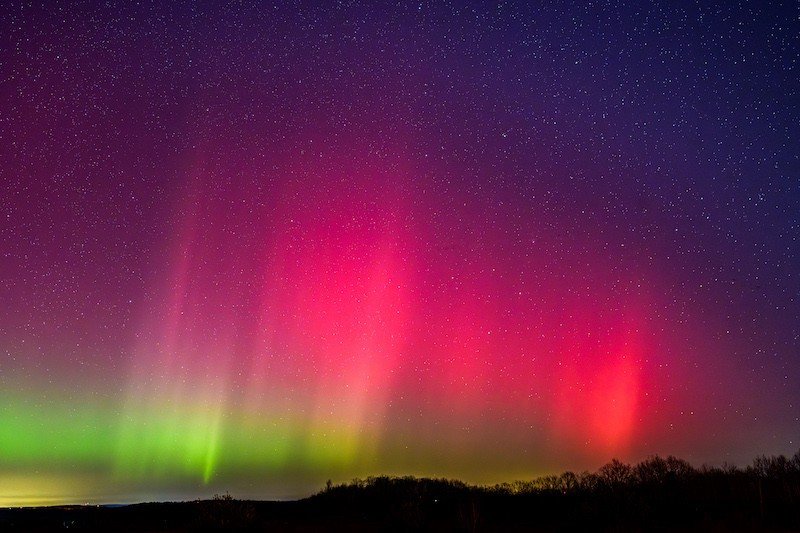
    Want to shoot northern lights? Your friends are posting their best Northern Lights pics on Facebook and Instagram, and you want to try it too. How can you get the best shot on a camera that isn’t a cell phone? Capturing a strong photograph of the Northern Lights depends on using the right equipment, settings […]

    The post Shooting Northern lights? Here are the best camera settings appeared first on Green Prophet.

    Want to shoot northern lights?

    Your friends are posting their best Northern Lights pics on Facebook and Instagram, and you want to try it too. How can you get the best shot on a camera that isn’t a cell phone?

    Capturing a strong photograph of the Northern Lights depends on using the right equipment, settings and technique, and on adapting to changing light and movement in the sky. A full-frame digital camera mounted on a tripod offers the best results because it can collect more light with lower noise during long exposures. Jessica Fridrich uses a Nikon Z7 for her aurora work.

    “I must say that, until recently, I have always considered the Northern Lights to be a phenomenon that is only visible from polar regions. Last year, I realized that I had been missing out on a lot of fun.”

    What settings does she use? She typically sets the white balance to 4000K and exposes for about six seconds at ISO 1600 to 4000 with an f/2.8 lens. These choices come from practical considerations: long exposures and relatively high ISO values allow the sensor to gather enough faint light from fast-changing auroral structures, while an aperture of f/2.8 lets in more light during each exposure.

    Environmental conditions change the settings. When the Moon is out or when there is light pollution, the ISO should be reduced so the sky does not overexpose. If the aurora begins to move quickly, the exposure needs to be shortened to avoid motion blur in the structures. In that case, increasing the ISO compensates for the reduced exposure time; Fridrich shortens the exposure to four seconds or even two seconds when needed. Some auroral displays change shape rapidly, so adapting exposure length in real time is important.

    Correct focus is essential. Autofocus is unreliable in darkness, so the camera must be switched to manual focus. The best way to achieve sharpness is to focus on a bright star. This ensures that both the sky and the auroral structures will appear crisp. Lenses with large apertures, meaning low f-stop values, work particularly well for night photography because they allow more light into the camera. Fridrich says she often uses a 24–70 mm f/2.8 lens, keeping it wide open. The zoom capability helps capture specific details within the display. For exceptionally large or bright auroras, especially those that stretch overhead, a wide-angle lens is preferred because it can capture the full extent of the scene.

    Moisture is another practical concern. Dew often condenses on lenses during long sessions outdoors, so a simple lens cloth is important to keep the glass clear.

    Phones can also record auroras. Using night mode is generally sufficient, as modern phones automatically lengthen exposure time and increase sensitivity in low light. For both cameras and phones, saving images in RAW or another uncompressed format provides more flexibility for later editing, though JPEGs are acceptable for those who do not plan to process their images.

    Sites like Space Weather can help you find the right nights

    The post Shooting Northern lights? Here are the best camera settings appeared first on Green Prophet.
  • How to Calm Anxiety That’s Rooted in Childhood Wounds

    How to Calm Anxiety That’s Rooted in Childhood Wounds

    “Anxiety is a response to a nervous system that learned early on it had to protect itself.” ~Dr. Hilary Jacobs Hendel

    Anxiety shaped much of my life—how I showed up, how I held myself back, and how I connected with others. For years, I didn’t even know what it was. I just knew the pounding heart, the tight chest, the trembling hands. I knew the shame that followed every “failure,” big or small, and the fear I would never be enough.

    For a long time, I thought I was the problem. But anxiety isn’t a moral failing. It’s a part …

    “The most beautiful things in the world cannot be seen… they must be felt with the heart.” ~Helen Keller

    I didn’t want to admit it—not to myself, not to anyone. But I am slowly going blind.

    That truth is difficult to write, harder still to live. I’m seventy years old. I’ve survived war zones, illness, caregiving, and creative risks. I’ve worked as a documentary filmmaker, teacher, and mentor. But this—this quiet, gradual vanishing of sight—feels like the loneliest struggle of all.

    I have moderate to advanced macular degeneration in both eyes. My right eye is nearly gone, and my left is fading. Every two weeks, I receive injections to try to preserve what vision remains. It’s a routine I now live with—and one I dread.

    Living in a Vision-Centric World

    We live in a world that privileges sight above all other senses.

    From billboards to smartphones, from flashy design to social cues, vision is the dominant sense in American culture. If you can’t see clearly, you fall behind. You’re overlooked. The world stops making space for you.

    Is one sense truly more valuable than another? Philosophically, no. But socially, yes. In this culture, blindness is feared, pitied, or ignored—not understood. And so are most disabilities.

    Accessibility is often an afterthought. Accommodation, a burden. To live in a disabled body in this world is to be reminded—again and again—that your needs are inconvenient.

    I think of people in other countries—millions without access to care or even diagnosis. I thank the deities, ancestors, and forces of compassion that I don’t have something worse. And I remind myself: as painful as this is, I am lucky.

    But it is still bleak and painful to coexist with the physical world when it no longer sees you clearly—and when you can no longer see it.

    How a Filmmaker Faces Blindness

    As my sight fades, one question haunts me: How can I be a filmmaker, writer, and teacher without the eyes I once depended on?

    I often think of Beethoven. He lost his hearing gradually, as I’m losing my sight. A composer who could no longer hear—but still created. Still transmitted music. Still found beauty in silence.

    I understand his despair—and his devotion. No, I’m not Beethoven. But I am someone whose life has been shaped by visual storytelling. And now I must learn to shape it by feel, by memory, by trust.

    I rely on accessibility tools. I listen to every word I write. I use audio cues, screen readers, and my own internal voice. I still write in flow when I can—but more slowly, word by word. I revise by sound. I rebuild by sense. I write proprioceptively—feeling the shape of a sentence in my fingers and breath before it lands on the screen.

    It’s not efficient. But it’s alive. And in some ways, it’s more honest than before.

    Try ordering groceries with low vision. Tiny gray text on a white background. Menus with no labels. Buttons you can’t find. After ten minutes, I give up—not just on the website, but on dinner, on the day.

    This is what disability looks like in the digital age: Not darkness, but exclusion. Not silence, but indifference.

    Even with tools, even with technology, it’s exhausting. The internet—a space with so much potential to empower—too often becomes a maze for those who can’t see clearly. It is bleak to live in a world that offers solutions in theory, but not in practice.

    I still teach. I still mentor. But the way I teach has changed.

    I no longer rely on visual feedback. I ask students to describe their work aloud. I listen closely—for meaning, for emotion, for clarity of purpose. I guide not by looking, but by sensing.

    This isn’t less than—it’s different. Sometimes richer. Teaching has become more relational, more intentional. Not about being the expert, but about being present.

    And still, I miss what I had. Every task takes more time. Every email is a mountain. But I carry on—not out of stubbornness, but because this is who I am. A teacher. A creator. A witness.

    Buddhism, Impermanence, and Grief

    So where do I put this pain?

    Buddhism helps. It teaches that all forms are impermanent. Sight fades. Bodies change. Clinging brings suffering. But letting go—softly, attentively—can bring peace.

    That doesn’t mean I bypass grief. I live with it. I breathe with it.

    There’s a Zen story of a man who lost an arm. Someone asked him how he was coping. He replied, “It is as if I lost a jewel. But the moon still shines.”

    I think of that often.

    I have lost a jewel. But I still see the moon. Sometimes not with my eyes, but with memory, with feeling, with breath.

    The Wisdom of Slowness

    My writing is slow now. Not because I’ve lost my voice, but because I must hear it differently.

    I still experience flow—but not in the old way. I write word by word. Then I listen. Then I rewrite. I move like someone walking across a dark room, hands outstretched—not afraid, but attentive.

    This is how I create now. Deliberately. Tenderly. With presence.

    And in this slow, difficult process, I’ve found something unexpected: a deeper connection to my own language. A deeper longing to make others feel something true.

    Even as I fade from the visual world, I am finding a new way to see.

    What I Still Offer

    If there’s one thing I can offer—through blindness, grief, and slowness—it’s this: We don’t lose ourselves when we lose abilities or roles. We’re not disappearing. We’re still here. Just doing things differently—more slowly, more attentively, and perhaps with a deeper sense of meaning.

    One day, I may not be able to see the screen at all. But I will still be a writer. Still be a teacher. Still be someone who sees, in the ways that matter most.

    Even if the light goes out in my eyes, it does not have to go out in my voice.

    And if you’re reading this, then the effort was worth it.

    About Tony Collins

    Tony Collins, EdD, MFA, is a writer, documentary filmmaker, and educator whose work explores presence, creativity, and meaning in everyday life. His essays blend storytelling and reflection in the style of creative nonfiction, drawing on experiences from filmmaking, travel, and caregiving. He is the author of Creative Scholarship: Rethinking Evaluation in Film and New Media Windows to the Sea: Collected Writings. You can read more of his essays and reflections on his Substack at tonycollins.substack.com.

    Get in the conversation! Click here to leave a comment on the site.

  • What I See Clearly Now That I Can’t See Clearly

    What I See Clearly Now That I Can’t See Clearly

    “The most beautiful things in the world cannot be seen… they must be felt with the heart.” ~Helen Keller

    I didn’t want to admit it—not to myself, not to anyone. But I am slowly going blind.

    That truth is difficult to write, harder still to live. I’m seventy years old. I’ve survived war zones, illness, caregiving, and creative risks. I’ve worked as a documentary filmmaker, teacher, and mentor. But this—this quiet, gradual vanishing of sight—feels like the loneliest struggle of all.

    I have moderate to advanced macular degeneration in both eyes. My right eye is nearly gone, and my …

    “The most beautiful things in the world cannot be seen… they must be felt with the heart.” ~Helen Keller

    I didn’t want to admit it—not to myself, not to anyone. But I am slowly going blind.

    That truth is difficult to write, harder still to live. I’m seventy years old. I’ve survived war zones, illness, caregiving, and creative risks. I’ve worked as a documentary filmmaker, teacher, and mentor. But this—this quiet, gradual vanishing of sight—feels like the loneliest struggle of all.

    I have moderate to advanced macular degeneration in both eyes. My right eye is nearly gone, and my left is fading. Every two weeks, I receive injections to try to preserve what vision remains. It’s a routine I now live with—and one I dread.

    Living in a Vision-Centric World

    We live in a world that privileges sight above all other senses.

    From billboards to smartphones, from flashy design to social cues, vision is the dominant sense in American culture. If you can’t see clearly, you fall behind. You’re overlooked. The world stops making space for you.

    Is one sense truly more valuable than another? Philosophically, no. But socially, yes. In this culture, blindness is feared, pitied, or ignored—not understood. And so are most disabilities.

    Accessibility is often an afterthought. Accommodation, a burden. To live in a disabled body in this world is to be reminded—again and again—that your needs are inconvenient.

    I think of people in other countries—millions without access to care or even diagnosis. I thank the deities, ancestors, and forces of compassion that I don’t have something worse. And I remind myself: as painful as this is, I am lucky.

    But it is still bleak and painful to coexist with the physical world when it no longer sees you clearly—and when you can no longer see it.

    How a Filmmaker Faces Blindness

    As my sight fades, one question haunts me: How can I be a filmmaker, writer, and teacher without the eyes I once depended on?

    I often think of Beethoven. He lost his hearing gradually, as I’m losing my sight. A composer who could no longer hear—but still created. Still transmitted music. Still found beauty in silence.

    I understand his despair—and his devotion. No, I’m not Beethoven. But I am someone whose life has been shaped by visual storytelling. And now I must learn to shape it by feel, by memory, by trust.

    I rely on accessibility tools. I listen to every word I write. I use audio cues, screen readers, and my own internal voice. I still write in flow when I can—but more slowly, word by word. I revise by sound. I rebuild by sense. I write proprioceptively—feeling the shape of a sentence in my fingers and breath before it lands on the screen.

    It’s not efficient. But it’s alive. And in some ways, it’s more honest than before.

    Try ordering groceries with low vision. Tiny gray text on a white background. Menus with no labels. Buttons you can’t find. After ten minutes, I give up—not just on the website, but on dinner, on the day.

    This is what disability looks like in the digital age: Not darkness, but exclusion. Not silence, but indifference.

    Even with tools, even with technology, it’s exhausting. The internet—a space with so much potential to empower—too often becomes a maze for those who can’t see clearly. It is bleak to live in a world that offers solutions in theory, but not in practice.

    I still teach. I still mentor. But the way I teach has changed.

    I no longer rely on visual feedback. I ask students to describe their work aloud. I listen closely—for meaning, for emotion, for clarity of purpose. I guide not by looking, but by sensing.

    This isn’t less than—it’s different. Sometimes richer. Teaching has become more relational, more intentional. Not about being the expert, but about being present.

    And still, I miss what I had. Every task takes more time. Every email is a mountain. But I carry on—not out of stubbornness, but because this is who I am. A teacher. A creator. A witness.

    Buddhism, Impermanence, and Grief

    So where do I put this pain?

    Buddhism helps. It teaches that all forms are impermanent. Sight fades. Bodies change. Clinging brings suffering. But letting go—softly, attentively—can bring peace.

    That doesn’t mean I bypass grief. I live with it. I breathe with it.

    There’s a Zen story of a man who lost an arm. Someone asked him how he was coping. He replied, “It is as if I lost a jewel. But the moon still shines.”

    I think of that often.

    I have lost a jewel. But I still see the moon. Sometimes not with my eyes, but with memory, with feeling, with breath.

    The Wisdom of Slowness

    My writing is slow now. Not because I’ve lost my voice, but because I must hear it differently.

    I still experience flow—but not in the old way. I write word by word. Then I listen. Then I rewrite. I move like someone walking across a dark room, hands outstretched—not afraid, but attentive.

    This is how I create now. Deliberately. Tenderly. With presence.

    And in this slow, difficult process, I’ve found something unexpected: a deeper connection to my own language. A deeper longing to make others feel something true.

    Even as I fade from the visual world, I am finding a new way to see.

    What I Still Offer

    If there’s one thing I can offer—through blindness, grief, and slowness—it’s this: We don’t lose ourselves when we lose abilities or roles. We’re not disappearing. We’re still here. Just doing things differently—more slowly, more attentively, and perhaps with a deeper sense of meaning.

    One day, I may not be able to see the screen at all. But I will still be a writer. Still be a teacher. Still be someone who sees, in the ways that matter most.

    Even if the light goes out in my eyes, it does not have to go out in my voice.

    And if you’re reading this, then the effort was worth it.

    About Tony Collins

    Tony Collins, EdD, MFA, is a writer, documentary filmmaker, and educator whose work explores presence, creativity, and meaning in everyday life. His essays blend storytelling and reflection in the style of creative nonfiction, drawing on experiences from filmmaking, travel, and caregiving. He is the author of Creative Scholarship: Rethinking Evaluation in Film and New Media Windows to the Sea: Collected Writings. You can read more of his essays and reflections on his Substack at tonycollins.substack.com.

    Get in the conversation! Click here to leave a comment on the site.

  • Chicken and beef plumping. Are You Paying For Meat, Or For Water?

    Chicken and beef plumping. Are You Paying For Meat, Or For Water?

    Even meat labeled organic may contain injected saline, because FSIS lists salt and water as organic. The FSIS allows selling injected meat as “natural” and “fresh” unless the added solution changes the product’s nature in ways that require different labeling. If you want to make absolutely sure that product is free of added salt and water, look for a statement on the label reading “no artificial ingredients,” “minimally processed,” or similar.

    The post Chicken and beef plumping. Are You Paying For Meat, Or For Water? appeared first on Green Prophet.

    Rachel Rose Jackson

    Rachel Rose Jackson

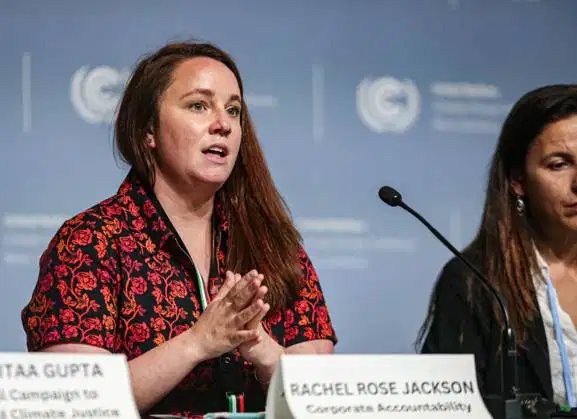
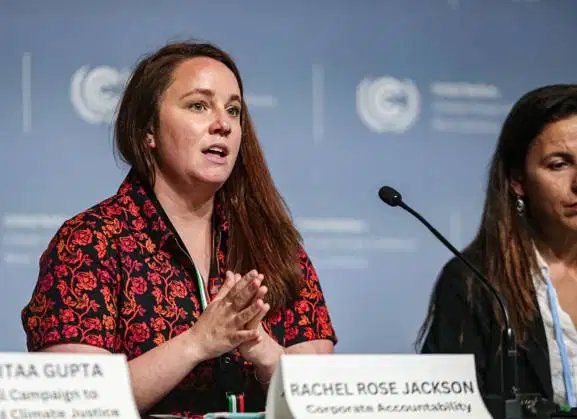
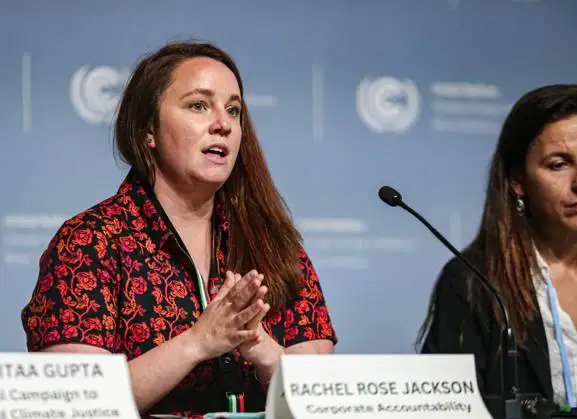
    Is COP30 intentionally confusing and opaque so the public can’t see how Global North countries and big polluters block real climate action. This is the argument of Rachel Rose Jackson, Director of Climate Research and Policy at Corporate Accountability. Behind closed doors, she asserts, wealthy nations avoid paying climate debt while expanding fossil fuels, and fossil fuel lobbyists flood the negotiations. The result is an artificial COP bubble disconnected from real-world climate crises, designed to protect polluters rather than people.

    Here is her piece.

    “If you’re finding it almost impossible to track and understand the finer details of what is happening across the negotiating rooms of COP30, you are not alone. It’s tediously technical, and at best very confusing. This is by design. It’s all part of a carefully orchestrated plan to distance every day humans from what happens here, to construct veils of secrecy, and to create a fake, alternate universe that spurs a complete disconnect from the reality of the world that we’re all living and the climate crisis that we’re all experiencing outside of these halls.

    This is an intentional plan to distract and distance from the typhoons that are currently happening in the Philippines while we are here, where hundreds of people are dying, and many activists here are not even sure if their families are safe or if they’ll come home to a community that was the same as when they left. This is a plan to create intentional disconnect from the trillions of dollars that are being spent annually on war and fossil fuel violence in places like Palestine. From the wildfires, from the floods, from the grabbed lands, from the harm caused all around the world by the very same actors that are here creating this disconnect.

    It is not a coincidence that it is so difficult to track the inner workings of COP30. This carefully orchestrated illusion is crafted by the very same countries that are most responsible for climate change and most responsible for the past three decades of blocking progress to address it. I’m talking about Global North– the countries whose economies have gotten rich off fossil fuels, extracting and burning and profiting at the expense of people across the world, particularly Global South communities, frontline communities, and Indigenous Peoples.

    In clearer terms, here’s what’s happening behind the doors of COP30. The systematic denial of the trillions of dollars that is overdue in climate debt by the Global North to communities in the Global South who are hit hardest and worst. This debt is not charity, it’s not kindness, it’s owed, and it’s long overdue. There’s then the thorough withdrawal of all other forms of meaningful finance that have the chance to become public and people-centered, on one hand, and the rolling out and ramping up of carbon markets and other ‘carbon finance’ schemes that allow the Global North and Big Polluters to continue profit off of polluting the planet. And then, the pretense of the TFFF, which is riddled with loopholes and is another attempt to profit off of nature. All of this while at home, these same Global North countries are proclaiming climate championship while doing very little to decrease emissions or to do their fair share of climate action. Instead, they are actually scaling up fossil fuel production.

    Last week, research by Oil Change International showed that just four Global North countries have derailed an oil and gas phase out since the Paris Agreement. This quartet increased their oil and gas production by 40% between when the Paris Agreement was agreed and last year. In this same period, the rest of the world had a combined oil and gas decrease of 2%. These planet wrecking climate blockers are Canada, Australia, Norway, and the United States.

    Which brings me to the United States. They’re not at COP30, right? Incorrect. Let’s be clear, the United States has always been the largest blocker of climate action at home and abroad, the largest polluter, and the biggest bully. They may not be officially at COP30, but they are very much undermining action. And the fact that they don’t have an official delegation doesn’t change that.

    The United States is here as the biggest donor to the World Bank, which is now the interim trustee and host of both the TFFF as well as the Loss and Damage Fund. So they hold the purse strings to some of the biggest parts of climate action. And at home, they’re also using tariffs and economic sanctions to weaponize climate action and to prevent other countries from being able to take the action they need domestically to respond to the climate crisis. So the US is very much here. They’ve taken off the gloves and they’re ready to throw down, as are their other fight club buddies Canada, Australia, Norway, and the EU.

    In addition, it’s also really important we understand that it is not only countries who are being invited to COP30 to do dirty. Kick Big Polluters Out just released exposing that there are more than 1,600 fossil fuel lobbyists at COP30. Thats means 1 out of 25 participants is advancing a fossil-fueled agenda, outnumbering delegates from the Philippines from 50 to one and delegates from Jamaica 40 to one. Big Polluters are overrunning this place. They are everywhere. They’re whispering in the ears of delegates. They are in rooms that even civil society doesn’t have access to. And just 90 of these oil and gas corporations that have attended COP26-COP29 are responsible for nearly 60% of oil and gas production in 2024.

    So as we head into the final days of these critical talks, and while the climate crisis impacts people all around the world, we want to know what are Big Polluters doing here? And if Global North countries aren’t getting serious about doing their fair share of climate action, why are they wasting our time? As the window COP 30 starts to wind down, so-called world leaders mustIt’s time to step up. It’s time to Kick Big Polluters Out. It’s time for Global North countries to do their long-overdue fair share of climate action, to justly end fossil fuels, and to crack open that disconnect between the real world that’s outside these halls and the carefully orchestrated artificial universe inside these halls.”

    The post COP30 Is Designed to Confuse—So the Real Climate Blockers Stay Hidden appeared first on Green Prophet.

  • UNESCO’s virtual museum of stolen cultural objects

    UNESCO’s virtual museum of stolen cultural objects

    Inside the virtual galleries, visitors will find everything from looted manuscripts to sacred sculptures to objects trafficked across borders and into private hands. Each artifact is accompanied by its backstory: where it was created, how it disappeared, what it meant to the community that once held it. Some pieces have known fates; others are still missing, possibly sitting on a shelf in a Dubai flat or a house in Spain. UNESCO wants to make these absences visible — to show the wounds as well as the artifacts.

    The post UNESCO’s virtual museum of stolen cultural objects appeared first on Green Prophet.

    Rachel Rose Jackson

    Rachel Rose Jackson

    Is COP30 intentionally confusing and opaque so the public can’t see how Global North countries and big polluters block real climate action. This is the argument of Rachel Rose Jackson, Director of Climate Research and Policy at Corporate Accountability. Behind closed doors, she asserts, wealthy nations avoid paying climate debt while expanding fossil fuels, and fossil fuel lobbyists flood the negotiations. The result is an artificial COP bubble disconnected from real-world climate crises, designed to protect polluters rather than people.

    Here is her piece.

    “If you’re finding it almost impossible to track and understand the finer details of what is happening across the negotiating rooms of COP30, you are not alone. It’s tediously technical, and at best very confusing. This is by design. It’s all part of a carefully orchestrated plan to distance every day humans from what happens here, to construct veils of secrecy, and to create a fake, alternate universe that spurs a complete disconnect from the reality of the world that we’re all living and the climate crisis that we’re all experiencing outside of these halls.

    This is an intentional plan to distract and distance from the typhoons that are currently happening in the Philippines while we are here, where hundreds of people are dying, and many activists here are not even sure if their families are safe or if they’ll come home to a community that was the same as when they left. This is a plan to create intentional disconnect from the trillions of dollars that are being spent annually on war and fossil fuel violence in places like Palestine. From the wildfires, from the floods, from the grabbed lands, from the harm caused all around the world by the very same actors that are here creating this disconnect.

    It is not a coincidence that it is so difficult to track the inner workings of COP30. This carefully orchestrated illusion is crafted by the very same countries that are most responsible for climate change and most responsible for the past three decades of blocking progress to address it. I’m talking about Global North– the countries whose economies have gotten rich off fossil fuels, extracting and burning and profiting at the expense of people across the world, particularly Global South communities, frontline communities, and Indigenous Peoples.

    In clearer terms, here’s what’s happening behind the doors of COP30. The systematic denial of the trillions of dollars that is overdue in climate debt by the Global North to communities in the Global South who are hit hardest and worst. This debt is not charity, it’s not kindness, it’s owed, and it’s long overdue. There’s then the thorough withdrawal of all other forms of meaningful finance that have the chance to become public and people-centered, on one hand, and the rolling out and ramping up of carbon markets and other ‘carbon finance’ schemes that allow the Global North and Big Polluters to continue profit off of polluting the planet. And then, the pretense of the TFFF, which is riddled with loopholes and is another attempt to profit off of nature. All of this while at home, these same Global North countries are proclaiming climate championship while doing very little to decrease emissions or to do their fair share of climate action. Instead, they are actually scaling up fossil fuel production.

    Last week, research by Oil Change International showed that just four Global North countries have derailed an oil and gas phase out since the Paris Agreement. This quartet increased their oil and gas production by 40% between when the Paris Agreement was agreed and last year. In this same period, the rest of the world had a combined oil and gas decrease of 2%. These planet wrecking climate blockers are Canada, Australia, Norway, and the United States.

    Which brings me to the United States. They’re not at COP30, right? Incorrect. Let’s be clear, the United States has always been the largest blocker of climate action at home and abroad, the largest polluter, and the biggest bully. They may not be officially at COP30, but they are very much undermining action. And the fact that they don’t have an official delegation doesn’t change that.

    The United States is here as the biggest donor to the World Bank, which is now the interim trustee and host of both the TFFF as well as the Loss and Damage Fund. So they hold the purse strings to some of the biggest parts of climate action. And at home, they’re also using tariffs and economic sanctions to weaponize climate action and to prevent other countries from being able to take the action they need domestically to respond to the climate crisis. So the US is very much here. They’ve taken off the gloves and they’re ready to throw down, as are their other fight club buddies Canada, Australia, Norway, and the EU.

    In addition, it’s also really important we understand that it is not only countries who are being invited to COP30 to do dirty. Kick Big Polluters Out just released exposing that there are more than 1,600 fossil fuel lobbyists at COP30. Thats means 1 out of 25 participants is advancing a fossil-fueled agenda, outnumbering delegates from the Philippines from 50 to one and delegates from Jamaica 40 to one. Big Polluters are overrunning this place. They are everywhere. They’re whispering in the ears of delegates. They are in rooms that even civil society doesn’t have access to. And just 90 of these oil and gas corporations that have attended COP26-COP29 are responsible for nearly 60% of oil and gas production in 2024.

    So as we head into the final days of these critical talks, and while the climate crisis impacts people all around the world, we want to know what are Big Polluters doing here? And if Global North countries aren’t getting serious about doing their fair share of climate action, why are they wasting our time? As the window COP 30 starts to wind down, so-called world leaders mustIt’s time to step up. It’s time to Kick Big Polluters Out. It’s time for Global North countries to do their long-overdue fair share of climate action, to justly end fossil fuels, and to crack open that disconnect between the real world that’s outside these halls and the carefully orchestrated artificial universe inside these halls.”

    The post COP30 Is Designed to Confuse—So the Real Climate Blockers Stay Hidden appeared first on Green Prophet.
  • COP30 Is Designed to Confuse—So the Real Climate Blockers Stay Hidden

    COP30 Is Designed to Confuse—So the Real Climate Blockers Stay Hidden

    The United States is here as the biggest donor to the World Bank, which is now the interim trustee and host of both the TFFF as well as the Loss and Damage Fund. So they hold the purse strings to some of the biggest parts of climate action. And at home, they’re also using tariffs and economic sanctions to weaponize climate action and to prevent other countries from being able to take the action they need domestically to respond to the climate crisis. So the US is very much here. They’ve taken off the gloves and they’re ready to throw down, as are their other fight club buddies Canada, Australia, Norway, and the EU.

    The post COP30 Is Designed to Confuse—So the Real Climate Blockers Stay Hidden appeared first on Green Prophet.

    Rachel Rose Jackson

    Rachel Rose Jackson

    Is COP30 intentionally confusing and opaque so the public can’t see how Global North countries and big polluters block real climate action. This is the argument of Rachel Rose Jackson, Director of Climate Research and Policy at Corporate Accountability. Behind closed doors, she asserts, wealthy nations avoid paying climate debt while expanding fossil fuels, and fossil fuel lobbyists flood the negotiations. The result is an artificial COP bubble disconnected from real-world climate crises, designed to protect polluters rather than people.

    Here is her piece.

    “If you’re finding it almost impossible to track and understand the finer details of what is happening across the negotiating rooms of COP30, you are not alone. It’s tediously technical, and at best very confusing. This is by design. It’s all part of a carefully orchestrated plan to distance every day humans from what happens here, to construct veils of secrecy, and to create a fake, alternate universe that spurs a complete disconnect from the reality of the world that we’re all living and the climate crisis that we’re all experiencing outside of these halls.

    This is an intentional plan to distract and distance from the typhoons that are currently happening in the Philippines while we are here, where hundreds of people are dying, and many activists here are not even sure if their families are safe or if they’ll come home to a community that was the same as when they left. This is a plan to create intentional disconnect from the trillions of dollars that are being spent annually on war and fossil fuel violence in places like Palestine. From the wildfires, from the floods, from the grabbed lands, from the harm caused all around the world by the very same actors that are here creating this disconnect.

    It is not a coincidence that it is so difficult to track the inner workings of COP30. This carefully orchestrated illusion is crafted by the very same countries that are most responsible for climate change and most responsible for the past three decades of blocking progress to address it. I’m talking about Global North– the countries whose economies have gotten rich off fossil fuels, extracting and burning and profiting at the expense of people across the world, particularly Global South communities, frontline communities, and Indigenous Peoples.

    In clearer terms, here’s what’s happening behind the doors of COP30. The systematic denial of the trillions of dollars that is overdue in climate debt by the Global North to communities in the Global South who are hit hardest and worst. This debt is not charity, it’s not kindness, it’s owed, and it’s long overdue. There’s then the thorough withdrawal of all other forms of meaningful finance that have the chance to become public and people-centered, on one hand, and the rolling out and ramping up of carbon markets and other ‘carbon finance’ schemes that allow the Global North and Big Polluters to continue profit off of polluting the planet. And then, the pretense of the TFFF, which is riddled with loopholes and is another attempt to profit off of nature. All of this while at home, these same Global North countries are proclaiming climate championship while doing very little to decrease emissions or to do their fair share of climate action. Instead, they are actually scaling up fossil fuel production.

    Last week, research by Oil Change International showed that just four Global North countries have derailed an oil and gas phase out since the Paris Agreement. This quartet increased their oil and gas production by 40% between when the Paris Agreement was agreed and last year. In this same period, the rest of the world had a combined oil and gas decrease of 2%. These planet wrecking climate blockers are Canada, Australia, Norway, and the United States.

    Which brings me to the United States. They’re not at COP30, right? Incorrect. Let’s be clear, the United States has always been the largest blocker of climate action at home and abroad, the largest polluter, and the biggest bully. They may not be officially at COP30, but they are very much undermining action. And the fact that they don’t have an official delegation doesn’t change that.

    The United States is here as the biggest donor to the World Bank, which is now the interim trustee and host of both the TFFF as well as the Loss and Damage Fund. So they hold the purse strings to some of the biggest parts of climate action. And at home, they’re also using tariffs and economic sanctions to weaponize climate action and to prevent other countries from being able to take the action they need domestically to respond to the climate crisis. So the US is very much here. They’ve taken off the gloves and they’re ready to throw down, as are their other fight club buddies Canada, Australia, Norway, and the EU.

    In addition, it’s also really important we understand that it is not only countries who are being invited to COP30 to do dirty. Kick Big Polluters Out just released exposing that there are more than 1,600 fossil fuel lobbyists at COP30. Thats means 1 out of 25 participants is advancing a fossil-fueled agenda, outnumbering delegates from the Philippines from 50 to one and delegates from Jamaica 40 to one. Big Polluters are overrunning this place. They are everywhere. They’re whispering in the ears of delegates. They are in rooms that even civil society doesn’t have access to. And just 90 of these oil and gas corporations that have attended COP26-COP29 are responsible for nearly 60% of oil and gas production in 2024.

    So as we head into the final days of these critical talks, and while the climate crisis impacts people all around the world, we want to know what are Big Polluters doing here? And if Global North countries aren’t getting serious about doing their fair share of climate action, why are they wasting our time? As the window COP 30 starts to wind down, so-called world leaders mustIt’s time to step up. It’s time to Kick Big Polluters Out. It’s time for Global North countries to do their long-overdue fair share of climate action, to justly end fossil fuels, and to crack open that disconnect between the real world that’s outside these halls and the carefully orchestrated artificial universe inside these halls.”

    The post COP30 Is Designed to Confuse—So the Real Climate Blockers Stay Hidden appeared first on Green Prophet.

  • The 2026 Tiny Buddha Calendar Is Ready for Holiday Gifting!

    The 2026 Tiny Buddha Calendar Is Ready for Holiday Gifting!

    Tiny Buddha's 2026 Day-to-Day Calendar

    Hi friend! As we head into the holiday season, I know many of us are starting to think about gifts for the people we love (and maybe a few things for ourselves as well). With that in mind, I wanted to remind you that the 2026 Tiny Buddha Day-to-Day Calendar is now available.

    It’s one of my favorite projects every year because I include the kind of daily reminders that I personally find validating, comforting, and encouraging—some from me, some from site contributors, and some from authors I enjoy. And as the number-one bestselling calendar in Mind-Body-Spirit for the past

    Tiny Buddha's 2026 Day-to-Day Calendar

    Hi friend! As we head into the holiday season, I know many of us are starting to think about gifts for the people we love (and maybe a few things for ourselves as well). With that in mind, I wanted to remind you that the 2026 Tiny Buddha Day-to-Day Calendar is now available.

    It’s one of my favorite projects every year because I include the kind of daily reminders that I personally find validating, comforting, and encouraging—some from me, some from site contributors, and some from authors I enjoy. And as the number-one bestselling calendar in Mind-Body-Spirit for the past two years, I know it’s become an annual staple for lots of readers.

    Featuring vibrant tear-off pages, the calendar is printed on FSC certified paper with soy-based ink and covers topics like happiness, love, relationships, change, meaning, mindfulness, self-care, letting go, and more.

    Here are a few recent reviews from the 2026 edition:

    “I got this as a gift last year and fell in love with all the advice from many different sources! So I ordered one for this year, and I just received my new one and it is the same! If you want gentle daily messages that not only inspire but also make you think, this is it!”

    “I buy this calendar every year, and I love it!!! I look forward to the daily inspiration. Sometimes you just need a little kick in the pants to get your mind right, and this calendar does that for me. Thank you!”

    “I love, love, the daily quotes, and this will be my third year of purchase. I would really miss them if I didn’t have them each day to read a different quote. They brighten my day.”

    If you’d like to bring a little Tiny Buddha wisdom into your home and your day—or give someone you love the gift of comfort and insight—you can grab a calendar (or two!) here.

    Thank you, as always, for being here and for supporting my work.

    About Lori Deschene

    Lori Deschene is the founder of Tiny Buddha. She started the site after struggling with depression, bulimia, c-PTSD, and toxic shame so she could recycle her former pain into something useful and inspire others to do the same. You can find her books, including Tiny Buddha’s Gratitude Journal and Tiny Buddha’s Worry Journal, here and learn more about her eCourse, Recreate Your Life Story, if you’re ready to transform your life and become the person you want to be.

    Get in the conversation! Click here to leave a comment on the site.

  • Are You Paying For Meat, Or For Water?

    Are You Paying For Meat, Or For Water?

    Let’s say you’re sautéeing ground beef. Look at the meat you’re stirring around: what’s all that water in your frying pan? It’s water all right, but you paid for meat, not H2O. It’s right to ask if this a hidden ingredient, like meat glue. To figure out how much you paid for that water, drain […]

    The post Are You Paying For Meat, Or For Water? appeared first on Green Prophet.

    supermarket packaged meat

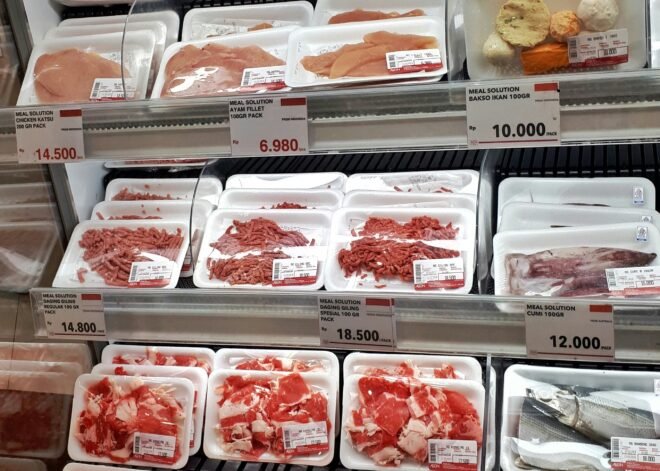
    Let’s say you’re sautéeing ground beef. Look at the meat you’re stirring around: what’s all that water in your frying pan? It’s water all right, but you paid for meat, not H2O. It’s right to ask if this a hidden ingredient, like meat glue.

    To figure out how much you paid for that water, drain it off and measure it. 1 cup of water equals about 236 grams, or 0.5 lb. Divide that into the price per kilo/lb that you paid for that package of raw ground beef, and prepare for a shock.

    Cooking causes loss of natural meat fluids, about 25% of the weight. Injected meat may lose up to 40% weight. Even discounting natural loss of juices in cooking, it’s likely you paid the price of meat for that water. And you’re short of the amount of food you were counting on.

    Another experiment, this one with packaged raw meat: take the piece off the damp absorbent pad it sat on, and weigh it. You may find that it weighs less than stated on the label by as much as 15%. That was water absorbed by the pad. And that’s without accounting for water leeched out when the meat hits a hot pan.

    Many manufacturers inject water or saline solution, or water plus salt, phosphate, and flavorings into raw beef, pork, chicken, turkey, and some seafoods. This increases the product’s saleable weight. And it increases manufacturers’ profit per animal; water is cheaper than meat, after all. Phosphates make the meat retain that added water, giving it a juicy appearance and texture.

    According to the USDA, about 30% of poultry, 15% of beef, and 90% of pork are injected with salty liquids. This is the FSIS’s detailed breakdown of water in meat and poultry.

    The meat is treated before getting weighed, packaged, and labeled; when the supermarket receives the product, it’s ready to sell.

    Injecting saline into meat is called “plumping” or “enhancing.” It’s a recognized, governnment regulated practice.  Meat manufacturers justify plumping by claiming that it grants meat and poultry better flavor and texture, (and makes them more marketable) when treated so. That’s probably true. But wait, what happened to the original flavor and juiciness?

    It’s a problem. Today’s consumers demand meat and poultry bred to have less fat. Because fat contains much of the flavor and protects the natural juices, low-fat proteins tend to dry up in cooking and lose flavor. Consumers like to buy the most attractive product, and expect retail chains to conform to standard weight and appearance. From the processor’s and supermarket’s point of view, pumping salty, flavored water and phosphate into your steak is therefore doing you a favor.

    Plumping’s not new, but consumers have become aware and vocal about it only recently. There were scandals in the UK about water-injected chicken and pork as far back as 2017.

    Health hazards

    More recently, consumers have brought up other related issues. Safety, for example. The Food Safety and Inspection Service (FSIS) lists injected meat as a high-risk carrier of E. coli bacteria, which is often found on the surface of meat. When the needles that insert the salt solution penetrate the meat, the bacteria is pushed in deeply. Cooking may not kill it, especially when the meat’s served rare.

    To avoid bacterial infection in injected meat, the FSIS recommends, but does not require, that processors apply “an allowed antimicrobial agent to the surface of the product prior to processing.” What antimicrobial agents are these? And how are they applied? We aren’t told.

    Salt and water sounds harmless, but the consumer eating injected meat is getting more sodium in their diet than they’re aware or can keep track of. This could be bad news for people with high blood pressure or heart disease who must minimize their salt intake.

    Even meat labeled organic may contain injected saline, because FSIS lists salt and water as organic. The FSIS allows selling injected meat as “natural” and “fresh” unless the added solution changes the product’s nature in ways that require different labeling. If you want to make absolutely sure that product is free of added salt and water, look for a statement on the label reading “no artificial ingredients,” “minimally processed,” or similar.

    A person standing in the supermarket and considering the label on a meat product may well wonder where they should put their trust. Must they Google every brand to feel comfortable eating it? It’s one thing to inject brine into your Thanksgiving turkey, and some people choose to, but the cook should be in control over that, not the meat processing factory.

    Red flags

    If the product was injected, the package label should indicate that it contains X amount of added solution. Conversely, it may read that it’s X percent meat (or chicken, or fish). You’re to understand that the missing percent is water treated with salt or salt plus phosphate.

    Look on the label for the words enhanced, marinated, broth, and flavored. Those are signs that the meat has been interfered with. Avoid food packaged in sauce; you may be taking home chemical enhancers, fillers, preservatives, and yet more salt.

    On the other hand, if the label reads “no added solutions,” “minimally processed,” “no artificial ingredients” or “100% beef (or fish or chicken) ” – or the listed ingredients don’t include water, salt, or phosphate, it’s probably honest meat.

    If you can, buy whole cuts of roasts and chops. Learn to trim them at home. Or if that’s too much trouble, buy your supermarket meat from the butcher counter. Ask if they grind their own.

    Even better, buy meat from local farms. Best of all, if you can, is to make a co-op order of freshly butchered meat together with neighbors, friends, or work colleagues. It will cost more, but consider water you pay for in plumped meat.

    Photo by Fitri Ariningrum on Unsplash


    The post Are You Paying For Meat, Or For Water? appeared first on Green Prophet.

  • What Happened When I Stopped Expecting Perfection from Myself

    What Happened When I Stopped Expecting Perfection from Myself


    “There is no amount of self-improvement that can make up for a lack of self-acceptance.” ~Robert Holden

    Six years ago, I forgot it was picture day at my daughter’s school. She left the house in a sweatshirt with a faint, unidentifiable stain and hair still bent from yesterday’s ponytail.

    The photographer probably spent less than ten seconds on her photo, but I spent hours replaying the morning in my head, imagining her years later looking at that picture and believing her mother had not tried hard enough.

    It’s strange how small moments can lodge themselves in memory. Even now, …


    “There is no amount of self-improvement that can make up for a lack of self-acceptance.” ~Robert Holden

    Six years ago, I forgot it was picture day at my daughter’s school. She left the house in a sweatshirt with a faint, unidentifiable stain and hair still bent from yesterday’s ponytail.

    The photographer probably spent less than ten seconds on her photo, but I spent hours replaying the morning in my head, imagining her years later looking at that picture and believing her mother had not tried hard enough.

    It’s strange how small moments can lodge themselves in memory. Even now, when life is smooth, that picture sometimes drifts back. The difference is that I no longer treat it as proof that I am careless or unloving. I see it as a reminder that no one gets it all right, no matter how hard they try.

    I tend to hold on to my “failures” long after everyone else has let them go. My daughter has never mentioned that photo, and one day, if she becomes a mother, she might discover that small imperfections are not proof of neglect. They can be a kind of grace.

    For most of my life, I thought being a good person meant being relentlessly self-critical. I stayed up too late worrying over things no one else noticed, like an unanswered text or a dusty shelf before company arrived. Sometimes I replayed conversations until I found the exact moment I could have been warmer or wiser.

    The list was endless, and my self-worth seemed to hinge on how perfectly I performed in every role. Somewhere along the way, I started expecting myself to already know how to do everything right. But this is the first time I have lived this exact day, with this exact set of challenges and choices.

    It is the first time parenting a child this age. The first time navigating friendships in this season. The first time balancing today’s responsibilities with today’s emotions.

    The shift came on a day when nothing seemed to go my way. I missed an appointment I had no excuse for missing, realized too late that I had forgotten to order my friend’s birthday gift, and then managed to burn dinner. None of it was catastrophic, but the weight of these small failures began to gather, as they always did, into a heaviness in my chest.

    I could feel myself leaning toward the familiar spiral of self-reproach when I happened to glance across the room and see my daughter. And in that instant, a thought surfaced: What if I spoke to myself the way I would speak to her if she had made these same mistakes?

    I knew exactly what I would say. I would remind her that being human means sometimes getting it wrong. I would tell her that one day’s mistakes do not erase years of love.

    I would make sure she knew she was still good, still worthy, and still enough. So I tried saying it to myself, out loud. “We all make mistakes.”

    The words felt clumsy, almost unnatural, like I was finally trying to speak the language I had only just begun to learn. But something inside softened just enough for me to take a breath and let the day end without carrying all its weight into tomorrow.

    Self-compassion has not made me careless. It has made me steadier. When I stop spending my energy on shame, I have more of it for the people and priorities that matter.

    Research confirms this truth. Self-compassion is not about lowering standards. It is about building the emotional safety that allows us to keep showing up without fear.

    And here is what I have learned about actually practicing it. Self-compassion is not a single thought or mantra. It’s a habit, one you build the same way you would strength or endurance.

    It begins with noticing the voice in your head when you make a mistake. Most of us have an internal commentator that sounds less like a mentor and more like a drill sergeant. The work is in catching that voice in the act and then, without forcing a smile or pretending you are not disappointed, speaking to yourself like someone you love.

    Sometimes that means literally saying the words out loud so you can hear the tone. Sometimes it means pausing long enough to remember you are still learning. Sometimes it means choosing kindness even when shame feels easier.

    It also helps to remember what self-compassion is not. It is not excusing harmful behavior or ignoring areas where we want to grow. It is acknowledging that growth happens more easily in a climate of patience than in one of punishment.

    The science supports this. When we practice self-kindness, our stress response begins to quiet, and our nervous system has a chance to settle. This does not just feel better in the moment; it makes it easier to think clearly and choose our next step.

    I’ve noticed other changes as well. Self-compassion makes me braver. When I’m not terrified of berating myself if I fall short, I am more willing to try something new.

    I take risks in conversations. I admit when I do not know something. I start things without obsessing over how they’ll end, and when mistakes inevitably happen, I don’t have to waste days recovering from my own criticism.

    Sometimes self-compassion is quiet, like putting your phone down when you begin to spiral through mental replays. Sometimes it is active, like deciding to stop apologizing for being human. Sometimes it is physical, like unclenching your jaw or placing a hand on your chest as you breathe.

    Over time, these small gestures add up. They rewire the way you respond to yourself, replacing the reflex of blame with the reflex of care.

    We are all walking into each day for the first time. Of course we will miss a detail or lose our patience. Of course we will get things wrong.

    But when we meet ourselves with kindness instead of condemnation, we remind ourselves that love, whether for others or for ourselves, has never depended on perfection.

    And that lesson will last far longer than any perfect picture.

    About Lissy Bauer

    Lissy Bauer is a writer and certified life coach who explores emotional honesty, resilience, and the courage to stay present in a world built for escape. Drawing on lived experience and positive psychology research, she helps readers navigate uncertainty without rushing to fix or flee it. Her books offer compassionate tools for sitting with what hurts and embracing imperfection. Connect with her at lissybauer.carrd.co.

    Get in the conversation! Click here to leave a comment on the site.

  • Global Emissions Keep Rising, But Scientists Say Peak is in Sight

    Global Emissions Keep Rising, But Scientists Say Peak is in Sight

    Black smog in Cairo At COP30 in Belém, Brazil, scientists delivered another stark update: global fossil-fuel emissions are set to rise yet again this year. But for the first time, there are credible signs the world may be nearing a turning point. The timing of that peak — and what happens afterward — will depend […]

    The post Global Emissions Keep Rising, But Scientists Say Peak is in Sight appeared first on Green Prophet.

    hipster reads book while smoking a joint

    THC blood levels don’t reliably indicate driving impairment, meaning current per se laws risk penalizing sober drivers long after cannabis use.

    Previous research that evaluated the effect of the hallucinogenic molecules of cannabis (delta-9-tetrahydrocannabinol THC) the main psychoactive compound in cannabis on motor vehicle crashes concluded that there is no increase of crash risk because of detectable THC. The molecule may linger days after use and is not a reliable indicator that a driver is impaired, report scientists in a new study.

    Despite evidence showing no correlation between the detection of THC in the blood and driving impairment, 6 American states in the United States have per se laws using 2 or 5 ng/mL of THC as the cut-off point for driving under the influence of cannabis, while 12 have a zero-tolerance law.

    These cut-off points are considered face value evidence of driving impairment, which means that even if it has been several days since an individual’s last use of the drug and they show no behavioral impairment, they may still face legal risks, up to and including felony charges. In Dubai you can go to jail for having cannabis in your blood, even if the cannabis was consumed in London, Tel Aviv or Toronto.

    To address this issue, a team of researchers led by Dr. Thomas D. Marcotte, professor of psychiatry at the University of California, San Diego, and codirector of the Center for Medicinal Cannabis Research, set out to investigate the blood concentrations of THC in regular cannabis users, as well as the simulated driving performance for participants who exceeded per se cut-off points compared with those who were below these values. The researchers measured baseline concentrations of THC in 190 regular cannabis users after instructing participants to abstain from cannabis for at least 48 hours. Following abstention, the researchers also evaluated driving performance in this group using a driving simulator.

    From this, the team found that many regular users of cannabis exceed zero tolerance and per se THC cut-off point concentrations days after their last use. Specifically, 43% of participants exceeded zero-tolerance statutes at baseline, while 24% had baseline blood THC concentrations that were greater than or equal to the per se cut-off of 2 ng/mL, and 5.3% had blood concentrations greater than or equal to 5 ng/mL.

    Based on the results from the driving simulation, participants with elevated baseline concentrations of THC did no worse on a driving simulator compared with participants who were below per se cut-off points. Altogether, the results add to a growing body of evidence showing that current per se THC blood limit laws lack scientific credibility as face-value evidence of impairment.

    “More work needs to be done to address how to best identify drivers who are under the influence of cannabis and are unsafe to drive,” the study authors wrote. “At present, the best protocol is a combination of observations in the field and toxicology testing.” They also added that “an essential component of improving highway safety is collaborations between law enforcement and the scientific community to develop standards that are unbiased and potentially lifesaving.”

    The post Stoned and driving? High THC levels might not mean you are impaired appeared first on Green Prophet.