
Sink holes from over-watering farmers’ fields
- Posted on December 25, 2025
Sinkholes are rapidly appearing in Turkey’s central Anatolian farming region, particularly around Konya and Karapınar. These giant gaping holes in the ground in areas of farmland, known locally as obruk, are not random geological events. They are linked to prolonged drought, climate-driven heat stress, and heavy groundwater extraction for agriculture in one of the country’s most important breadbaskets.
The post Sink holes from over-watering farmers’ fields appeared first on Green Prophet.
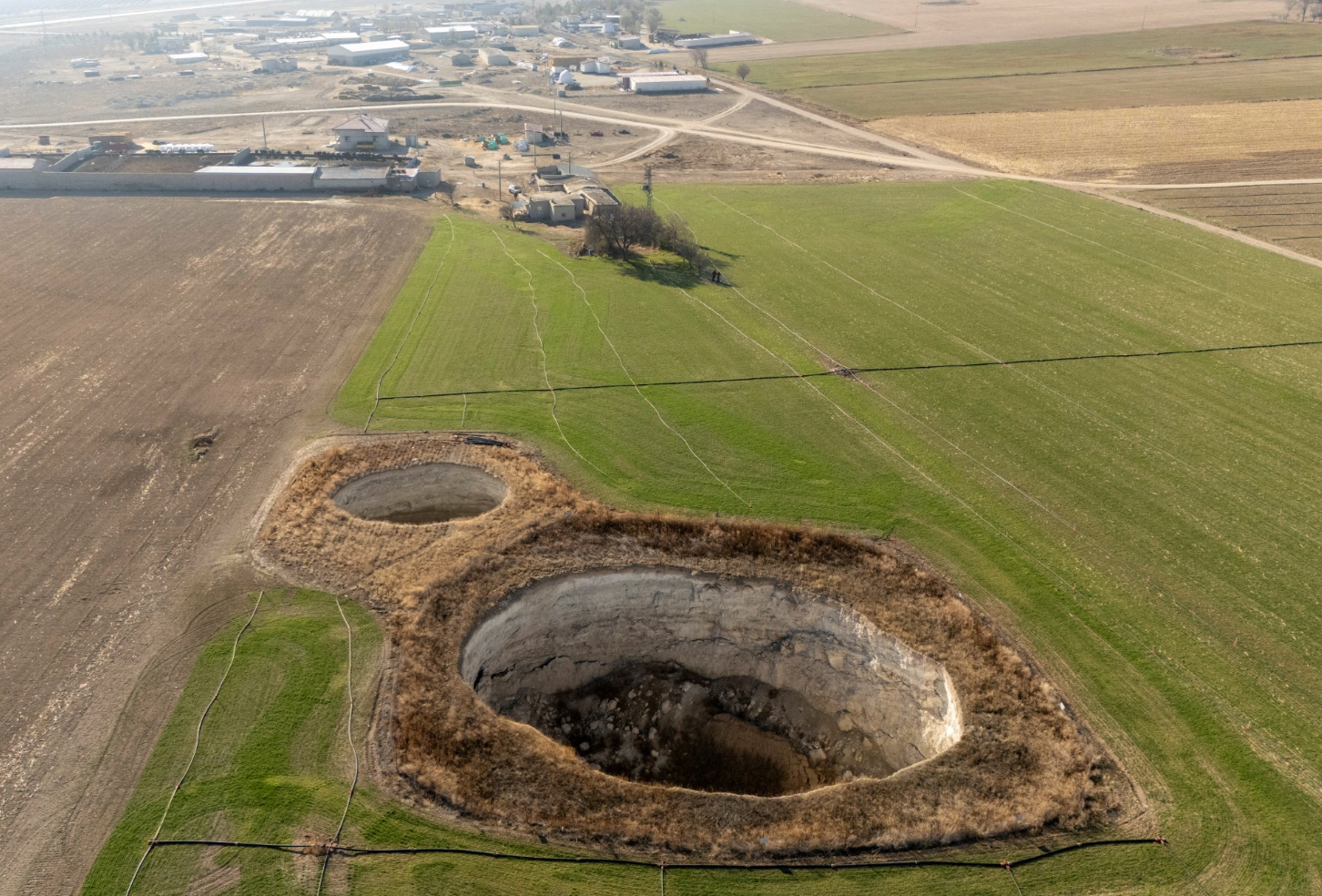
Sink holes appearing in Konya, Turkey due to overuse of irrigation water. Via Reuters.
Sinkholes are rapidly appearing in Turkey’s central Anatolian farming region, particularly around Konya and Karapınar. These giant gaping holes in the ground in areas of farmland, known locally as obruk, are not random geological events. They are linked to prolonged drought, climate-driven heat stress, and heavy groundwater extraction for agriculture in one of the country’s most important breadbaskets. As rainfall declines and evaporation increases, natural aquifer recharge has slowed, while demand for irrigation water has surged. There are an estimated 700 new sink holes that have popped up this winter, according to Reuters.
Related: Explore Istanbul’s coolest neighborhood Balat
In Konya, large-scale farming relies heavily on groundwater wells. Farmers often respond to drought by pumping more water and overwatering crops, especially where irrigation remains inefficient or poorly regulated. When groundwater is withdrawn faster than it can be replenished, underground cavities lose pressure and stability. Over time, the land above can suddenly collapse, creating sinkholes that damage fields, roads, and infrastructure and threaten lives. Sinks holes have appeared in Iran, and also in Israel in the area of the Dead Sea. A giant sink hole collapsed an entire road in Bangkok, Thailand earlier this year.
Climate change has intensified drought through higher temperatures and shifting rainfall patterns, while decades of groundwater overuse for agriculture have compounded the damage. As in Turkey, farmers often drill deeper wells and irrigate more aggressively during dry years, accelerating aquifer depletion and land subsidence. Scientists warn that this cycle—drought followed by over-pumping—can permanently damage water systems and agricultural viability.
Related: learn more about Tunisia’s lagoons and hanging gardens for sustainable agriculture.
Across Turkey, the Dead Sea basin, and Iran, the lesson is consistent: groundwater is being treated as an endless emergency reserve. In reality, once aquifers are drained or destabilized, the land itself begins to fail. Sinkholes are not just geological curiosities; they are warning signs that climate change, drought, and overwatering are colliding with unsustainable farming practices.
Read more on resource overuse on Green Prophet:
Green Prophet: Turkey’s deadly sinkholes threaten agriculture and people
Green Prophet: Sinkholes and shrinking shores of the Dead Sea
Green Prophet: Land subsidence in Iran is a looming disaster
The post Sink holes from over-watering farmers’ fields appeared first on Green Prophet.
Related Posts
Recommended Story For You :

Bringing Dead Batteries Back To Life Is Simple!
SEPTIFIX to the Rescue! Say Goodbye to Problems and Hello to Savings

Ecomposing of Paper Towels Produce Methane Gas

A Leading Cause Of Global Warming!

A cleaner world where energy is abundant essentially free

and sourced directly out of the inherent power of the space surrounding us.

MIT Discovery can cut power bills by 65%

Easy DIY Power Plan Will Change Our World Forever

Discover the World with Our Passionate Geography Teacher in Memphis!