Category: Blog

Your blog category

  • How the Mediterranean’s most hopeful UN green organizations fail at peace-building

    How the Mediterranean’s most hopeful UN green organizations fail at peace-building

    Arab normalization resistance — unchallenged by EU and UN bodies — ensures they remain politically sanitized and technically shallow.
    The Mediterranean cannot solve climate change, migration pressures, or food insecurity if it continues to sideline the very countries with the expertise to contribute. And the more the UfM, the EU, and UN bodies appease political vetoes, the more they reinforce the exact divisions they were created to heal.

    The post How the Mediterranean’s most hopeful UN green organizations fail at peace-building appeared first on Green Prophet.
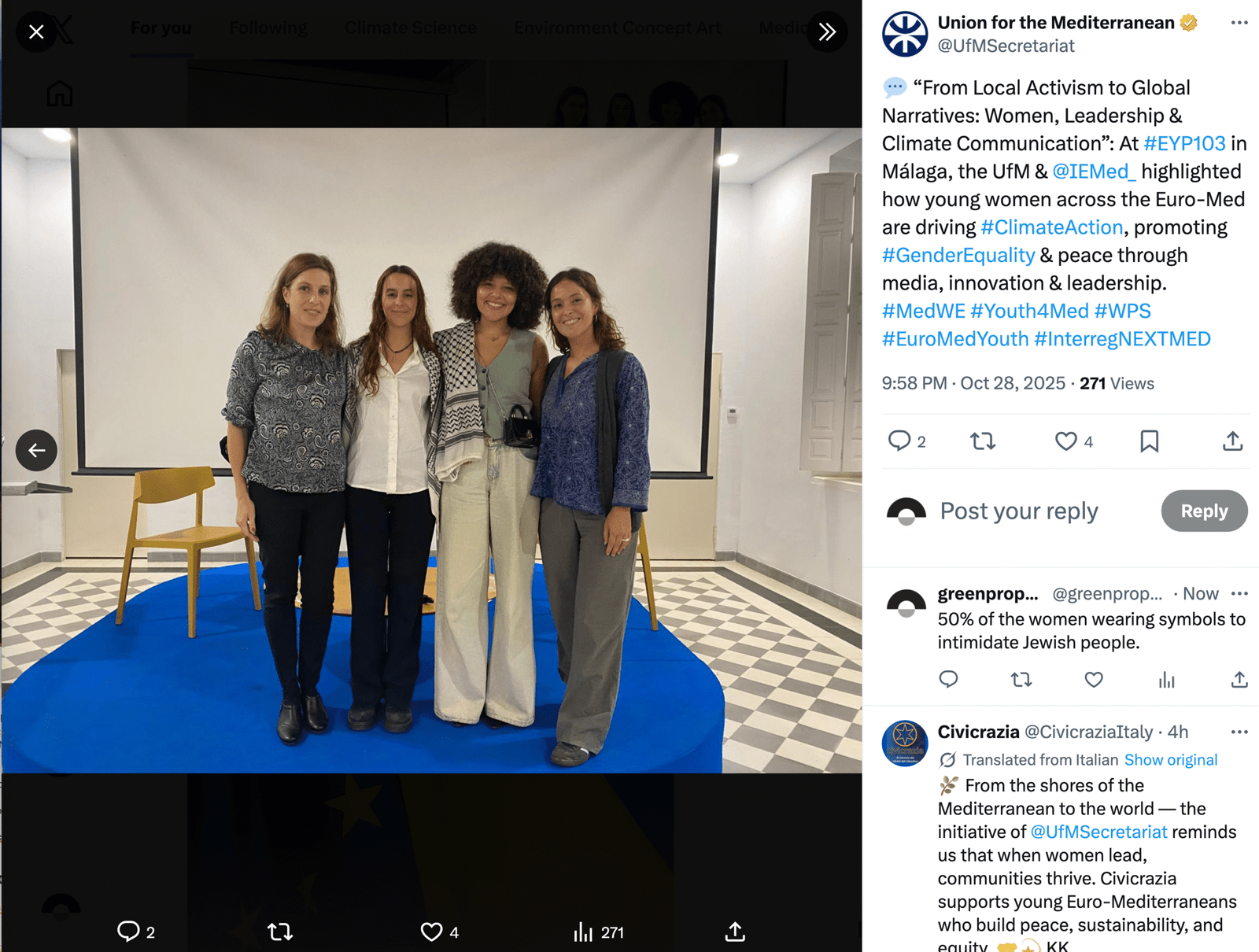
    The UfM is supposed to be non-biased yet 50% of the women here are wearing keffiahs to intimidate Israelis and Jews

    The UfM is supposed to be non-biased yet 50% of the women here are wearing keffiahs to intimidate Israelis and Jews.

    The Union for the Mediterranean (UfM) was created to be the great bridge between Europe, North Africa, and the Middle East — a place where shared challenges like climate change, water scarcity, youth unemployment, and clean energy could be tackled together.

    Instead, the UfM has become a textbook case of consensus paralysis: a structure where 43 countries must agree before anything moves forward. In practice, this means that the long shadow of the Arab–Israeli conflict still shapes what can be said, who can be present, and which countries are allowed to lead. For an institution whose sole purpose is regional cooperation, the result is tragically predictable: the Mediterranean’s biggest tools for healing rifts are the ones most consistently left unused.

    Below are recent, documented examples of how Arab political pressure — often reinforced by the EU’s own risk-aversion and the UN’s quiet compliance — creates sins of omission that undermine progress in women’s empowerment, climate cooperation, cleantech, and cultural diplomacy. I’ve even seen it in forest fire prevention.

    I have reached out to the spokesperson and leadership at the UfM about their exclusionary practices, which I touch on below. Nasser Kamel, a general from Egypt who heads the organization didn’t reply. His spokesperson answered the phone but then refused to send feedback about the exclusionary policies we pointed out. Green Prophet then received this:

    “The participation of representatives, experts, and citizens from any Member State, including Israel, in UfM activities is at the discretion of the respective national authorities and stakeholders. As an intergovernmental organisation, the UfM does not have the mandate to compel participation although it actively encourages and welcomes the engagement of all its members in its initiatives. There is no pattern of exclusion in either pre-activity communications or post-activity follow-ups related to water or any other sector. Israel is an active and engaged Member State that regularly participates in UfM Senior Officials Meetings as well as UfM Regional Platforms and Working Groups focused on water policy dialogue and related initiatives in the Mediterranean.”

    This is the pattern in groups like this. Nice words, but they practice something else entirely. As someone who works in cleantech, and as a champion for women and the environment in the region I couldn’t help but notice exclusionary policies to Israelis. They may be “there” on paper but the reality is something else.

    Case Study 1 (2023–2024): Women & Climate Leadership Without Israelis
    UfM officials regularly state that “women, youth, and climate” are the safest and most promising spaces for Euro-Mediterranean cooperation. Yet the institution’s own events tell a different story. Across the Women4Mediterranean, Women Innovators, Climate Adaptation, and Women Entrepreneurs conferences held in Barcelona, Cairo, and Brussels (2023–2024), not a single Israeli woman innovator or climate leader was featured on panels or in official delegations. They will publish data that will not include Israeli women.

    This is despite Israel being:

    • A global top-tier country for women in STEM
    • A regional leader in climate adaptation, water reuse, and desert agriculture
    • Home to Arab-Jewish women-led climate ventures that embody the cooperation the UfM claims to champion. The Arava Institute is a prime example.

    Women’s innovation is the softest of soft diplomacy tools — the very space where the region should be building trust. Yet because a handful of Arab governments routinely reject anything that looks like normalization, the UfM quietly complies. This is the politics of omission, which is harder to expose than outright exclusion, but just as damaging.

    The excuse: Muslim Arabs, a majority by far in the region, don’t feel comfortable around Israelis. Israeli Arabs are invited through a back door when they register as Palestinians. Read below to how it’s been perfected.

    Case Study 2 (2022–2024): UN Bodies Reinforcing the Same Patterns

    A UN body, supposed to be neutral calls the Hamas-launched conflict, a War on Gaza

    The UN’s regional arms — especially ESCWA, but also UNDP and FAO in the Gulf — hold major climate, cleantech, and development gatherings in Doha, Dubai, Cairo, and Riyadh. And the pattern repeats: Israeli experts are excluded, or invited only as “online observers.” Joint research groups are formed that include Arab states and European academics, but not Israeli institutions — even when the topic is water scarcity, desalination, agriculture, or desertification, where Israel is a global leader.

    Behind closed doors, European officials will admit the reason: “We avoid confrontation. Arabs would walk out.” In other words, UN bodies — which preach inclusiveness — reinforce the same consensus paralysis as the UfM.
    Again, the tools for healing rifts exist — and they are deliberately not used.

    If you see the front page of ESCWA’s website they are calling the Hamas-Israel conflict, started by Hamas “a War on Gaza.”

    Palestine is intentionally framed as a regional development priority, while Israel is framed as irrelevant — except as a geopolitical antagonist. Here is a UN-funded Med conference that paints Israel as a villain.

    Case Study 3 (2020–2023): Cleantech, Climate Finance & Qatar’s Influence

    Many UfM and EU-Mediterranean climate programs are now co-funded or co-branded with Gulf partners (Qatar Foundation, Masdar, ADQ, Saudi Green Initiative, etc.). These sponsors bring money — but also political red lines. The last meeting was in Doha, Qatar. Why are Mediterranean peace and climate leaders meeting in the Gulf?

    High-visibility participation of Israelis, they will say, becomes “too sensitive.”

    EU-backed research networks omit Israeli nodes even when the science requires them (e.g., micro-irrigation, solar thermal storage, grid-stabilizing technologies). This is not an accidental oversight. This is structural. Arab sovereign wealth funds are now key financiers in Mediterranean climate cooperation — and they leverage their position to enforce old regional politics inside ostensibly neutral EU frameworks.

    Case Study 4 (2020): COVID-19 Recovery Programs Without Israeli MedTech
    During the COVID-19 recovery period, the UfM launched major programs for digital health, medtech, and emergency response.  Yet none of its flagship recovery initiatives visibly integrated Israeli: Remote diagnostics, AI health systems, First-responder innovations, Arab–Jewish hospital cooperation models. Israel’s medtech sector could have been a perfect bridge — especially for women in health, startups in the periphery, or cross-Mediterranean humanitarian partnerships.

    Instead, the UfM defaulted to the lowest common denominator: keep it technical, keep it vague, avoid political discomfort so the Arab world and natural gas and oil money stays happy.

    Why This Matters Now

    The tragedy of consensus paralysis is not simply that Israelis are marginalized. It is that the region loses access to the best available tools for peacebuilding:

    • Women’s entrepreneurship
    • Climate adaptation
    • Water reuse
    • Digital health
    • Desert agriculture
    • Cleantech innovation
    • Youth exchanges

    These should be the spaces where cooperation flourishes beyond politics. Instead, Arab normalization resistance — unchallenged by EU and UN bodies — ensures they remain politically sanitized and technically shallow.
    The Mediterranean cannot solve climate change, migration pressures, or food insecurity if it continues to sideline the very countries with the expertise to contribute. And the more the UfM, the EU, and UN bodies appease political vetoes, the more they reinforce the exact divisions they were created to heal.

    The call mechanism for inclusion is broken

    One way EU and UN organizations exclude Jewish Israelis, and I see this all the time in areas of cleantech and eco-events, is by limiting “eligibility” to Palestinians, not Israelis, by defining participants through population categories, not citizenship. And this is what you will find.

    Many calls for participation use criteria such as:

    • Arab youth
    • Women from the Arab region
    • West Asian populations
    • Participants from conflict-affected Arab communities
    • Stakeholders from the State of Palestine

    Because Israeli Arabs (Muslim or Christian) share language, culture, and geographic identity with Palestinian populations, they technically qualify for these categories. But Israeli Jews — even if regionally relevant, even if experts in the exact domain — do not qualify.

    Calling for Arabs from the region, it allows organizers to include “Arab citizens of Israel” without acknowledging Israel as a state; claim inclusivity (“we included Arab voices from the region”); avoid dealing with Israeli ministries, embassies, or universities; preserve the diplomatic fiction that “all Arabs” participate while Israel does not. This results in Israeli Muslim and Christian professionals being welcomed only as Arabs, not as Israelis, effectively erasing their national identity in international fora.

    The Path Forward

    If institutions like the UfM want to be relevant in 2030 and beyond, and stay funded, they must protect technical cooperation from political vetoes. Guarantee representation for all regional innovators, including Israelis. Elevate women, climate, and youth programs as de-politicized peace platforms. Stop outsourcing Mediterranean cooperation to Gulf funders with political conditions. Publicly acknowledge sins of omission instead of hiding behind “neutrality”

    Because the greatest danger in Euro-Mediterranean cooperation today is not conflict — it is the cowardice of institutions unwilling to use the tools that build peace.


    The post How the Mediterranean’s most hopeful UN green organizations fail at peace-building appeared first on Green Prophet.
  • Rare whale species spotted for the first time

    Rare whale species spotted for the first time

    Beaked whales are among the least understood mammals on Earth. There are 24 known species, most of them rarely seen because they dive deeper and stay underwater longer than any other marine mammal. Many species have only been described from stranded carcasses, and new species continue to be identified, including one as recently as 2021.

    The post Rare whale species spotted for the first time appeared first on Green Prophet.
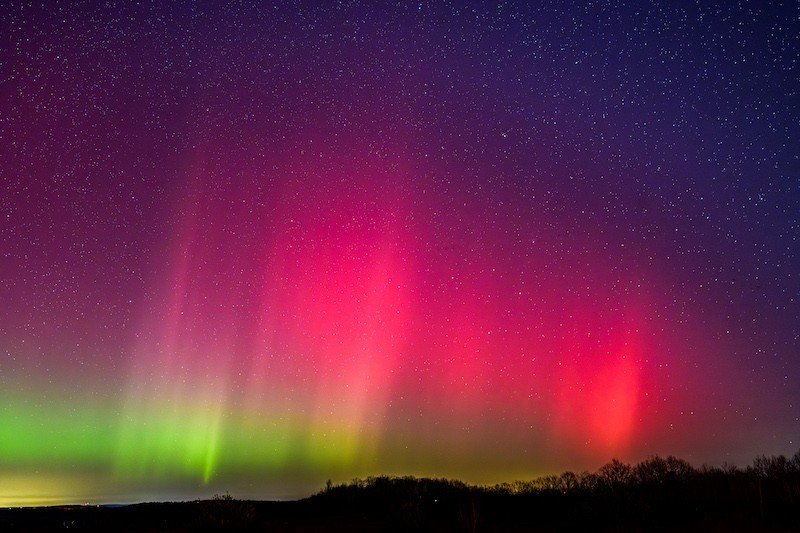
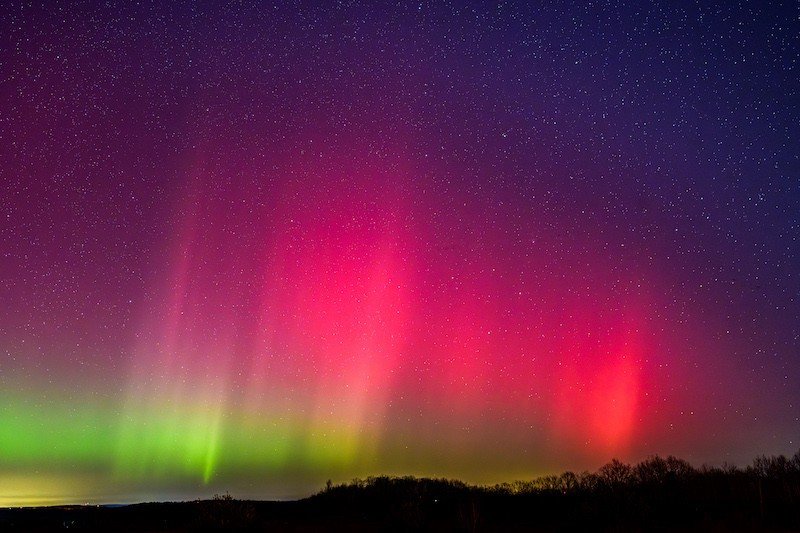
    Want to shoot northern lights?

    Your friends are posting their best Northern Lights pics on Facebook and Instagram, and you want to try it too. How can you get the best shot on a camera that isn’t a cell phone?

    Capturing a strong photograph of the Northern Lights depends on using the right equipment, settings and technique, and on adapting to changing light and movement in the sky. A full-frame digital camera mounted on a tripod offers the best results because it can collect more light with lower noise during long exposures. Jessica Fridrich uses a Nikon Z7 for her aurora work.

    “I must say that, until recently, I have always considered the Northern Lights to be a phenomenon that is only visible from polar regions. Last year, I realized that I had been missing out on a lot of fun.”

    What settings does she use? She typically sets the white balance to 4000K and exposes for about six seconds at ISO 1600 to 4000 with an f/2.8 lens. These choices come from practical considerations: long exposures and relatively high ISO values allow the sensor to gather enough faint light from fast-changing auroral structures, while an aperture of f/2.8 lets in more light during each exposure.

    Environmental conditions change the settings. When the Moon is out or when there is light pollution, the ISO should be reduced so the sky does not overexpose. If the aurora begins to move quickly, the exposure needs to be shortened to avoid motion blur in the structures. In that case, increasing the ISO compensates for the reduced exposure time; Fridrich shortens the exposure to four seconds or even two seconds when needed. Some auroral displays change shape rapidly, so adapting exposure length in real time is important.

    Correct focus is essential. Autofocus is unreliable in darkness, so the camera must be switched to manual focus. The best way to achieve sharpness is to focus on a bright star. This ensures that both the sky and the auroral structures will appear crisp. Lenses with large apertures, meaning low f-stop values, work particularly well for night photography because they allow more light into the camera. Fridrich says she often uses a 24–70 mm f/2.8 lens, keeping it wide open. The zoom capability helps capture specific details within the display. For exceptionally large or bright auroras, especially those that stretch overhead, a wide-angle lens is preferred because it can capture the full extent of the scene.

    Moisture is another practical concern. Dew often condenses on lenses during long sessions outdoors, so a simple lens cloth is important to keep the glass clear.

    Phones can also record auroras. Using night mode is generally sufficient, as modern phones automatically lengthen exposure time and increase sensitivity in low light. For both cameras and phones, saving images in RAW or another uncompressed format provides more flexibility for later editing, though JPEGs are acceptable for those who do not plan to process their images.

    Sites like Space Weather can help you find the right nights

    The post Shooting Northern lights? Here are the best camera settings appeared first on Green Prophet.
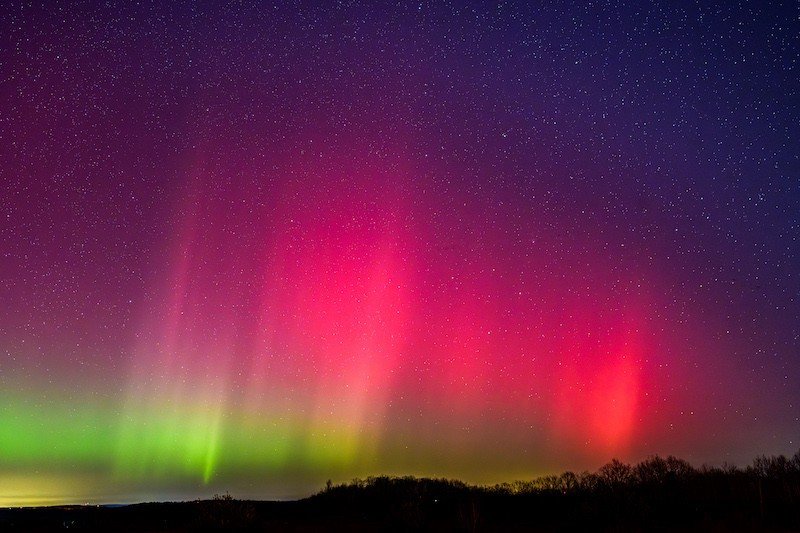
  • Shooting Northern lights? Here are the best camera settings

    Shooting Northern lights? Here are the best camera settings

    Want to shoot northern lights? Your friends are posting their best Northern Lights pics on Facebook and Instagram, and you want to try it too. How can you get the best shot on a camera that isn’t a cell phone? Capturing a strong photograph of the Northern Lights depends on using the right equipment, settings […]

    The post Shooting Northern lights? Here are the best camera settings appeared first on Green Prophet.

    Want to shoot northern lights?

    Your friends are posting their best Northern Lights pics on Facebook and Instagram, and you want to try it too. How can you get the best shot on a camera that isn’t a cell phone?

    Capturing a strong photograph of the Northern Lights depends on using the right equipment, settings and technique, and on adapting to changing light and movement in the sky. A full-frame digital camera mounted on a tripod offers the best results because it can collect more light with lower noise during long exposures. Jessica Fridrich uses a Nikon Z7 for her aurora work.

    “I must say that, until recently, I have always considered the Northern Lights to be a phenomenon that is only visible from polar regions. Last year, I realized that I had been missing out on a lot of fun.”

    What settings does she use? She typically sets the white balance to 4000K and exposes for about six seconds at ISO 1600 to 4000 with an f/2.8 lens. These choices come from practical considerations: long exposures and relatively high ISO values allow the sensor to gather enough faint light from fast-changing auroral structures, while an aperture of f/2.8 lets in more light during each exposure.

    Environmental conditions change the settings. When the Moon is out or when there is light pollution, the ISO should be reduced so the sky does not overexpose. If the aurora begins to move quickly, the exposure needs to be shortened to avoid motion blur in the structures. In that case, increasing the ISO compensates for the reduced exposure time; Fridrich shortens the exposure to four seconds or even two seconds when needed. Some auroral displays change shape rapidly, so adapting exposure length in real time is important.

    Correct focus is essential. Autofocus is unreliable in darkness, so the camera must be switched to manual focus. The best way to achieve sharpness is to focus on a bright star. This ensures that both the sky and the auroral structures will appear crisp. Lenses with large apertures, meaning low f-stop values, work particularly well for night photography because they allow more light into the camera. Fridrich says she often uses a 24–70 mm f/2.8 lens, keeping it wide open. The zoom capability helps capture specific details within the display. For exceptionally large or bright auroras, especially those that stretch overhead, a wide-angle lens is preferred because it can capture the full extent of the scene.

    Moisture is another practical concern. Dew often condenses on lenses during long sessions outdoors, so a simple lens cloth is important to keep the glass clear.

    Phones can also record auroras. Using night mode is generally sufficient, as modern phones automatically lengthen exposure time and increase sensitivity in low light. For both cameras and phones, saving images in RAW or another uncompressed format provides more flexibility for later editing, though JPEGs are acceptable for those who do not plan to process their images.

    Sites like Space Weather can help you find the right nights

    The post Shooting Northern lights? Here are the best camera settings appeared first on Green Prophet.

  • American students build “bread-loaf sized” satellite they will send to space

    American students build “bread-loaf sized” satellite they will send to space

    A bread-sized satellite developed by students Talk about an amazing science fair opportunity! A multidisciplinary team of undergraduate students led by the University of New Hampshire designed and built a mini satellite, known as a CubeSat, that will launch into space to gather data in collaboration with NASA’s Interstellar Mapping and Acceleration Probe (IMAP) mission. […]

    The post American students build “bread-loaf sized” satellite they will send to space appeared first on Green Prophet.

    Want to shoot northern lights?

    Your friends are posting their best Northern Lights pics on Facebook and Instagram, and you want to try it too. How can you get the best shot on a camera that isn’t a cell phone?

    Capturing a strong photograph of the Northern Lights depends on using the right equipment, settings and technique, and on adapting to changing light and movement in the sky. A full-frame digital camera mounted on a tripod offers the best results because it can collect more light with lower noise during long exposures. Jessica Fridrich uses a Nikon Z7 for her aurora work.

    “I must say that, until recently, I have always considered the Northern Lights to be a phenomenon that is only visible from polar regions. Last year, I realized that I had been missing out on a lot of fun.”

    What settings does she use? She typically sets the white balance to 4000K and exposes for about six seconds at ISO 1600 to 4000 with an f/2.8 lens. These choices come from practical considerations: long exposures and relatively high ISO values allow the sensor to gather enough faint light from fast-changing auroral structures, while an aperture of f/2.8 lets in more light during each exposure.

    Environmental conditions change the settings. When the Moon is out or when there is light pollution, the ISO should be reduced so the sky does not overexpose. If the aurora begins to move quickly, the exposure needs to be shortened to avoid motion blur in the structures. In that case, increasing the ISO compensates for the reduced exposure time; Fridrich shortens the exposure to four seconds or even two seconds when needed. Some auroral displays change shape rapidly, so adapting exposure length in real time is important.

    Correct focus is essential. Autofocus is unreliable in darkness, so the camera must be switched to manual focus. The best way to achieve sharpness is to focus on a bright star. This ensures that both the sky and the auroral structures will appear crisp. Lenses with large apertures, meaning low f-stop values, work particularly well for night photography because they allow more light into the camera. Fridrich says she often uses a 24–70 mm f/2.8 lens, keeping it wide open. The zoom capability helps capture specific details within the display. For exceptionally large or bright auroras, especially those that stretch overhead, a wide-angle lens is preferred because it can capture the full extent of the scene.

    Moisture is another practical concern. Dew often condenses on lenses during long sessions outdoors, so a simple lens cloth is important to keep the glass clear.

    Phones can also record auroras. Using night mode is generally sufficient, as modern phones automatically lengthen exposure time and increase sensitivity in low light. For both cameras and phones, saving images in RAW or another uncompressed format provides more flexibility for later editing, though JPEGs are acceptable for those who do not plan to process their images.

    Sites like Space Weather can help you find the right nights

    The post Shooting Northern lights? Here are the best camera settings appeared first on Green Prophet.

  • What I See Clearly Now That I Can’t See Clearly

    What I See Clearly Now That I Can’t See Clearly

    “The most beautiful things in the world cannot be seen… they must be felt with the heart.” ~Helen Keller

    I didn’t want to admit it—not to myself, not to anyone. But I am slowly going blind.

    That truth is difficult to write, harder still to live. I’m seventy years old. I’ve survived war zones, illness, caregiving, and creative risks. I’ve worked as a documentary filmmaker, teacher, and mentor. But this—this quiet, gradual vanishing of sight—feels like the loneliest struggle of all.

    I have moderate to advanced macular degeneration in both eyes. My right eye is nearly gone, and my …

    “The most beautiful things in the world cannot be seen… they must be felt with the heart.” ~Helen Keller

    I didn’t want to admit it—not to myself, not to anyone. But I am slowly going blind.

    That truth is difficult to write, harder still to live. I’m seventy years old. I’ve survived war zones, illness, caregiving, and creative risks. I’ve worked as a documentary filmmaker, teacher, and mentor. But this—this quiet, gradual vanishing of sight—feels like the loneliest struggle of all.

    I have moderate to advanced macular degeneration in both eyes. My right eye is nearly gone, and my left is fading. Every two weeks, I receive injections to try to preserve what vision remains. It’s a routine I now live with—and one I dread.

    Living in a Vision-Centric World

    We live in a world that privileges sight above all other senses.

    From billboards to smartphones, from flashy design to social cues, vision is the dominant sense in American culture. If you can’t see clearly, you fall behind. You’re overlooked. The world stops making space for you.

    Is one sense truly more valuable than another? Philosophically, no. But socially, yes. In this culture, blindness is feared, pitied, or ignored—not understood. And so are most disabilities.

    Accessibility is often an afterthought. Accommodation, a burden. To live in a disabled body in this world is to be reminded—again and again—that your needs are inconvenient.

    I think of people in other countries—millions without access to care or even diagnosis. I thank the deities, ancestors, and forces of compassion that I don’t have something worse. And I remind myself: as painful as this is, I am lucky.

    But it is still bleak and painful to coexist with the physical world when it no longer sees you clearly—and when you can no longer see it.

    How a Filmmaker Faces Blindness

    As my sight fades, one question haunts me: How can I be a filmmaker, writer, and teacher without the eyes I once depended on?

    I often think of Beethoven. He lost his hearing gradually, as I’m losing my sight. A composer who could no longer hear—but still created. Still transmitted music. Still found beauty in silence.

    I understand his despair—and his devotion. No, I’m not Beethoven. But I am someone whose life has been shaped by visual storytelling. And now I must learn to shape it by feel, by memory, by trust.

    I rely on accessibility tools. I listen to every word I write. I use audio cues, screen readers, and my own internal voice. I still write in flow when I can—but more slowly, word by word. I revise by sound. I rebuild by sense. I write proprioceptively—feeling the shape of a sentence in my fingers and breath before it lands on the screen.

    It’s not efficient. But it’s alive. And in some ways, it’s more honest than before.

    Try ordering groceries with low vision. Tiny gray text on a white background. Menus with no labels. Buttons you can’t find. After ten minutes, I give up—not just on the website, but on dinner, on the day.

    This is what disability looks like in the digital age: Not darkness, but exclusion. Not silence, but indifference.

    Even with tools, even with technology, it’s exhausting. The internet—a space with so much potential to empower—too often becomes a maze for those who can’t see clearly. It is bleak to live in a world that offers solutions in theory, but not in practice.

    I still teach. I still mentor. But the way I teach has changed.

    I no longer rely on visual feedback. I ask students to describe their work aloud. I listen closely—for meaning, for emotion, for clarity of purpose. I guide not by looking, but by sensing.

    This isn’t less than—it’s different. Sometimes richer. Teaching has become more relational, more intentional. Not about being the expert, but about being present.

    And still, I miss what I had. Every task takes more time. Every email is a mountain. But I carry on—not out of stubbornness, but because this is who I am. A teacher. A creator. A witness.

    Buddhism, Impermanence, and Grief

    So where do I put this pain?

    Buddhism helps. It teaches that all forms are impermanent. Sight fades. Bodies change. Clinging brings suffering. But letting go—softly, attentively—can bring peace.

    That doesn’t mean I bypass grief. I live with it. I breathe with it.

    There’s a Zen story of a man who lost an arm. Someone asked him how he was coping. He replied, “It is as if I lost a jewel. But the moon still shines.”

    I think of that often.

    I have lost a jewel. But I still see the moon. Sometimes not with my eyes, but with memory, with feeling, with breath.

    The Wisdom of Slowness

    My writing is slow now. Not because I’ve lost my voice, but because I must hear it differently.

    I still experience flow—but not in the old way. I write word by word. Then I listen. Then I rewrite. I move like someone walking across a dark room, hands outstretched—not afraid, but attentive.

    This is how I create now. Deliberately. Tenderly. With presence.

    And in this slow, difficult process, I’ve found something unexpected: a deeper connection to my own language. A deeper longing to make others feel something true.

    Even as I fade from the visual world, I am finding a new way to see.

    What I Still Offer

    If there’s one thing I can offer—through blindness, grief, and slowness—it’s this: We don’t lose ourselves when we lose abilities or roles. We’re not disappearing. We’re still here. Just doing things differently—more slowly, more attentively, and perhaps with a deeper sense of meaning.

    One day, I may not be able to see the screen at all. But I will still be a writer. Still be a teacher. Still be someone who sees, in the ways that matter most.

    Even if the light goes out in my eyes, it does not have to go out in my voice.

    And if you’re reading this, then the effort was worth it.

    About Tony Collins

    Tony Collins, EdD, MFA, is a writer, documentary filmmaker, and educator whose work explores presence, creativity, and meaning in everyday life. His essays blend storytelling and reflection in the style of creative nonfiction, drawing on experiences from filmmaking, travel, and caregiving. He is the author of Creative Scholarship: Rethinking Evaluation in Film and New Media Windows to the Sea: Collected Writings. You can read more of his essays and reflections on his Substack at tonycollins.substack.com.

    Get in the conversation! Click here to leave a comment on the site.

  • How to Calm Anxiety That’s Rooted in Childhood Wounds

    How to Calm Anxiety That’s Rooted in Childhood Wounds

    “Anxiety is a response to a nervous system that learned early on it had to protect itself.” ~Dr. Hilary Jacobs Hendel

    Anxiety shaped much of my life—how I showed up, how I held myself back, and how I connected with others. For years, I didn’t even know what it was. I just knew the pounding heart, the tight chest, the trembling hands. I knew the shame that followed every “failure,” big or small, and the fear I would never be enough.

    For a long time, I thought I was the problem. But anxiety isn’t a moral failing. It’s a part …

    “The most beautiful things in the world cannot be seen… they must be felt with the heart.” ~Helen Keller

    I didn’t want to admit it—not to myself, not to anyone. But I am slowly going blind.

    That truth is difficult to write, harder still to live. I’m seventy years old. I’ve survived war zones, illness, caregiving, and creative risks. I’ve worked as a documentary filmmaker, teacher, and mentor. But this—this quiet, gradual vanishing of sight—feels like the loneliest struggle of all.

    I have moderate to advanced macular degeneration in both eyes. My right eye is nearly gone, and my left is fading. Every two weeks, I receive injections to try to preserve what vision remains. It’s a routine I now live with—and one I dread.

    Living in a Vision-Centric World

    We live in a world that privileges sight above all other senses.

    From billboards to smartphones, from flashy design to social cues, vision is the dominant sense in American culture. If you can’t see clearly, you fall behind. You’re overlooked. The world stops making space for you.

    Is one sense truly more valuable than another? Philosophically, no. But socially, yes. In this culture, blindness is feared, pitied, or ignored—not understood. And so are most disabilities.

    Accessibility is often an afterthought. Accommodation, a burden. To live in a disabled body in this world is to be reminded—again and again—that your needs are inconvenient.

    I think of people in other countries—millions without access to care or even diagnosis. I thank the deities, ancestors, and forces of compassion that I don’t have something worse. And I remind myself: as painful as this is, I am lucky.

    But it is still bleak and painful to coexist with the physical world when it no longer sees you clearly—and when you can no longer see it.

    How a Filmmaker Faces Blindness

    As my sight fades, one question haunts me: How can I be a filmmaker, writer, and teacher without the eyes I once depended on?

    I often think of Beethoven. He lost his hearing gradually, as I’m losing my sight. A composer who could no longer hear—but still created. Still transmitted music. Still found beauty in silence.

    I understand his despair—and his devotion. No, I’m not Beethoven. But I am someone whose life has been shaped by visual storytelling. And now I must learn to shape it by feel, by memory, by trust.

    I rely on accessibility tools. I listen to every word I write. I use audio cues, screen readers, and my own internal voice. I still write in flow when I can—but more slowly, word by word. I revise by sound. I rebuild by sense. I write proprioceptively—feeling the shape of a sentence in my fingers and breath before it lands on the screen.

    It’s not efficient. But it’s alive. And in some ways, it’s more honest than before.

    Try ordering groceries with low vision. Tiny gray text on a white background. Menus with no labels. Buttons you can’t find. After ten minutes, I give up—not just on the website, but on dinner, on the day.

    This is what disability looks like in the digital age: Not darkness, but exclusion. Not silence, but indifference.

    Even with tools, even with technology, it’s exhausting. The internet—a space with so much potential to empower—too often becomes a maze for those who can’t see clearly. It is bleak to live in a world that offers solutions in theory, but not in practice.

    I still teach. I still mentor. But the way I teach has changed.

    I no longer rely on visual feedback. I ask students to describe their work aloud. I listen closely—for meaning, for emotion, for clarity of purpose. I guide not by looking, but by sensing.

    This isn’t less than—it’s different. Sometimes richer. Teaching has become more relational, more intentional. Not about being the expert, but about being present.

    And still, I miss what I had. Every task takes more time. Every email is a mountain. But I carry on—not out of stubbornness, but because this is who I am. A teacher. A creator. A witness.

    Buddhism, Impermanence, and Grief

    So where do I put this pain?

    Buddhism helps. It teaches that all forms are impermanent. Sight fades. Bodies change. Clinging brings suffering. But letting go—softly, attentively—can bring peace.

    That doesn’t mean I bypass grief. I live with it. I breathe with it.

    There’s a Zen story of a man who lost an arm. Someone asked him how he was coping. He replied, “It is as if I lost a jewel. But the moon still shines.”

    I think of that often.

    I have lost a jewel. But I still see the moon. Sometimes not with my eyes, but with memory, with feeling, with breath.

    The Wisdom of Slowness

    My writing is slow now. Not because I’ve lost my voice, but because I must hear it differently.

    I still experience flow—but not in the old way. I write word by word. Then I listen. Then I rewrite. I move like someone walking across a dark room, hands outstretched—not afraid, but attentive.

    This is how I create now. Deliberately. Tenderly. With presence.

    And in this slow, difficult process, I’ve found something unexpected: a deeper connection to my own language. A deeper longing to make others feel something true.

    Even as I fade from the visual world, I am finding a new way to see.

    What I Still Offer

    If there’s one thing I can offer—through blindness, grief, and slowness—it’s this: We don’t lose ourselves when we lose abilities or roles. We’re not disappearing. We’re still here. Just doing things differently—more slowly, more attentively, and perhaps with a deeper sense of meaning.

    One day, I may not be able to see the screen at all. But I will still be a writer. Still be a teacher. Still be someone who sees, in the ways that matter most.

    Even if the light goes out in my eyes, it does not have to go out in my voice.

    And if you’re reading this, then the effort was worth it.

    About Tony Collins

    Tony Collins, EdD, MFA, is a writer, documentary filmmaker, and educator whose work explores presence, creativity, and meaning in everyday life. His essays blend storytelling and reflection in the style of creative nonfiction, drawing on experiences from filmmaking, travel, and caregiving. He is the author of Creative Scholarship: Rethinking Evaluation in Film and New Media Windows to the Sea: Collected Writings. You can read more of his essays and reflections on his Substack at tonycollins.substack.com.

    Get in the conversation! Click here to leave a comment on the site.

  • COP30 Is Designed to Confuse—So the Real Climate Blockers Stay Hidden

    COP30 Is Designed to Confuse—So the Real Climate Blockers Stay Hidden

    The United States is here as the biggest donor to the World Bank, which is now the interim trustee and host of both the TFFF as well as the Loss and Damage Fund. So they hold the purse strings to some of the biggest parts of climate action. And at home, they’re also using tariffs and economic sanctions to weaponize climate action and to prevent other countries from being able to take the action they need domestically to respond to the climate crisis. So the US is very much here. They’ve taken off the gloves and they’re ready to throw down, as are their other fight club buddies Canada, Australia, Norway, and the EU.

    The post COP30 Is Designed to Confuse—So the Real Climate Blockers Stay Hidden appeared first on Green Prophet.

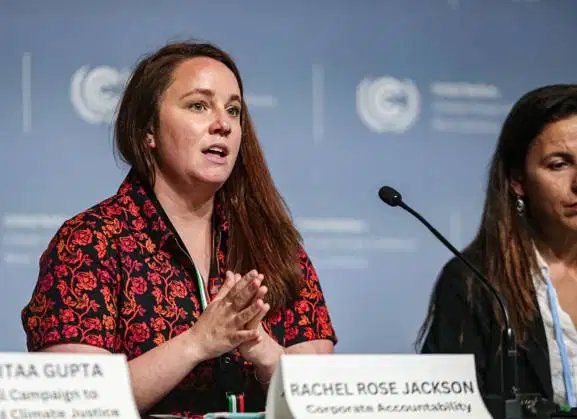
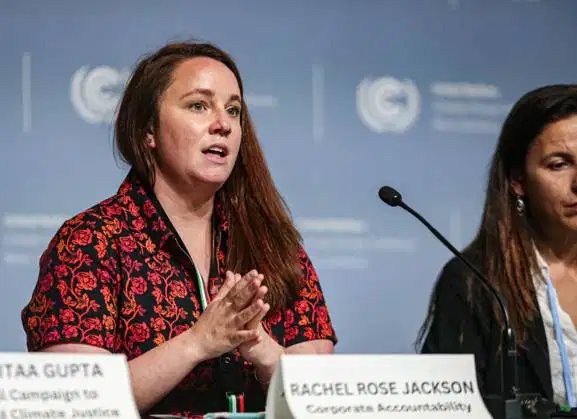
    Rachel Rose Jackson

    Rachel Rose Jackson

    Is COP30 intentionally confusing and opaque so the public can’t see how Global North countries and big polluters block real climate action. This is the argument of Rachel Rose Jackson, Director of Climate Research and Policy at Corporate Accountability. Behind closed doors, she asserts, wealthy nations avoid paying climate debt while expanding fossil fuels, and fossil fuel lobbyists flood the negotiations. The result is an artificial COP bubble disconnected from real-world climate crises, designed to protect polluters rather than people.

    Here is her piece.

    “If you’re finding it almost impossible to track and understand the finer details of what is happening across the negotiating rooms of COP30, you are not alone. It’s tediously technical, and at best very confusing. This is by design. It’s all part of a carefully orchestrated plan to distance every day humans from what happens here, to construct veils of secrecy, and to create a fake, alternate universe that spurs a complete disconnect from the reality of the world that we’re all living and the climate crisis that we’re all experiencing outside of these halls.

    This is an intentional plan to distract and distance from the typhoons that are currently happening in the Philippines while we are here, where hundreds of people are dying, and many activists here are not even sure if their families are safe or if they’ll come home to a community that was the same as when they left. This is a plan to create intentional disconnect from the trillions of dollars that are being spent annually on war and fossil fuel violence in places like Palestine. From the wildfires, from the floods, from the grabbed lands, from the harm caused all around the world by the very same actors that are here creating this disconnect.

    It is not a coincidence that it is so difficult to track the inner workings of COP30. This carefully orchestrated illusion is crafted by the very same countries that are most responsible for climate change and most responsible for the past three decades of blocking progress to address it. I’m talking about Global North– the countries whose economies have gotten rich off fossil fuels, extracting and burning and profiting at the expense of people across the world, particularly Global South communities, frontline communities, and Indigenous Peoples.

    In clearer terms, here’s what’s happening behind the doors of COP30. The systematic denial of the trillions of dollars that is overdue in climate debt by the Global North to communities in the Global South who are hit hardest and worst. This debt is not charity, it’s not kindness, it’s owed, and it’s long overdue. There’s then the thorough withdrawal of all other forms of meaningful finance that have the chance to become public and people-centered, on one hand, and the rolling out and ramping up of carbon markets and other ‘carbon finance’ schemes that allow the Global North and Big Polluters to continue profit off of polluting the planet. And then, the pretense of the TFFF, which is riddled with loopholes and is another attempt to profit off of nature. All of this while at home, these same Global North countries are proclaiming climate championship while doing very little to decrease emissions or to do their fair share of climate action. Instead, they are actually scaling up fossil fuel production.

    Last week, research by Oil Change International showed that just four Global North countries have derailed an oil and gas phase out since the Paris Agreement. This quartet increased their oil and gas production by 40% between when the Paris Agreement was agreed and last year. In this same period, the rest of the world had a combined oil and gas decrease of 2%. These planet wrecking climate blockers are Canada, Australia, Norway, and the United States.

    Which brings me to the United States. They’re not at COP30, right? Incorrect. Let’s be clear, the United States has always been the largest blocker of climate action at home and abroad, the largest polluter, and the biggest bully. They may not be officially at COP30, but they are very much undermining action. And the fact that they don’t have an official delegation doesn’t change that.

    The United States is here as the biggest donor to the World Bank, which is now the interim trustee and host of both the TFFF as well as the Loss and Damage Fund. So they hold the purse strings to some of the biggest parts of climate action. And at home, they’re also using tariffs and economic sanctions to weaponize climate action and to prevent other countries from being able to take the action they need domestically to respond to the climate crisis. So the US is very much here. They’ve taken off the gloves and they’re ready to throw down, as are their other fight club buddies Canada, Australia, Norway, and the EU.

    In addition, it’s also really important we understand that it is not only countries who are being invited to COP30 to do dirty. Kick Big Polluters Out just released exposing that there are more than 1,600 fossil fuel lobbyists at COP30. Thats means 1 out of 25 participants is advancing a fossil-fueled agenda, outnumbering delegates from the Philippines from 50 to one and delegates from Jamaica 40 to one. Big Polluters are overrunning this place. They are everywhere. They’re whispering in the ears of delegates. They are in rooms that even civil society doesn’t have access to. And just 90 of these oil and gas corporations that have attended COP26-COP29 are responsible for nearly 60% of oil and gas production in 2024.

    So as we head into the final days of these critical talks, and while the climate crisis impacts people all around the world, we want to know what are Big Polluters doing here? And if Global North countries aren’t getting serious about doing their fair share of climate action, why are they wasting our time? As the window COP 30 starts to wind down, so-called world leaders mustIt’s time to step up. It’s time to Kick Big Polluters Out. It’s time for Global North countries to do their long-overdue fair share of climate action, to justly end fossil fuels, and to crack open that disconnect between the real world that’s outside these halls and the carefully orchestrated artificial universe inside these halls.”

    The post COP30 Is Designed to Confuse—So the Real Climate Blockers Stay Hidden appeared first on Green Prophet.

  • UNESCO’s virtual museum of stolen cultural objects

    UNESCO’s virtual museum of stolen cultural objects

    Inside the virtual galleries, visitors will find everything from looted manuscripts to sacred sculptures to objects trafficked across borders and into private hands. Each artifact is accompanied by its backstory: where it was created, how it disappeared, what it meant to the community that once held it. Some pieces have known fates; others are still missing, possibly sitting on a shelf in a Dubai flat or a house in Spain. UNESCO wants to make these absences visible — to show the wounds as well as the artifacts.

    The post UNESCO’s virtual museum of stolen cultural objects appeared first on Green Prophet.

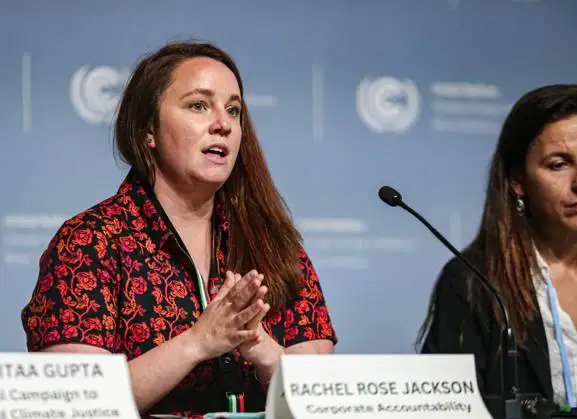
    Rachel Rose Jackson

    Rachel Rose Jackson

    Is COP30 intentionally confusing and opaque so the public can’t see how Global North countries and big polluters block real climate action. This is the argument of Rachel Rose Jackson, Director of Climate Research and Policy at Corporate Accountability. Behind closed doors, she asserts, wealthy nations avoid paying climate debt while expanding fossil fuels, and fossil fuel lobbyists flood the negotiations. The result is an artificial COP bubble disconnected from real-world climate crises, designed to protect polluters rather than people.

    Here is her piece.

    “If you’re finding it almost impossible to track and understand the finer details of what is happening across the negotiating rooms of COP30, you are not alone. It’s tediously technical, and at best very confusing. This is by design. It’s all part of a carefully orchestrated plan to distance every day humans from what happens here, to construct veils of secrecy, and to create a fake, alternate universe that spurs a complete disconnect from the reality of the world that we’re all living and the climate crisis that we’re all experiencing outside of these halls.

    This is an intentional plan to distract and distance from the typhoons that are currently happening in the Philippines while we are here, where hundreds of people are dying, and many activists here are not even sure if their families are safe or if they’ll come home to a community that was the same as when they left. This is a plan to create intentional disconnect from the trillions of dollars that are being spent annually on war and fossil fuel violence in places like Palestine. From the wildfires, from the floods, from the grabbed lands, from the harm caused all around the world by the very same actors that are here creating this disconnect.

    It is not a coincidence that it is so difficult to track the inner workings of COP30. This carefully orchestrated illusion is crafted by the very same countries that are most responsible for climate change and most responsible for the past three decades of blocking progress to address it. I’m talking about Global North– the countries whose economies have gotten rich off fossil fuels, extracting and burning and profiting at the expense of people across the world, particularly Global South communities, frontline communities, and Indigenous Peoples.

    In clearer terms, here’s what’s happening behind the doors of COP30. The systematic denial of the trillions of dollars that is overdue in climate debt by the Global North to communities in the Global South who are hit hardest and worst. This debt is not charity, it’s not kindness, it’s owed, and it’s long overdue. There’s then the thorough withdrawal of all other forms of meaningful finance that have the chance to become public and people-centered, on one hand, and the rolling out and ramping up of carbon markets and other ‘carbon finance’ schemes that allow the Global North and Big Polluters to continue profit off of polluting the planet. And then, the pretense of the TFFF, which is riddled with loopholes and is another attempt to profit off of nature. All of this while at home, these same Global North countries are proclaiming climate championship while doing very little to decrease emissions or to do their fair share of climate action. Instead, they are actually scaling up fossil fuel production.

    Last week, research by Oil Change International showed that just four Global North countries have derailed an oil and gas phase out since the Paris Agreement. This quartet increased their oil and gas production by 40% between when the Paris Agreement was agreed and last year. In this same period, the rest of the world had a combined oil and gas decrease of 2%. These planet wrecking climate blockers are Canada, Australia, Norway, and the United States.

    Which brings me to the United States. They’re not at COP30, right? Incorrect. Let’s be clear, the United States has always been the largest blocker of climate action at home and abroad, the largest polluter, and the biggest bully. They may not be officially at COP30, but they are very much undermining action. And the fact that they don’t have an official delegation doesn’t change that.

    The United States is here as the biggest donor to the World Bank, which is now the interim trustee and host of both the TFFF as well as the Loss and Damage Fund. So they hold the purse strings to some of the biggest parts of climate action. And at home, they’re also using tariffs and economic sanctions to weaponize climate action and to prevent other countries from being able to take the action they need domestically to respond to the climate crisis. So the US is very much here. They’ve taken off the gloves and they’re ready to throw down, as are their other fight club buddies Canada, Australia, Norway, and the EU.

    In addition, it’s also really important we understand that it is not only countries who are being invited to COP30 to do dirty. Kick Big Polluters Out just released exposing that there are more than 1,600 fossil fuel lobbyists at COP30. Thats means 1 out of 25 participants is advancing a fossil-fueled agenda, outnumbering delegates from the Philippines from 50 to one and delegates from Jamaica 40 to one. Big Polluters are overrunning this place. They are everywhere. They’re whispering in the ears of delegates. They are in rooms that even civil society doesn’t have access to. And just 90 of these oil and gas corporations that have attended COP26-COP29 are responsible for nearly 60% of oil and gas production in 2024.

    So as we head into the final days of these critical talks, and while the climate crisis impacts people all around the world, we want to know what are Big Polluters doing here? And if Global North countries aren’t getting serious about doing their fair share of climate action, why are they wasting our time? As the window COP 30 starts to wind down, so-called world leaders mustIt’s time to step up. It’s time to Kick Big Polluters Out. It’s time for Global North countries to do their long-overdue fair share of climate action, to justly end fossil fuels, and to crack open that disconnect between the real world that’s outside these halls and the carefully orchestrated artificial universe inside these halls.”

    The post COP30 Is Designed to Confuse—So the Real Climate Blockers Stay Hidden appeared first on Green Prophet.

  • Chicken and beef plumping. Are You Paying For Meat, Or For Water?

    Chicken and beef plumping. Are You Paying For Meat, Or For Water?

    Even meat labeled organic may contain injected saline, because FSIS lists salt and water as organic. The FSIS allows selling injected meat as “natural” and “fresh” unless the added solution changes the product’s nature in ways that require different labeling. If you want to make absolutely sure that product is free of added salt and water, look for a statement on the label reading “no artificial ingredients,” “minimally processed,” or similar.

    The post Chicken and beef plumping. Are You Paying For Meat, Or For Water? appeared first on Green Prophet.

    Rachel Rose Jackson

    Rachel Rose Jackson

    Is COP30 intentionally confusing and opaque so the public can’t see how Global North countries and big polluters block real climate action. This is the argument of Rachel Rose Jackson, Director of Climate Research and Policy at Corporate Accountability. Behind closed doors, she asserts, wealthy nations avoid paying climate debt while expanding fossil fuels, and fossil fuel lobbyists flood the negotiations. The result is an artificial COP bubble disconnected from real-world climate crises, designed to protect polluters rather than people.

    Here is her piece.

    “If you’re finding it almost impossible to track and understand the finer details of what is happening across the negotiating rooms of COP30, you are not alone. It’s tediously technical, and at best very confusing. This is by design. It’s all part of a carefully orchestrated plan to distance every day humans from what happens here, to construct veils of secrecy, and to create a fake, alternate universe that spurs a complete disconnect from the reality of the world that we’re all living and the climate crisis that we’re all experiencing outside of these halls.

    This is an intentional plan to distract and distance from the typhoons that are currently happening in the Philippines while we are here, where hundreds of people are dying, and many activists here are not even sure if their families are safe or if they’ll come home to a community that was the same as when they left. This is a plan to create intentional disconnect from the trillions of dollars that are being spent annually on war and fossil fuel violence in places like Palestine. From the wildfires, from the floods, from the grabbed lands, from the harm caused all around the world by the very same actors that are here creating this disconnect.

    It is not a coincidence that it is so difficult to track the inner workings of COP30. This carefully orchestrated illusion is crafted by the very same countries that are most responsible for climate change and most responsible for the past three decades of blocking progress to address it. I’m talking about Global North– the countries whose economies have gotten rich off fossil fuels, extracting and burning and profiting at the expense of people across the world, particularly Global South communities, frontline communities, and Indigenous Peoples.

    In clearer terms, here’s what’s happening behind the doors of COP30. The systematic denial of the trillions of dollars that is overdue in climate debt by the Global North to communities in the Global South who are hit hardest and worst. This debt is not charity, it’s not kindness, it’s owed, and it’s long overdue. There’s then the thorough withdrawal of all other forms of meaningful finance that have the chance to become public and people-centered, on one hand, and the rolling out and ramping up of carbon markets and other ‘carbon finance’ schemes that allow the Global North and Big Polluters to continue profit off of polluting the planet. And then, the pretense of the TFFF, which is riddled with loopholes and is another attempt to profit off of nature. All of this while at home, these same Global North countries are proclaiming climate championship while doing very little to decrease emissions or to do their fair share of climate action. Instead, they are actually scaling up fossil fuel production.

    Last week, research by Oil Change International showed that just four Global North countries have derailed an oil and gas phase out since the Paris Agreement. This quartet increased their oil and gas production by 40% between when the Paris Agreement was agreed and last year. In this same period, the rest of the world had a combined oil and gas decrease of 2%. These planet wrecking climate blockers are Canada, Australia, Norway, and the United States.

    Which brings me to the United States. They’re not at COP30, right? Incorrect. Let’s be clear, the United States has always been the largest blocker of climate action at home and abroad, the largest polluter, and the biggest bully. They may not be officially at COP30, but they are very much undermining action. And the fact that they don’t have an official delegation doesn’t change that.

    The United States is here as the biggest donor to the World Bank, which is now the interim trustee and host of both the TFFF as well as the Loss and Damage Fund. So they hold the purse strings to some of the biggest parts of climate action. And at home, they’re also using tariffs and economic sanctions to weaponize climate action and to prevent other countries from being able to take the action they need domestically to respond to the climate crisis. So the US is very much here. They’ve taken off the gloves and they’re ready to throw down, as are their other fight club buddies Canada, Australia, Norway, and the EU.

    In addition, it’s also really important we understand that it is not only countries who are being invited to COP30 to do dirty. Kick Big Polluters Out just released exposing that there are more than 1,600 fossil fuel lobbyists at COP30. Thats means 1 out of 25 participants is advancing a fossil-fueled agenda, outnumbering delegates from the Philippines from 50 to one and delegates from Jamaica 40 to one. Big Polluters are overrunning this place. They are everywhere. They’re whispering in the ears of delegates. They are in rooms that even civil society doesn’t have access to. And just 90 of these oil and gas corporations that have attended COP26-COP29 are responsible for nearly 60% of oil and gas production in 2024.

    So as we head into the final days of these critical talks, and while the climate crisis impacts people all around the world, we want to know what are Big Polluters doing here? And if Global North countries aren’t getting serious about doing their fair share of climate action, why are they wasting our time? As the window COP 30 starts to wind down, so-called world leaders mustIt’s time to step up. It’s time to Kick Big Polluters Out. It’s time for Global North countries to do their long-overdue fair share of climate action, to justly end fossil fuels, and to crack open that disconnect between the real world that’s outside these halls and the carefully orchestrated artificial universe inside these halls.”

    The post COP30 Is Designed to Confuse—So the Real Climate Blockers Stay Hidden appeared first on Green Prophet.

  • The 2026 Tiny Buddha Calendar Is Ready for Holiday Gifting!

    The 2026 Tiny Buddha Calendar Is Ready for Holiday Gifting!

    Tiny Buddha's 2026 Day-to-Day Calendar

    Hi friend! As we head into the holiday season, I know many of us are starting to think about gifts for the people we love (and maybe a few things for ourselves as well). With that in mind, I wanted to remind you that the 2026 Tiny Buddha Day-to-Day Calendar is now available.

    It’s one of my favorite projects every year because I include the kind of daily reminders that I personally find validating, comforting, and encouraging—some from me, some from site contributors, and some from authors I enjoy. And as the number-one bestselling calendar in Mind-Body-Spirit for the past

    Tiny Buddha's 2026 Day-to-Day Calendar

    Hi friend! As we head into the holiday season, I know many of us are starting to think about gifts for the people we love (and maybe a few things for ourselves as well). With that in mind, I wanted to remind you that the 2026 Tiny Buddha Day-to-Day Calendar is now available.

    It’s one of my favorite projects every year because I include the kind of daily reminders that I personally find validating, comforting, and encouraging—some from me, some from site contributors, and some from authors I enjoy. And as the number-one bestselling calendar in Mind-Body-Spirit for the past two years, I know it’s become an annual staple for lots of readers.

    Featuring vibrant tear-off pages, the calendar is printed on FSC certified paper with soy-based ink and covers topics like happiness, love, relationships, change, meaning, mindfulness, self-care, letting go, and more.

    Here are a few recent reviews from the 2026 edition:

    “I got this as a gift last year and fell in love with all the advice from many different sources! So I ordered one for this year, and I just received my new one and it is the same! If you want gentle daily messages that not only inspire but also make you think, this is it!”

    “I buy this calendar every year, and I love it!!! I look forward to the daily inspiration. Sometimes you just need a little kick in the pants to get your mind right, and this calendar does that for me. Thank you!”

    “I love, love, the daily quotes, and this will be my third year of purchase. I would really miss them if I didn’t have them each day to read a different quote. They brighten my day.”

    If you’d like to bring a little Tiny Buddha wisdom into your home and your day—or give someone you love the gift of comfort and insight—you can grab a calendar (or two!) here.

    Thank you, as always, for being here and for supporting my work.

    About Lori Deschene

    Lori Deschene is the founder of Tiny Buddha. She started the site after struggling with depression, bulimia, c-PTSD, and toxic shame so she could recycle her former pain into something useful and inspire others to do the same. You can find her books, including Tiny Buddha’s Gratitude Journal and Tiny Buddha’s Worry Journal, here and learn more about her eCourse, Recreate Your Life Story, if you’re ready to transform your life and become the person you want to be.

    Get in the conversation! Click here to leave a comment on the site.