Blog

  • What a martian ice age left behind tells us about our future

    What a martian ice age left behind tells us about our future

    What we can learn from Mars about climate change We have heard that peak climate change might be in sight. Does Mars have more clues about our future? Travelling from Mars’s equator toward its northern latitudes, planetary scientists reach a region called Coloe Fossae — a landscape carved by deep valleys, collapsed blocks of terrain, […]

    The post What a martian ice age left behind tells us about our future appeared first on Green Prophet.

    hipster reads book while smoking a joint

    THC blood levels don’t reliably indicate driving impairment, meaning current per se laws risk penalizing sober drivers long after cannabis use.

    Previous research that evaluated the effect of the hallucinogenic molecules of cannabis (delta-9-tetrahydrocannabinol THC) the main psychoactive compound in cannabis on motor vehicle crashes concluded that there is no increase of crash risk because of detectable THC. The molecule may linger days after use and is not a reliable indicator that a driver is impaired, report scientists in a new study.

    Despite evidence showing no correlation between the detection of THC in the blood and driving impairment, 6 American states in the United States have per se laws using 2 or 5 ng/mL of THC as the cut-off point for driving under the influence of cannabis, while 12 have a zero-tolerance law.

    These cut-off points are considered face value evidence of driving impairment, which means that even if it has been several days since an individual’s last use of the drug and they show no behavioral impairment, they may still face legal risks, up to and including felony charges. In Dubai you can go to jail for having cannabis in your blood, even if the cannabis was consumed in London, Tel Aviv or Toronto.

    To address this issue, a team of researchers led by Dr. Thomas D. Marcotte, professor of psychiatry at the University of California, San Diego, and codirector of the Center for Medicinal Cannabis Research, set out to investigate the blood concentrations of THC in regular cannabis users, as well as the simulated driving performance for participants who exceeded per se cut-off points compared with those who were below these values. The researchers measured baseline concentrations of THC in 190 regular cannabis users after instructing participants to abstain from cannabis for at least 48 hours. Following abstention, the researchers also evaluated driving performance in this group using a driving simulator.

    From this, the team found that many regular users of cannabis exceed zero tolerance and per se THC cut-off point concentrations days after their last use. Specifically, 43% of participants exceeded zero-tolerance statutes at baseline, while 24% had baseline blood THC concentrations that were greater than or equal to the per se cut-off of 2 ng/mL, and 5.3% had blood concentrations greater than or equal to 5 ng/mL.

    Based on the results from the driving simulation, participants with elevated baseline concentrations of THC did no worse on a driving simulator compared with participants who were below per se cut-off points. Altogether, the results add to a growing body of evidence showing that current per se THC blood limit laws lack scientific credibility as face-value evidence of impairment.

    “More work needs to be done to address how to best identify drivers who are under the influence of cannabis and are unsafe to drive,” the study authors wrote. “At present, the best protocol is a combination of observations in the field and toxicology testing.” They also added that “an essential component of improving highway safety is collaborations between law enforcement and the scientific community to develop standards that are unbiased and potentially lifesaving.”

    The post Stoned and driving? High THC levels might not mean you are impaired appeared first on Green Prophet.


  • American college trains medical students on how to treat with cannabis

    American college trains medical students on how to treat with cannabis

    Students also gain hands-on experience in caring for patients using cannabis, as well as any other medications and illicit substances, after they begin their clinical rotations, he added. 

    The post American college trains medical students on how to treat with cannabis appeared first on Green Prophet.

    hipster reads book while smoking a joint

    THC blood levels don’t reliably indicate driving impairment, meaning current per se laws risk penalizing sober drivers long after cannabis use.

    Previous research that evaluated the effect of the hallucinogenic molecules of cannabis (delta-9-tetrahydrocannabinol THC) the main psychoactive compound in cannabis on motor vehicle crashes concluded that there is no increase of crash risk because of detectable THC. The molecule may linger days after use and is not a reliable indicator that a driver is impaired, report scientists in a new study.

    Despite evidence showing no correlation between the detection of THC in the blood and driving impairment, 6 American states in the United States have per se laws using 2 or 5 ng/mL of THC as the cut-off point for driving under the influence of cannabis, while 12 have a zero-tolerance law.

    These cut-off points are considered face value evidence of driving impairment, which means that even if it has been several days since an individual’s last use of the drug and they show no behavioral impairment, they may still face legal risks, up to and including felony charges. In Dubai you can go to jail for having cannabis in your blood, even if the cannabis was consumed in London, Tel Aviv or Toronto.

    To address this issue, a team of researchers led by Dr. Thomas D. Marcotte, professor of psychiatry at the University of California, San Diego, and codirector of the Center for Medicinal Cannabis Research, set out to investigate the blood concentrations of THC in regular cannabis users, as well as the simulated driving performance for participants who exceeded per se cut-off points compared with those who were below these values. The researchers measured baseline concentrations of THC in 190 regular cannabis users after instructing participants to abstain from cannabis for at least 48 hours. Following abstention, the researchers also evaluated driving performance in this group using a driving simulator.

    From this, the team found that many regular users of cannabis exceed zero tolerance and per se THC cut-off point concentrations days after their last use. Specifically, 43% of participants exceeded zero-tolerance statutes at baseline, while 24% had baseline blood THC concentrations that were greater than or equal to the per se cut-off of 2 ng/mL, and 5.3% had blood concentrations greater than or equal to 5 ng/mL.

    Based on the results from the driving simulation, participants with elevated baseline concentrations of THC did no worse on a driving simulator compared with participants who were below per se cut-off points. Altogether, the results add to a growing body of evidence showing that current per se THC blood limit laws lack scientific credibility as face-value evidence of impairment.

    “More work needs to be done to address how to best identify drivers who are under the influence of cannabis and are unsafe to drive,” the study authors wrote. “At present, the best protocol is a combination of observations in the field and toxicology testing.” They also added that “an essential component of improving highway safety is collaborations between law enforcement and the scientific community to develop standards that are unbiased and potentially lifesaving.”

    The post Stoned and driving? High THC levels might not mean you are impaired appeared first on Green Prophet.

  • Stoned and driving? High THC levels might not mean you are impaired

    Stoned and driving? High THC levels might not mean you are impaired

    THC blood levels don’t reliably indicate driving impairment, meaning current per se laws risk penalizing sober drivers long after cannabis use. Previous research that evaluated the effect of the hallucinogenic molecules of cannabis (delta-9-tetrahydrocannabinol THC) the main psychoactive compound in cannabis on motor vehicle crashes concluded that there is no increase of crash risk because […]

    The post Stoned and driving? High THC levels might not mean you are impaired appeared first on Green Prophet.

    hipster reads book while smoking a joint

    THC blood levels don’t reliably indicate driving impairment, meaning current per se laws risk penalizing sober drivers long after cannabis use.

    Previous research that evaluated the effect of the hallucinogenic molecules of cannabis (delta-9-tetrahydrocannabinol THC) the main psychoactive compound in cannabis on motor vehicle crashes concluded that there is no increase of crash risk because of detectable THC. The molecule may linger days after use and is not a reliable indicator that a driver is impaired, report scientists in a new study.

    Despite evidence showing no correlation between the detection of THC in the blood and driving impairment, 6 American states in the United States have per se laws using 2 or 5 ng/mL of THC as the cut-off point for driving under the influence of cannabis, while 12 have a zero-tolerance law.

    These cut-off points are considered face value evidence of driving impairment, which means that even if it has been several days since an individual’s last use of the drug and they show no behavioral impairment, they may still face legal risks, up to and including felony charges. In Dubai you can go to jail for having cannabis in your blood, even if the cannabis was consumed in London, Tel Aviv or Toronto.

    To address this issue, a team of researchers led by Dr. Thomas D. Marcotte, professor of psychiatry at the University of California, San Diego, and codirector of the Center for Medicinal Cannabis Research, set out to investigate the blood concentrations of THC in regular cannabis users, as well as the simulated driving performance for participants who exceeded per se cut-off points compared with those who were below these values. The researchers measured baseline concentrations of THC in 190 regular cannabis users after instructing participants to abstain from cannabis for at least 48 hours. Following abstention, the researchers also evaluated driving performance in this group using a driving simulator.

    From this, the team found that many regular users of cannabis exceed zero tolerance and per se THC cut-off point concentrations days after their last use. Specifically, 43% of participants exceeded zero-tolerance statutes at baseline, while 24% had baseline blood THC concentrations that were greater than or equal to the per se cut-off of 2 ng/mL, and 5.3% had blood concentrations greater than or equal to 5 ng/mL.

    Based on the results from the driving simulation, participants with elevated baseline concentrations of THC did no worse on a driving simulator compared with participants who were below per se cut-off points. Altogether, the results add to a growing body of evidence showing that current per se THC blood limit laws lack scientific credibility as face-value evidence of impairment.

    “More work needs to be done to address how to best identify drivers who are under the influence of cannabis and are unsafe to drive,” the study authors wrote. “At present, the best protocol is a combination of observations in the field and toxicology testing.” They also added that “an essential component of improving highway safety is collaborations between law enforcement and the scientific community to develop standards that are unbiased and potentially lifesaving.”

    The post Stoned and driving? High THC levels might not mean you are impaired appeared first on Green Prophet.
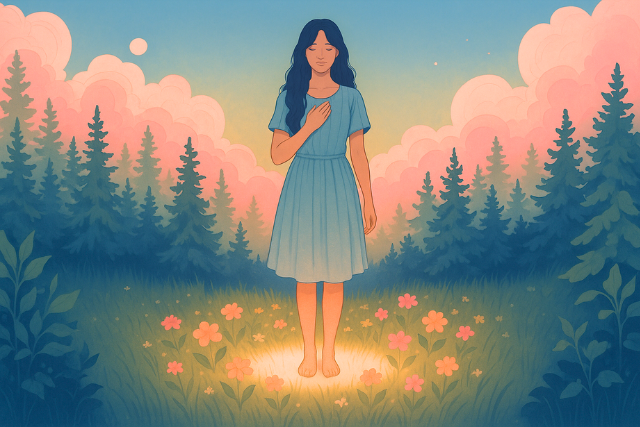
  • How to Return to Emotional Safety, One Sensory Anchor at a Time

    How to Return to Emotional Safety, One Sensory Anchor at a Time

    “In a sense, we are all time travelers drifting through our memories, returning to the places where we once lived.” ~Vladimir Nabokov

    I found it by accident, a grainy image of my childhood bedroom wallpaper.

    It was tucked in the blurry background of a photo in an old family album, a detail I’d never noticed until that day.

    White background. Tiny pastel hearts and flowers. A border of ragdoll girls in dresses the color of mint candies and pink lemonade.

    My body tingled with recognition.

    It was like finding a piece of myself I didn’t remember existed. Not the grown-up …

    “In a sense, we are all time travelers drifting through our memories, returning to the places where we once lived.” ~Vladimir Nabokov

    I found it by accident, a grainy image of my childhood bedroom wallpaper.

    It was tucked in the blurry background of a photo in an old family album, a detail I’d never noticed until that day.

    White background. Tiny pastel hearts and flowers. A border of ragdoll girls in dresses the color of mint candies and pink lemonade.

    My body tingled with recognition.

    It was like finding a piece of myself I didn’t remember existed. Not the grown-up me, but the girl I used to be before a career, a mortgage, and the heavy quiet of adult responsibility.

    The Pull of the Past

    When I was small, the world felt bigger in a softer way.

    Colors seemed brighter, objects more alive, and the smallest things—the feel of my favorite stuffed animal companion in my hand, the scent of my mother’s bathwater—carried entire worlds of meaning.

    These aren’t just memories; they’re sensory anchors.

    I could forget a conversation from last week, but I can still picture the exact shade of the mint-green dress my wallpaper girl wore. I can still feel the gentle indentation of her printed outline, as if the wallpaper itself had texture.

    These details, it turns out, were never gone. They were simply waiting for me to come back.

    Nostalgia as a Regulation Tool

    I didn’t realize until recently that revisiting those sensory anchors could calm my nervous system.

    Of course, I know not everyone remembers childhood as safe or sweet. For many, those early years carried pain or fear. Some people find their sensory anchors in different chapters of life—a first apartment, a quiet library corner, or a beloved chair in adulthood. Wherever they come from, anchors can be powerful.

    For me, nostalgia isn’t about wanting to live in the past. It’s about finding small pockets of safety I can carry into the present.

    Touching the soft yarn hair of a Cabbage Patch Kid isn’t just cute, it’s grounding. Seeing those pastel hearts reminds my body what peace once felt like, and in that moment, I can feel it again.

    A few months ago, one of my children was in the hospital for a week. Those days blurred together: the beeping machines, the too-bright lights, the smell of antiseptic in the air.

    One afternoon, while she slept beside me in that cold plastic hospital chair, I scrolled on my phone and stumbled upon an online image of a toy I used to have. That single memory opened a door. I looked for another, and another. Each one reminded me of something else I had loved.

    Before I knew it, I was mentally compiling a list of toys I’d like to find again, and how I might track them down.

    That feeling—the rush of familiarity, the gentle spark of recognition—was more than just pleasant. It was regulating. In those moments of quiet, I felt a warmth that had been nearly forgotten.

    When she woke and the noise and decisions returned, I carried that warmth in my belly like a hidden ember.

    The Practice of Returning

    Since then, I’ve begun weaving these cues into my home.

    My shelf holds a cheerful line of 1980s toys in the exact colors I remember. At night, the soft glow of the wooden childhood lamp I sought out warms my space with a light that feels like safety.

    These touches aren’t just décor; they’re part of my emotional toolkit.

    When I feel overwhelmed, I step into that corner, touch the toys, take a slow breath, and remember who I was before life got so loud.

    Some of my collection lives in my walk-in closet, tucked away just for me. I choose when and how to share it. Sometimes I don’t share it at all. That privacy feels important, like holding a small, sacred key that unlocks a door only I am meant to open.

    This practice can look different for others. A friend of mine grew up with an entirely different story. His childhood was full of absence and stress, and he never had the GI Joes he longed for. Now, as an adult, he collects them one by one. For him, this is not nostalgia but repair, a way to heal by finally holding what once felt out of reach.

    How You Can Try It

    If you’d like to create your own version of a ritual of return, here’s how to begin:

    1. Identify your sensory anchors.

    Think about colors, textures, scents, or sounds from your happiest memories. If childhood feels heavy, look to other times. What do you remember most vividly? A kitchen smell? A favorite song? The feel of a well-loved blanket?

    2. Find small ways to bring them back.

    This doesn’t have to mean collecting big, expensive items. It could be a thrifted mug, a playlist of songs you loved at age eight, or a single scent that transports you.

    3. Use them intentionally.

    Place these cues where you’ll see or touch them often. Incorporate them into a morning or evening routine. Let them be part of how you calm yourself, not just pretty objects but companions in your present life.

    Why It Matters

    We can’t go back, and we don’t need to.

    But we can return, in small ways, to the places inside us where we first felt safe, joyful, or whole.

    For some, that means reclaiming the sweetness of childhood. For others, like my friend with his GI Joes, it means rewriting the story and creating what was once missing. Still others may anchor themselves in completely different seasons of life.

    What matters is the act of returning to something steady, something that belongs to us now.

    Each time we do, we carry a little more of that peace forward into the lives we are living now.

    I’m still searching for that childhood wallpaper—online, in vintage shops, in the corners of the internet where people post long-forgotten designs. The search brings almost as much joy as the finding.

    Because every time I search, I’m not just looking for wallpaper. I’m putting my hand on the door handle of memory. And when that door opens, I meet myself.

    About Alice Farley

    Alice Farley is a teacher, writer, and mother of two in Ontario, Canada. She believes the spaces we create—both around us and within us—can be invitations to return to who we truly are. Her writing weaves together threads of childhood nostalgia, emotional regulation, and the quiet magic in everyday life.

    Get in the conversation! Click here to leave a comment on the site.

  • How flat windows work on round and dome-shaped rooms

    How flat windows work on round and dome-shaped rooms

    Round homes ask us to rethink building conventions. Their curves offer comfort, efficiency, and surprising strength—but they require intentional window design. Whether you’re building in the desert, forest, or city fringe, one of these solutions will fit your climate, materials, and aesthetic.

    The post How flat windows work on round and dome-shaped rooms appeared first on Green Prophet.

    In an era when the climate crisis often feels abstract, distant, or buried beneath the data of carbon credits or financing mechanisms of COP30, a new artistic project from Brazil is cutting through the noise—literally—by turning one of the world’s most fragile ecosystems into a musical collaborator.

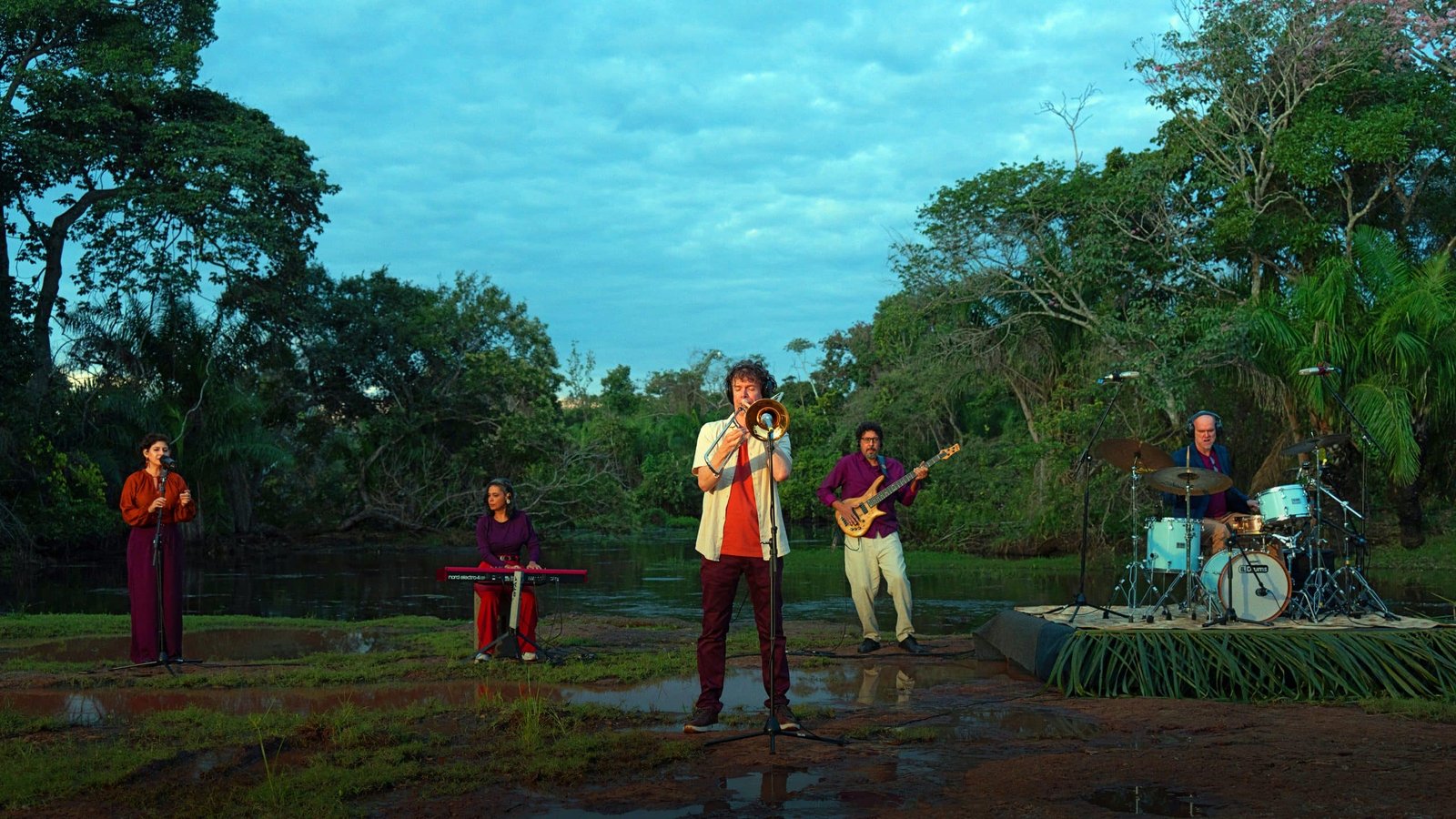
    Pantanal Jam, a groundbreaking sound experiment created inside the world’s largest tropical wetland of Brazil, treats nature not as a backdrop but as a full artistic partner. The Pantanal—home to jaguars, giant otters, macaws, and more than 4,700 documented species—becomes both muse and musician, shaping the album’s rhythms, motifs, and improvisations in real time.

    To understand the philosophy behind the project, Green Prophet spoke with Sandro Moreno, drummer, percussionist, and co-creator of Pantanal Jam.

    His reflections reveal not only the making of an album but the emergence of a new ecological listening practice—one that invites humans to stop dominating nature’s soundscape and start collaborating with it.

    Take the album “Espiral,” says Moreno. “At the very beginning of the track, a jaguar growls – not as a background effect, but as a participating artist. That growl shaped the pulse of the moment. It entered the rhythm like a beat, blending seamlessly with the percussion and setting the mood for everything that followed. It was wild, unexpected, and perfect.

    “Throughout the album, this conversation with nature continues. Birds like the thrush, the Pantanal blackbird, the seriema, the hornero, the potoo, the ibis, macaws, and parakeets – they didn’t just inspire us. They played with us. Their calls, cries, and chatter became part of the music’s soul, interacting with our drums, guitars, and voices in spontaneous harmony.

    “This wasn’t about layering nature sounds onto music in post-production. It was about playing with nature – responding to its rhythms in real time, allowing its unpredictability to shape our own.”

    Musicians have long searched for ways to collaborate with the natural world, though few have taken it as far as Pantanal Jam.

    Stevie Wonder experimented with field recordings and environmental textures on albums like Journey Through the Secret Life of Plants, one of the earliest mainstream attempts to treat nature as a co-composer rather than a backdrop.

    couple recording sounds with plants

    If you love this kind of sonic ecology, you’ll probably also enjoy our stories about Plants that talk using sound and AI, how we might one day speak “dolphin”, and crickets composing the soundscape at the Venice Biennale.

    Scientists and sound artists have also translated plant electrical signals into audible frequencies, creating “plant music” that reveals hidden rhythms in living organisms. And Björk, through projects like Biophilia, has blended natural processes, digital ecosystems, and experimental instrumentation to explore how the environment can shape melody, structure, and emotional tone.

    Pantanal Jam emerges in this lineage but roots itself directly in a living biome, playing not about nature or around it, but with it in real time.

    According to Moreno, when the group set out to create Pantanal Jam, they weren’t planning to simply compose music. They were planning to listen—deeply—to “one of the most biodiverse and magical places on Earth,” responding to it “in the most honest way we could: through sound.”

    Moreno describes the concept as letting the living landscape lead: the wind, the water, the rustling trees, and most importantly the animals. These weren’t atmosphere or incidental texture. They acted as “fellow musicians,” their voices forming motifs that shaped the improvisations and guided the compositions.

    For a percussionist, this demanded a different kind of listening. Moreno says rhythm exists everywhere in the Pantanal: in the lapping of water, the beating of wings, distant thunder, or dawn animal calls. Playing in that environment required letting go of control, responding intuitively, and allowing the environment to lead. It became less about performance and more about presence.

    His description of the project extends beyond technique. Pantanal Jam, he says, is an invitation to reconnect with the earth through music, to experience the wild not as an accessory but as part of our own creative process. Art doesn’t have to dominate nature. It can dance with it.

    The Panatal in Brazil. National Geographic.

    This approach lands at a crucial environmental moment. The Pantanal is under escalating threat. Wildfires in recent years have burned unprecedented areas, droughts have intensified, and agricultural expansion continues to alter the wetland’s hydrology. Projects like Pantanal Jam do not pretend to solve these systemic issues, but they shift the cultural lens: they ask listeners to hear the biome as a living, expressive presence rather than a resource or backdrop.

    By bringing listeners into this sound world, the project acts as both artistic innovation and subtle ecological advocacy. It reminds us that ecosystems are not silent. They speak constantly—if we listen.

    ::www.pantanaljam.com

    The post Can a jungle jam? Brazil percussionist finds out appeared first on Green Prophet.

  • Can a jungle jam? Brazil percussionist finds out

    Can a jungle jam? Brazil percussionist finds out

    Scientists and sound artists have also translated plant electrical signals into audible frequencies, creating “plant music” that reveals hidden rhythms in living organisms. And Björk, through projects like Biophilia, has blended natural processes, digital ecosystems, and experimental instrumentation to explore how the environment can shape melody, structure, and emotional tone.

    Pantanal Jam emerges in this lineage but roots itself directly in a living biome, playing not about nature or around it, but with it in real time.

    The post Can a jungle jam? Brazil percussionist finds out appeared first on Green Prophet.
    In an era when the climate crisis often feels abstract, distant, or buried beneath the data of carbon credits or financing mechanisms of COP30, a new artistic project from Brazil is cutting through the noise—literally—by turning one of the world’s most fragile ecosystems into a musical collaborator.

    Pantanal Jam, a groundbreaking sound experiment created inside the world’s largest tropical wetland of Brazil, treats nature not as a backdrop but as a full artistic partner. The Pantanal—home to jaguars, giant otters, macaws, and more than 4,700 documented species—becomes both muse and musician, shaping the album’s rhythms, motifs, and improvisations in real time.

    To understand the philosophy behind the project, Green Prophet spoke with Sandro Moreno, drummer, percussionist, and co-creator of Pantanal Jam.

    His reflections reveal not only the making of an album but the emergence of a new ecological listening practice—one that invites humans to stop dominating nature’s soundscape and start collaborating with it.

    Take the album “Espiral,” says Moreno. “At the very beginning of the track, a jaguar growls – not as a background effect, but as a participating artist. That growl shaped the pulse of the moment. It entered the rhythm like a beat, blending seamlessly with the percussion and setting the mood for everything that followed. It was wild, unexpected, and perfect.

    “Throughout the album, this conversation with nature continues. Birds like the thrush, the Pantanal blackbird, the seriema, the hornero, the potoo, the ibis, macaws, and parakeets – they didn’t just inspire us. They played with us. Their calls, cries, and chatter became part of the music’s soul, interacting with our drums, guitars, and voices in spontaneous harmony.

    “This wasn’t about layering nature sounds onto music in post-production. It was about playing with nature – responding to its rhythms in real time, allowing its unpredictability to shape our own.”

    Musicians have long searched for ways to collaborate with the natural world, though few have taken it as far as Pantanal Jam.

    Stevie Wonder experimented with field recordings and environmental textures on albums like Journey Through the Secret Life of Plants, one of the earliest mainstream attempts to treat nature as a co-composer rather than a backdrop.

    couple recording sounds with plants

    If you love this kind of sonic ecology, you’ll probably also enjoy our stories about Plants that talk using sound and AI, how we might one day speak “dolphin”, and crickets composing the soundscape at the Venice Biennale.

    Scientists and sound artists have also translated plant electrical signals into audible frequencies, creating “plant music” that reveals hidden rhythms in living organisms. And Björk, through projects like Biophilia, has blended natural processes, digital ecosystems, and experimental instrumentation to explore how the environment can shape melody, structure, and emotional tone.

    Pantanal Jam emerges in this lineage but roots itself directly in a living biome, playing not about nature or around it, but with it in real time.

    According to Moreno, when the group set out to create Pantanal Jam, they weren’t planning to simply compose music. They were planning to listen—deeply—to “one of the most biodiverse and magical places on Earth,” responding to it “in the most honest way we could: through sound.”

    Moreno describes the concept as letting the living landscape lead: the wind, the water, the rustling trees, and most importantly the animals. These weren’t atmosphere or incidental texture. They acted as “fellow musicians,” their voices forming motifs that shaped the improvisations and guided the compositions.

    For a percussionist, this demanded a different kind of listening. Moreno says rhythm exists everywhere in the Pantanal: in the lapping of water, the beating of wings, distant thunder, or dawn animal calls. Playing in that environment required letting go of control, responding intuitively, and allowing the environment to lead. It became less about performance and more about presence.

    His description of the project extends beyond technique. Pantanal Jam, he says, is an invitation to reconnect with the earth through music, to experience the wild not as an accessory but as part of our own creative process. Art doesn’t have to dominate nature. It can dance with it.

    The Panatal in Brazil. National Geographic.

    This approach lands at a crucial environmental moment. The Pantanal is under escalating threat. Wildfires in recent years have burned unprecedented areas, droughts have intensified, and agricultural expansion continues to alter the wetland’s hydrology. Projects like Pantanal Jam do not pretend to solve these systemic issues, but they shift the cultural lens: they ask listeners to hear the biome as a living, expressive presence rather than a resource or backdrop.

    By bringing listeners into this sound world, the project acts as both artistic innovation and subtle ecological advocacy. It reminds us that ecosystems are not silent. They speak constantly—if we listen.

    ::www.pantanaljam.com

    The post Can a jungle jam? Brazil percussionist finds out appeared first on Green Prophet.

  • Healing Without Reconciling with My Mother and Learning to Love Myself

    Healing Without Reconciling with My Mother and Learning to Love Myself

    “Owning our story and loving ourselves through that process is the bravest thing that we’ll ever do.” ~Brené Brown

    Several years ago, I wrote a heartfelt letter to my estranged mother, articulating my deep feelings about her perceived lack of empathy and care. My intention in writing the letter wasn’t to ignite conflict; it was to sincerely share my perspective.

    Rather than lashing out with blame, I expressed my profound sadness about feeling parentless and the struggle of raising myself without parental love and guidance, something I desperately needed at times.

    I bared my soul, detailing the emotional turmoil …

    “Owning our story and loving ourselves through that process is the bravest thing that we’ll ever do.” ~Brené Brown

    Several years ago, I wrote a heartfelt letter to my estranged mother, articulating my deep feelings about her perceived lack of empathy and care. My intention in writing the letter wasn’t to ignite conflict; it was to sincerely share my perspective.

    Rather than lashing out with blame, I expressed my profound sadness about feeling parentless and the struggle of raising myself without parental love and guidance, something I desperately needed at times.

    I bared my soul, detailing the emotional turmoil our relationship has had on me as an adult, and expressed the longing for connection that always seemed just out of reach.

    After completing the letter, I did something I thought at the time was a bit reckless: I mailed it. Now looking back, I realize it was a courageous step toward advocating for my emotional health, confronting my truths head-on.

    I had no expectations and was prepared for any outcome, including silence, which often felt like our norm. However, mailing it felt like a cathartic release and was undeniably liberating.

    Months passed without a response. I had kept my expectations low but remained hopeful that perhaps she would reflect on what I had shared and gain some insight into our dynamic. Then, almost nine months later, I found myself at a family gathering out of state, and she was there. I had a vague notion that she might show up, but I hadn’t put too much thought into it.

    A rush of panic enveloped me, especially knowing my children didn’t even recognize her. My husband supported me, rubbing my back to help me through the initial shock of seeing her after so many years.

    As conversations swirled around me, I felt an odd sense of being at an event together yet acting like strangers. Though it wasn’t much different from before, I had openly shared a vulnerable part of myself in that letter, which she never acknowledged receiving.

    During the gathering, we barely spoke; our unresolved past loomed between us like an unbridgeable chasm. As the event was wrapping up, my family and I collected our jackets to leave, and then she walked over to me.

    With a sincere expression, she said, “You were right, and I’m sorry.” That was all that passed between us, and then I left. As I walked out the door, a wave of sadness crashed over me, not just from the validation but from the acknowledgment of our painful reality.

    In that moment, I recognized that while the deep understanding I’d once yearned for might never materialize, that exchange marked a significant turning point in my healing journey.

    Through this process, I learned invaluable lessons about boundaries—how to say no without guilt, to stop explaining myself, and to recognize when emotional distance is an act of self-respect rather than rejection. I discovered that safeguarding my emotional space was not just essential but necessary for my well-being.

    Although my connection with my mother remains the same, my inner transformation has been profound.

    I still grapple with sadness that my children will not know their grandmother, leaving me with a wound that is still healing. However, I have learned the art of giving and receiving love in healthier ways. I prioritize open communication with my children and partner, ensuring that their feelings are validated, something I wished for during my upbringing.

    Not everyone is fortunate enough to have their experiences acknowledged. Many of us carry the weight of unvalidated pain, silently wishing for recognition that our feelings matter. The journey of writing a letter reinforced the power of self-love as a transformative force, even in the absence of answers or sincere apologies.

    Self-love for me is about nurturing inner compassion for myself and understanding and recognizing the validity of my feelings, independent of external validation.

    The seeds of self-love began to flourish in my twenties with small acts of kindness toward myself, moments of self-forgiveness, and the courage to question the beliefs I’d carried since childhood.

    It was a crucial period when I started to challenge the idea that my worth depended on pleasing others, and I allowed myself to feel fully—to name and honor my emotions without shame or self-censorship.

    During this time, I began seeing a therapist, which offered me a safe space to examine how my sense of worth had been shaped by my mother’s unpredictable affection and the silence that shaped me when it was withheld.

    Books like Adult Children of Emotionally Immature Parents by Lindsay C. Gibson and The Gifts of Imperfection by Brené Brown helped me understand and reframe these patterns, guiding me toward self-compassion and a more stable sense of self-worth.

    With the support of a nurturing chosen family and the continued guidance of therapy, I’ve been able to unravel beliefs that no longer serve me—such as the idea that my worth depends on others’ approval, that my emotions should be contained to keep the peace, and that love must be earned through perfection or compliance. Letting go of these patterns has allowed me to reclaim my sense of self and to honor my feelings as both valid and necessary.

    As I contemplate this recent encounter with my mother, I see the evolution of my perspective since I began advocating for my emotional well-being. I’ve come to understand the delicate balance between expectations and reality—the longing for a different kind of relationship coexisting with the acceptance of what is. It’s a balance that asks me to hold compassion for her limitations while still protecting my own heart.

    Each lesson I’ve embraced about self-love has become foundational—learning to set boundaries without guilt, to speak my truth, and to treat myself with the same tenderness I once reserved for others.

    These shifts have reshaped not only my relationship with myself but also how I engage with the world around me. Now, I give and receive love in healthier, more meaningful ways, ensuring that my relationships are grounded in mutual respect and appreciation.

    This healing journey has profoundly shaped my approach to parenting. I aim to teach my children the significance of setting boundaries and advocating for their emotional well-being, rather than simply seeking to please others or maintain peace at all costs. They see a mother who is honest about her feelings and who takes care of herself instead of abandoning herself, which serves as a powerful lesson that goes beyond words.

    While my relationship with my mother may never be what I hoped for, it has guided me toward a fuller sense of self and a more authentic, balanced way of loving. And I’m committed to continuing on this healing journey. I’ve unearthed the strength within me to heal and evolve—strength that exists independent of external acknowledgment.

    About Shilo Ratner

    Artist, writer, creative coach, teacher, and lover of anything chocolate. Shilo Ratner is a creative who loves helping other creatives reconnect to their creativity. When she is not helping clients or in her art studio, she is spending time with her two wonderful children and her loving husband in New Haven, Connecticut. Connect with her on Instagram @shiloratner or on her website www.shiloratner.com

    Get in the conversation! Click here to leave a comment on the site.

  • What Are the Best Charging Solutions for Multi-Device Households?

    What Are the Best Charging Solutions for Multi-Device Households?

    Smart charging features help balance power use and protect batteries from heat or overcharge. As a result, families can keep every device ready without swapping cables or outlets.

    The post What Are the Best Charging Solutions for Multi-Device Households? appeared first on Green Prophet.

    Charging cables

    Modern homes often depend on several phones, tablets, and smart devices that all need power. Keeping everything charged can feel messy without the right setup. Families and shared spaces now look for ways to keep devices powered without clutter or constant cable swaps. The best charging solutions for multi-device households combine speed, safety, and organization in one simple setup.

    As technology grows, so does the need for smarter charging stations that adapt to different devices. From compact hubs to wireless pads, new designs make it easier to power multiple gadgets at once. This article explores practical options that help every household stay connected and ready for the day.

    Statik Magnetic Cables

    Statik magnetic cables offer a simple way to charge multiple devices with one cord. Each cable uses a universal magnetic charging cable design that fits USB-C, Lightning, and Micro-USB ports. This setup helps families avoid clutter and keeps charging areas neat.

    The magnetic tips attach easily and reduce wear on device ports. A 360-degree rotating head allows flexible use, so users can plug in from different angles without bending the cord. This feature makes it practical for desks, nightstands, or travel bags.

    Durable nylon braiding adds strength and prevents fraying over time. Some models also support fast charging and data transfer, which suits phones, tablets, and even laptops. As a result, Statik cables serve as a useful choice for households with mixed devices that need consistent performance and long-lasting build quality.

    Anker PowerPort Atom PD 4

    The Anker PowerPort Atom PD 4 serves households that use several devices at once. It includes two USB-C ports and two USB-A ports, which allow a mix of phones, tablets, and laptops to charge together. Its compact size saves space on desks or counters.

    This charger supports up to 100 watts of total output. It can provide full power to one device or divide power among multiple devices as needed. This flexibility helps users keep everything charged without swapping cables or adapters.

    Some users note that the charger can feel warm during use and costs more than basic models. However, its ability to handle high-demand devices and reduce clutter often outweighs those concerns. It suits families or shared spaces where several people need to charge at the same time.

    Overall, the PowerPort Atom PD 4 offers a practical balance of speed, convenience, and capacity for multi-device households.

    Nomad Base Station Pro

    The Nomad Base Station Pro offers a simple way to charge several devices at once. It supports up to three Qi-compatible devices on its wide surface, so users can place phones, earbuds, or other gadgets anywhere without perfect alignment. This flexibility makes it practical for families or shared spaces.

    Its aluminum frame and soft leather pad give it a clean, modern look that fits well on desks or nightstands. The build feels solid, and the materials add a touch of quality without being flashy.

    The charger uses FreePower technology to detect each device and deliver the right amount of power. It connects through a USB-C port and includes a compatible power adapter in the box.

    LED lights on the front show charging status, and the pad automatically stops if a device does not support wireless charging. This feature helps prevent wasted energy and keeps the setup simple for daily use.

    Belkin Boost Charge 3-in-1 Wireless Charger

    The Belkin Boost Charge 3-in-1 Wireless Charger offers a simple way to power multiple devices at once. It supports fast charging for phones that use MagSafe or Qi2 technology and provides dedicated spots for a smartwatch and wireless earbuds. This setup helps reduce clutter and keeps devices ready for use.

    Its magnetic alignment helps each device connect securely to the pad. The phone charger delivers up to 15 watts of power, while the smartwatch and earbuds charge at lower watt levels suitable for their batteries. This balance helps maintain efficiency without overheating.

    The stand’s design allows a phone to rest in either portrait or landscape mode, which makes it convenient for video calls or media viewing. Its compact shape fits well on a nightstand or desk, and the soft surface helps prevent scratches. Therefore, it suits users who want a single charging point for their main devices without complicated cables.

    Twelve South HiRise Wireless

    The Twelve South HiRise Wireless line offers a clean and compact way to charge multiple devices at once. It fits well on a desk or nightstand and reduces clutter by combining several chargers into one unit. Each model focuses on practical design and steady power delivery.

    The HiRise 2 Deluxe supports two devices, such as a phone and earbuds. It uses Qi2 wireless charging on the main arm for faster power transfer and a slower base pad for smaller accessories. The magnetic connection helps align the phone easily and keeps it in place during use.

    The HiRise 3 Deluxe expands the setup to three devices. It adds a charging spot for a smartwatch while keeping the same small footprint. Its upright phone stand allows quick access to notifications without picking up the device. This design suits users who want a single, space-saving station for everyday charging needs.

    Conclusion

    Multi-device homes benefit most from charging setups that combine speed, safety, and space efficiency. A good station supports phones, tablets, earbuds, and watches at once without clutter.

    Smart charging features help balance power use and protect batteries from heat or overcharge. As a result, families can keep every device ready without swapping cables or outlets.

    Compact hubs with both wired and wireless options fit well in shared spaces. They reduce mess, save time, and make daily charging simpler for everyone.

    Choosing a station with multiple ports, surge protection, and clear indicators offers long-term convenience and better device care.


    The post What Are the Best Charging Solutions for Multi-Device Households? appeared first on Green Prophet.

  • When the Person You Love Is Disappearing into Addiction

    When the Person You Love Is Disappearing into Addiction

    “Boundaries are the distance at which I can love you and myself at the same time.” ~Prentis Hemphill

    I thought I had seen the worst of it. I thought I knew what it meant to watch someone you love disappear into addiction. My mother taught me that lesson long before I was old enough to truly understand it.

    Growing up, I saw her sink deep into heroin. I learned to read the signs before she even spoke. I knew when she was high. I knew when she was lying. I knew when she was gone, even when she was …

    “Boundaries are the distance at which I can love you and myself at the same time.” ~Prentis Hemphill

    I thought I had seen the worst of it. I thought I knew what it meant to watch someone you love disappear into addiction. My mother taught me that lesson long before I was old enough to truly understand it.

    Growing up, I saw her sink deep into heroin. I learned to read the signs before she even spoke. I knew when she was high. I knew when she was lying. I knew when she was gone, even when she was sitting right in front of me. And there was nothing I could do to stop it. I was just a child, powerless in the shadow of a disease that stole her piece by piece.

    Now, decades later, I am living that heartbreak again. Only this time, it’s my husband.

    It’s a different substance—alcohol instead of heroin—but the same slow disappearance. The same unpredictable moods. The same sense of walking on eggshells, wondering which version of him will walk through the door. And the same helplessness, watching someone I love unraveling, knowing I cannot save him.

    But there is one thing that’s different this time: me.

    The Moment That Broke Me Again

    It was just another night that should have been nothing. That night we had gone out to a comedy show, and at first, everything was great. Good times, laughing, reminiscent of the old times, and yes, drinks were flowing, and everyone was in good spirits.

    But as the night went on and he had a few too many, things shifted. He started acting out a bit—being loud, joking in ways that felt disrespectful. There was a couple sitting in front of us, the woman also drunk, and her partner looked embarrassed and frustrated.

    Somehow, he and that couple’s energy fed off each other, and before long, he started flirting with her right in front of me.

    Later that night, when I brought it up and told him how hurtful it was, he said, “Why are you upset? None of this matters.” He explained that it didn’t matter because, in his mind, I wasn’t going to do anything about it anyway—that I wouldn’t leave or hold him accountable.

    That was the moment that really broke me, because it showed me exactly how little respect or value he placed on my feelings and boundaries.

    Those words stopped me cold. At first, rage flared, hot and bright. But then something in me shifted.

    I heard not just the words, but the pattern behind them—the pattern I’d been ignoring.

    I realized this wasn’t the first time he’d humiliated me, embarrassed me, or disrespected me. It wasn’t the first time he’d gotten drunk, lashed out, and expected me to sweep it under the rug. And it wouldn’t be the last—not unless I changed something.

    Boundaries, Therapy, and the Pushback

    We are still together, but the way we are now is not the way we were before. We are doing the work.

    Therapy has been instrumental in addressing the root cause of his alcoholism—unpacking generational patterns and confronting the reality of what we’d normalized.

    For me, it meant recognizing that many behaviors I tolerated weren’t love but survival mechanisms shaped by my childhood. For him, it meant accepting that seeking help wasn’t weakness but courage.

    The first hurdles were admitting the problem and agreeing to seek help—both met with pushback.

    As an African American man, my husband struggled with the stigma around vulnerability, especially regarding mental health and addiction. Generational beliefs had taught him that asking for help threatened his sense of strength.

    Early therapy sessions were marked by defensiveness and silence, but patience and difficult conversations slowly shifted his perspective, especially when his mother told him that he was mirroring his father. She began telling him stories of how his father’s drinking affected their marriage. Even though she stayed with him, if things were different, she would have left.

    She also told him that I am not her, and if he doesn’t make a change, I won’t stay because I don’t have to. He realized that he was choosing alcohol over our relationship, but he didn’t know how to separate it from himself, as it has been a part of how he functions for so long.

    It is an inner struggle he is facing, but with honesty, strength, and dedication, he will continue to fight to become the true man he and I know he can be.

    The Work We’re Doing

    Therapy has helped me understand that contrary to what I experienced growing up, love without respect isn’t love at all.

    On my end, it’s been about patience and empathy, without excusing harm. On his end, it’s been about acceptance, accountability, and a willingness to face the truth, even when it’s ugly.

    We’ve set clear boundaries. If he crosses those lines, there are consequences.

    One boundary he must not overstep is respect. I love my husband, but I love myself just as much. I also told him if it comes to separation, just know I didn’t leave—you did when alcohol became more important than our relationship.

    We both understand this is a difficult situation that requires understanding and compassion, but consequences are final and forever life-changing. This mustn’t continue because this isn’t living. It’s just existing, and I choose to live.

    The progression is day by day. We still encounter stalemates, and we embrace them and push through them together. I know he truly wants to get better, not just for us but mainly for his own well-being.

    We have agreed that the cycle stops here, even if it means rebuilding everything from the ground up.

    Choosing Myself Without Leaving

    Choosing myself doesn’t mean walking away right now. For me, it means staying without losing myself. It means protecting my peace, even in the same home. It means no longer excusing disrespect just because it comes from someone I love.

    I am not the same person who silently absorbed my mother’s chaos. I know now that I can’t heal someone else by destroying myself.

    Some days, it’s still heavy. Some days, I still see my mother’s shadow in the bottom of his glass. But I’m learning to separate his fight from mine.

    I love him, but I love myself too. And I am finally learning that those two things can exist together—as long as I hold the line.

    If you are in a relationship touched by addiction, know this: you are allowed to choose yourself. You are allowed to demand respect. And you are allowed to break the cycle, even if you stay.

    About K.A.H. Conway

    K.A.H. Conway is a writer whose work explores grief, womanhood, healing, and transformation. Drawing from her own lived experiences, she writes with honesty and depth about loss, recovery, and self-rediscovery. Her voice is raw, intimate, and deeply human—inviting readers to find strength in vulnerability and meaning in pain.

    Get in the conversation! Click here to leave a comment on the site.

  • Kabbalah sages once lived on carob and now the superfruit returns as a modern prebiotic

    Kabbalah sages once lived on carob and now the superfruit returns as a modern prebiotic

    From Rabbi Shimon’s cave to a global marketplace hungry for sustainable nutrition, carob’s revival reminds us that sometimes the future of food grows from the oldest roots of all.

    The post Kabbalah sages once lived on carob and now the superfruit returns as a modern prebiotic appeared first on Green Prophet.

    Roman roads of the past

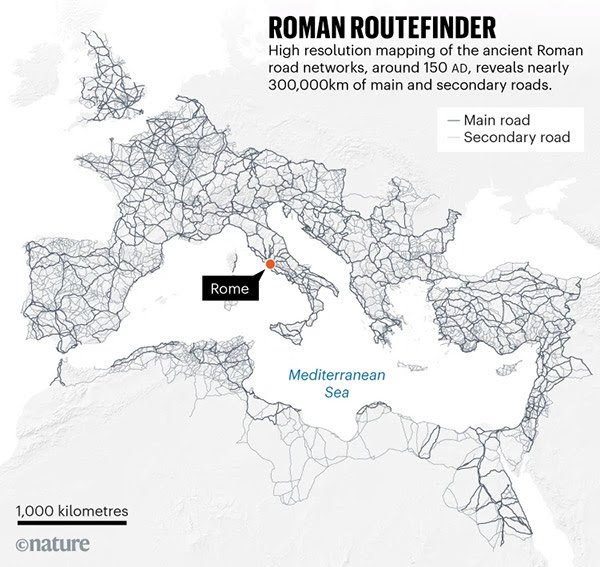
    Two thousand years ago, all roads led to Rome. Now, thanks to modern data science, they finally do again — this time in high resolution. A newly released digital atlas Itiner-e what they call a “Google Maps for Roman roads.”It is being hailed as a kind of Google Maps for the ancient world, charting nearly 300,000 kilometres of Roman roads across Europe, the Middle East, and North Africa. The project stitches together countless archaeological and historical datasets into a single interactive network, revealing the sheer scale of the viae Romanae that once bound the empire together.

    Ancient Roman roads

    At its peak around AD 150, the Roman Empire stretched from Britain’s Hadrian’s Wall to the banks of the Euphrates, from the Atlas Mountains to the Black Sea. Its lifeblood was the road — engineered with stone, gravel, and astonishing precision — that carried soldiers, grain, ideas, and empire itself. But despite centuries of scholarship and excavation, our understanding of this network has remained incomplete.

    Rome colosseum, self-healing mortar

    Romans mastered self-healing mortar, which works well in wet environments

    Although the roads are one of the best-known aspects of Roman history, it’s surprising how many details about them we still don’t know. According to the new dataset, the locations of only 3% of Roman roads are known with certainty; the rest have been inferred from satellite imagery, topographical analysis, and fragmentary archaeological evidence.

    The map, created through a collaboration of classicists, GIS specialists, and open-data archivists, pulls together previously siloed regional studies — from Britain’s Watling Street to Israel’s Via Maris — into a single digital ecosystem. Each route can be explored interactively, complete with estimated construction dates, trade significance, and terrain context.

    For ordinary viewers, it’s a revelation — a chance to visualize how Rome’s engineers carve through deserts, mountains, and marshes to keep an empire alive. It is, quite literally, the skeleton of Western civilization rendered as pixels and coordinates.

    But this project isn’t just a nostalgic look backward. It’s also a powerful reminder of what sustainable infrastructure once meant. Roman roads were built to last millennia, with local materials, drainage systems, and low-maintenance stonework that endured centuries of weather and war. Many of today’s highways and rail lines still trace their original foundations. Roman concrete was self-healing and lasts until today.

    In an age of asphalt sprawl, potholes, and short-term urban planning, the Roman network offers a strange kind of hope for our future. Ancient engineers designed for permanence and adaptation — concepts that modern infrastructure often neglects. The Romans understood maintenance as a civic duty, with roads meant to connect people, not just move things.

    Roman law (Lex Julia Municipalis, 45 BCE) required local communities and landowners to maintain the sections of road passing through their territory. Public funds (the cursus publicus) supported major arteries, showing that upkeep was embedded in governance.

    Some sustainability researchers see parallels between the Roman viae and today’s green corridors: both seek to balance movement, resilience, and local ecology.


    The post Take me home, Roman roads appeared first on Green Prophet.